Snart 600 000 barn på flykt – varning för svält
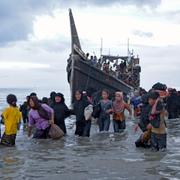
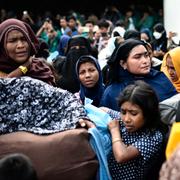
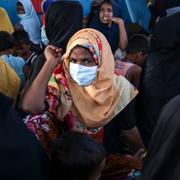
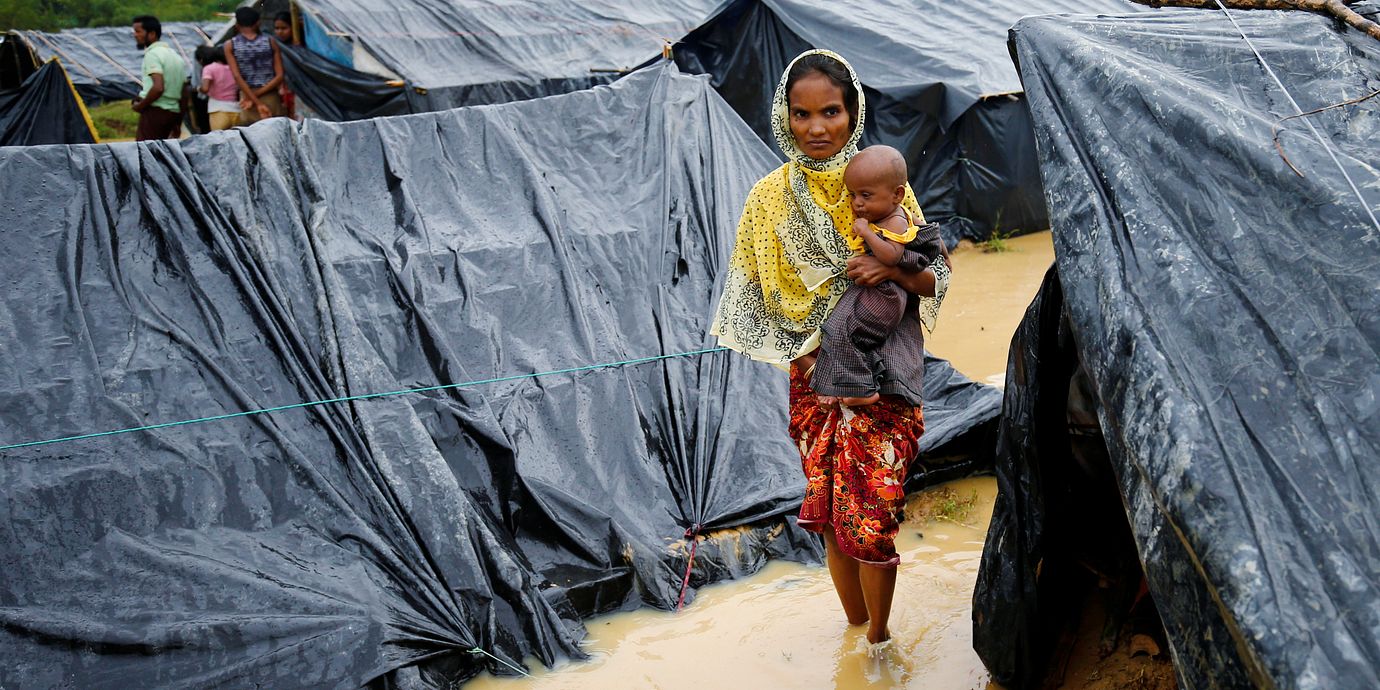
Runt 600 000 barn som tillhör den muslimska minoritetsbefolkningen rohingya kommer snart att befinna sig på flykt från Burma till grannlandet Bangladesh. Den säger Rädda barnens chef i Bangladesh, Mark Pierce, och hänvisar till bedömningar från FN-organ. Det rapporterar AFP.
Samtidigt ser Rädda barnen risk för att de mest grundläggande behoven inte kan tillgodoses i de flyktingläger som upprättats.
– Om familjer inte kan tillfredsställa sina grundläggande behov, kommer lidandet att bli ännu värre och liv kan förloras, säger Mark Pierce, hjälporganisationens landschef i Bangladesh.
Läs mer:
bakgrund
Rohingya people
Wikipedia (en)
The Rohingya people (, or ; historically also termed Arakanese Indians) are a stateless Indo-Aryan people from Rakhine State, Myanmar. There were an estimated 1 million Rohingya living in Myanmar before the 2016–17 crisis. The majority are Muslim while a minority are Hindu. Described by the United Nations in 2013 as one of the most persecuted minorities in the world, the Rohingya population are denied citizenship under the 1982 Burmese citizenship law. According to Human Rights Watch, the 1982 laws "effectively deny to the Rohingya the possibility of acquiring a nationality. Despite being able to trace Rohingya history to the 8th century, Burmese law does not recognize the ethnic minority as one of the national races". They are also restricted from freedom of movement, state education and civil service jobs. The Rohingyas have faced military crackdowns in 1978, 1991–1992, 2012, 2015 and 2016–2017. UN officials and HRW have described Myanmar's persecution of the Rohingya as ethnic cleansing, while there have been warnings of an unfolding genocide. Yanghee Lee, the UN special investigator on Myanmar, believes the country wants to expel its entire Rohingya population.
The Rohingya maintain they are long-standing residents of western Myanmar, and that their community includes both a mixture of precolonial and colonial settlers. The official stance of the Myanmar government, however, has been that they are illegal immigrants from Bangladesh. Myanmar's government does not recognize the term "Rohingya" and it prefers to refer to the community as Bengalis. Rohingya campaign groups, notably the Arakan Rohingya National Organization, demand the right to "self-determination within Myanmar".
The legal conditions faced by the Rohingya in Myanmar have been compared with apartheid.
Before the 2015 Rohingya refugee crisis and the military crackdown in 2016 and 2017, the Rohingya population in Myanmar was around 1.1 to 1.3 million, chiefly in the northern Rakhine townships, which were 80–98% Rohingya. Over 900,000 Rohingya refugees have fled to southeastern Bangladesh as well as to other surrounding countries, and major Muslim nations.. More than 100,000 Rohingyas in Myanmar are confined in camps for internally displaced persons.
Probes by the UN have found evidence of increasing incitement of hatred and religious intolerance by "ultra-nationalist Buddhists" against Rohingyas while the Burmese security forces have been conducting "summary executions, enforced disappearances, arbitrary arrests and detentions, torture and ill-treatment and forced labour" against the community. According to the United Nations, the human rights violations against the Rohingyas could be termed "crimes against humanity".
Omni är politiskt obundna och oberoende. Vi strävar efter att ge fler perspektiv på nyheterna. Har du frågor eller synpunkter kring vår rapportering? Kontakta redaktionen