Lukasjenko har svurits in vid hemlig ceremoni i Minsk
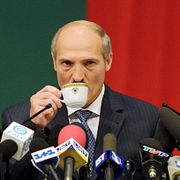
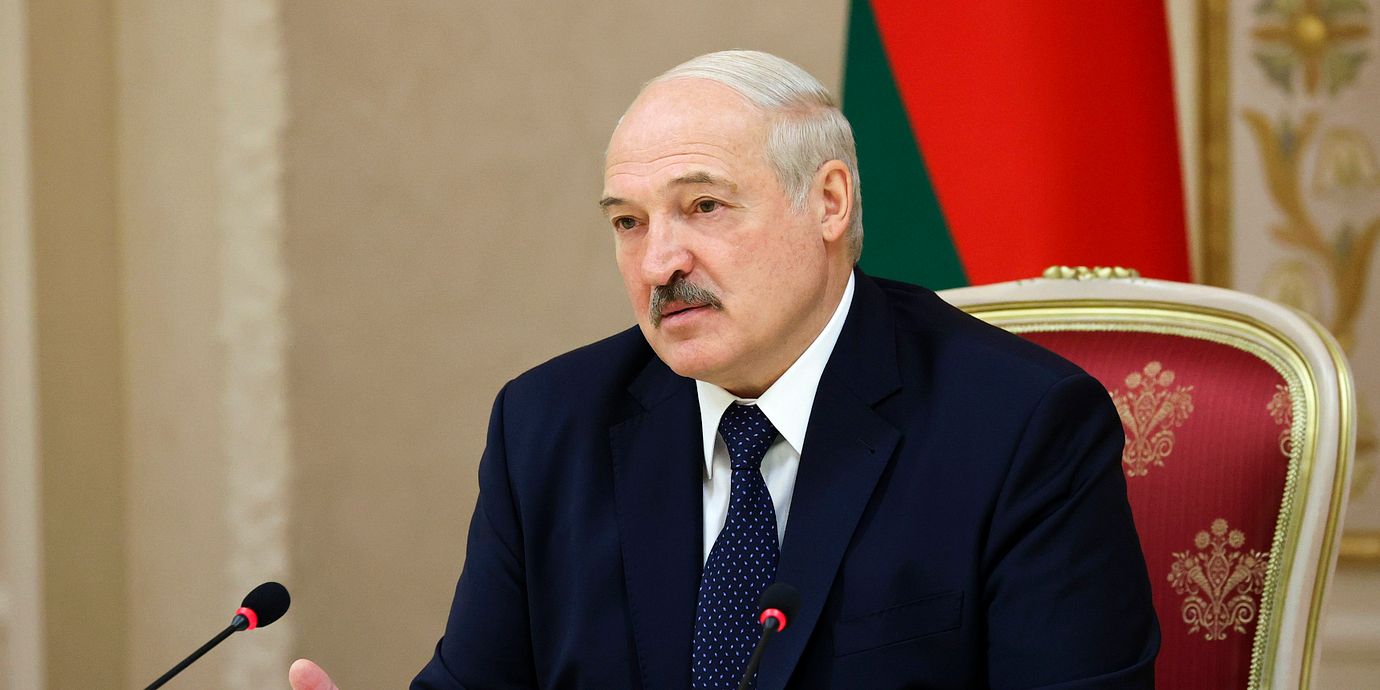
Belarus president Aleksandr Lukasjenko har svurits in för en ny mandatperiod vid en hemlig ceremoni, rapporterar landets statliga nyhetsbyrå Belta. Ceremonin, som hålls i Minsk, ska inte ha utannonserats i förväg.
Enligt den strängt styrda nyhetsbyrån deltog flera hundra personer vid evenemanget i Självständighetspalatset i Minsk.
Sedan Lukasjenko utropade sig till segrare av presidentvalet i augusti har stora demonstrationer pågått i landet. Oppositionens krav är att han avgår.
bakgrund
Aleksandr Lukasjenko
Wikipedia (en)
Alexander Grigoryevich Lukashenko or Alyaksandr Ryhoravich Lukashenka (Russian: Алекса́ндр Григо́рьевич Лукаше́нко, IPA: [ɐlʲɪˈksandr ɡrʲɪˈɡorʲjɪvʲɪtɕ ɫʊkɐˈʂɛnkə], Belarusian: Алякса́ндр Рыго́равіч Лукашэ́нка, IPA: [alʲaˈksand(a)r rɨˈɣɔravʲitʂ lukaˈʂɛnka]; born 30 August 1954) is a Belarusian politician, who has served as president of Belarus since the establishment of the office 26 years ago, on 20 July 1994. Before launching his political career, Lukashenko worked as director of a state farm (sovkhoz), and served in the Soviet Border Troops and in the Soviet Army.
Lukashenko opposed economic shock therapy during the post-Soviet transition, which during the 1990s generally spared Belarus from recessions as devastating as those in other post-Soviet states like Russia.
He has supported state ownership of key industries in Belarus as well. Lukashenko's government also retained some of the country's Soviet-era symbolism, which can be seen in the coat of arms and national flag of Belarus, adopted following a 1995 referendum, which were based on the symbols of the Belarusian SSR. Following the same referendum, Lukashenko was given more power by becoming allowed to dismiss the Supreme Soviet of Belarus, the Russian language was given the same status as Belarusian, and economic ties with Russia were strengthened, which furthermore led to the creation of the Union State with Russia, which allows Belarusians to freely travel to, work, and study in Russia, and vice versa. However, relations with Russia have not always ran too smoothly under his tenure either (such as during the Milk Wars) with Lukashenko occasionally having claimed that Moscow wanted to annex Belarus, as late as January 2020.Lukashenko's government is widely characterised as authoritarian and he has often been referred to by media outlets as "Europe's last dictator." Elections are not considered to be free and fair by international monitors, opponents of the regime are repressed, and the media is not free. Since 2006, the European Union and the United States have at times imposed sanctions on Lukashenko and other Belarusian officials for human rights violations.His government's handling of the COVID-19 pandemic in Belarus led to widespread public discontent towards his administration. The disputed 2020 Belarusian presidential election led to widespread allegations of vote rigging, which strongly amplified anti-government protests, where Lukashenko is facing unprecedented opposition to his rule. Following the election, the European Union refused to accept the election result and does not recognise him as the legitimate president of Belarus.
Omni är politiskt obundna och oberoende. Vi strävar efter att ge fler perspektiv på nyheterna. Har du frågor eller synpunkter kring vår rapportering? Kontakta redaktionen