Ryssland stoppar FN:s granskning av kemangrepp
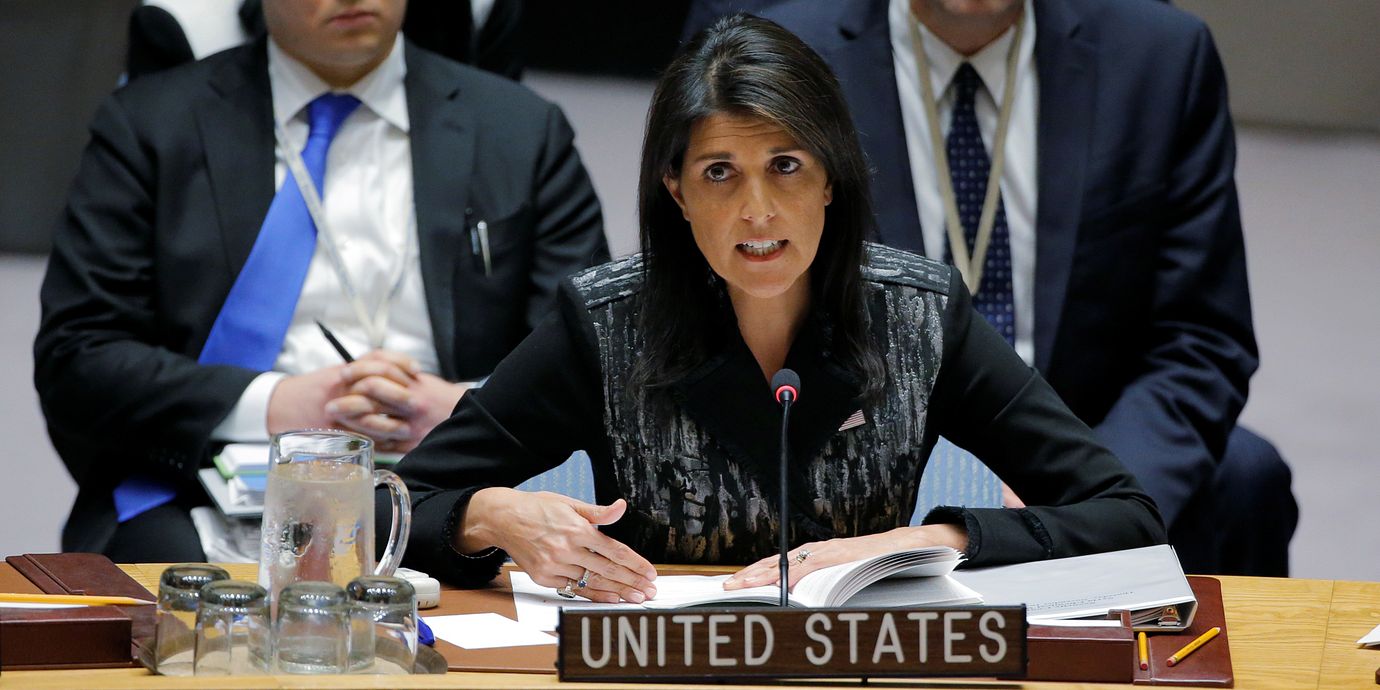
Ryssland har stoppat planerna på att utöka FN:s granskning av vilken sida i Syrienkriget som ligger bakom kemvapenattacker mot civila. Det är tionde gången som Ryssland använder sin vetorätt i säkerhetsrådet på ett sätt som gynnar deras allierade Syrien, skriver AFP. USA och Ryssland hade inför omröstningen lagt fram rivaliserande resolutionsförslag.
– Ryssland har underminerat vår möjlighet att stoppa framtida attacker genom att förstöra vår möjlighet att identifiera angriparna, säger USA:s FN-ambassadör Nikki Haley.
Saringasattacken i Khan Sheikhoun
Wikipedia (en)
The Khan Shaykhun chemical attack took place on 4 April 2017 on the town of Khan Shaykhun in the Idlib Governorate of Syria. At the time of the attack, the town was under the control of Tahrir al-Sham, previously known as the al-Nusra Front.
The town was reported to have been struck by an airstrike by government forces followed by massive civilian chemical poisoning. The release of a toxic gas, which included sarin, or a similar substance, killed at least 74 people and injured more than 557, according to the Idlib health authority. The attack was the deadliest use of chemical weapons in the Syrian civil war since the Ghouta chemical attack in 2013.
The United Nations, the governments of the United States, United Kingdom, Turkey, Saudi Arabia, France, and Israel, as well as Human Rights Watch have attributed the attack to the forces of Syrian President Bashar al-Assad. The Assad government denied using any chemical weapons in the air strike. The Russian Defense Ministry stated that Syrian aircraft had bombed a warehouse belonging to rebels which "may have contained a rebel chemical arms stockpile".
On 7 April, the United States launched 59 cruise missiles at Shayrat Air Base, which U.S. intelligence claimed was the source of the attack.
On October 26, an investigative panel created by the UN Security Council said it was “confident” that Assad’s air force was behind the chemical attack. Further, that the attack was possible because it drew from old Syrian stockpiles that Assad had vowed to destroy in 2013, indicating that Damascus has systematically cheated international inspectors for the past four years.
Omni är politiskt obundna och oberoende. Vi strävar efter att ge fler perspektiv på nyheterna. Har du frågor eller synpunkter kring vår rapportering? Kontakta redaktionen