Analys: Assad säkrar plats vid förhandlingsbordet
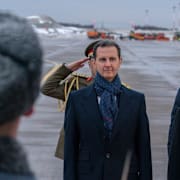
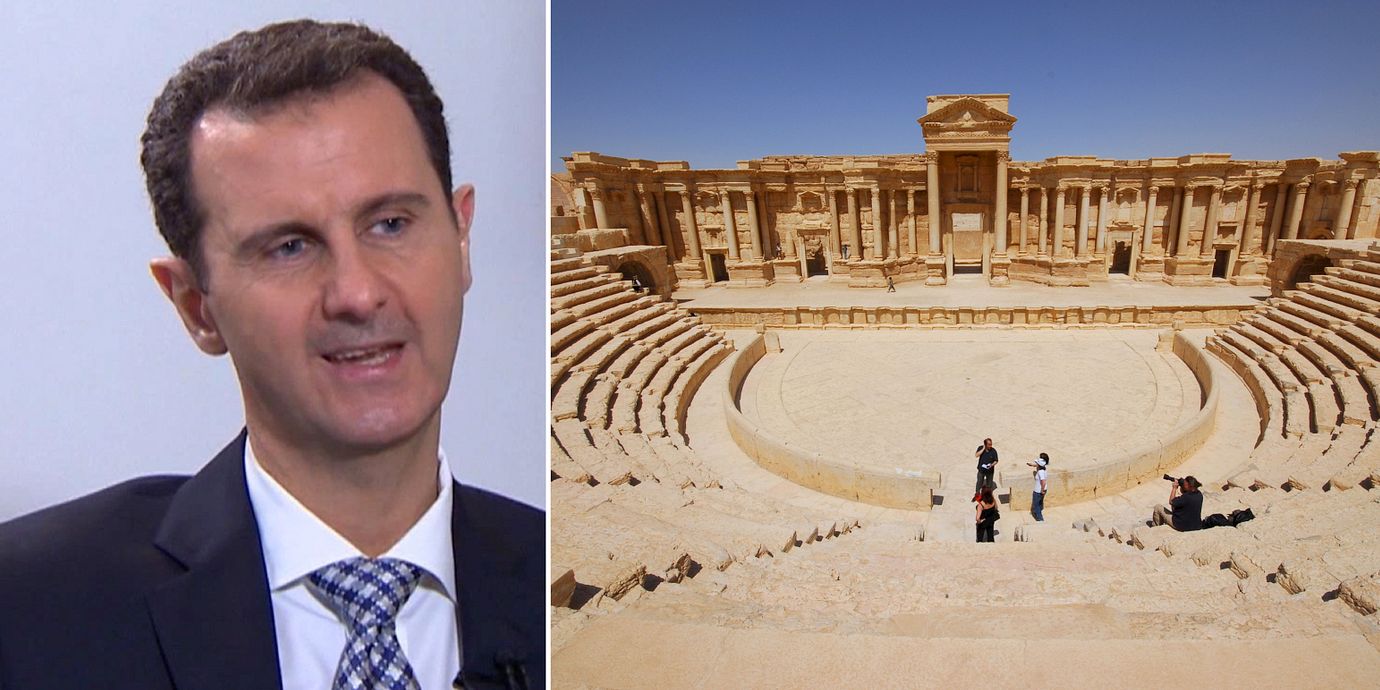
Att Bashar al-Assads regimstyrkor återtagit staden Palmyra från IS är en seger på flera plan för den syriske diktatorn. Dels framstår han som en pålitlig partner i kampen mot terrorn, dels säkrar han sin plats vid förhandlingsbordet i Genève.
”Med Palmyra kan president Assad visa att han förenar sig med hela världen i dess kamp mot det barbariska IS. Det ger Assad och den syriska regimen många propagandapoäng”, skriver SVT:s Eva Elmsäter.
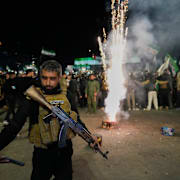
Men enligt BBC:s Lina Sinjab är det många som ifrågasätter varför IS ens kunde ta kontroll över Palmyra till att börja med. Medlemmar ur terrorgruppen ska näst intill ostört ha kunnat köra tiotals mil genom landet till Palmyra i maj 2015, medan regimstyrkorna var upptagna med att bomba civilbefolkningen.
Inbördeskriget i Syrien
Wikipedia (en)
The Syrian Civil War (Arabic: الحرب الأهلية السورية) is an ongoing multi-sided armed conflict with international interventions taking place in Syria. The unrest began in the early spring of 2011 within the context of the Arab Spring protests, with nationwide protests against President Bashar al-Assad's government, whose forces responded with violent crackdowns. The conflict gradually morphed from mass protests to an armed rebellion after months of military sieges. A United Nations report released in December, 2012, stated that the conflict had "become overtly sectarian in nature", between Alawite–dominated government forces, militias and other Shia groups fighting primarily against Sunni-dominated rebel groups; however both opposition and government forces denied that.
Initially, the Syrian government relied mainly on its armed forces, but since 2014 local protection units made up of volunteers known as National Defence Force have come to play a larger role, gradually becoming the primary military force of the Syrian state. From the early stages, the Syrian government received technical, financial, military and political support from Russia, Iran and Iraq. In 2013, Iran-backed Hezbollah entered the war in support of the Syrian Army. Due to foreign involvement, the conflict had been called a proxy war between the regional Sunni and Shia powers, most prominently as a proxy conflict between Saudi Arabia and Iran. In September 2015, Russia, Iraq, Iran and Syria set up a joint operation room (information centre) in Baghdad to coordinate their activity in Syria. On 30 September 2015, Russia started its own air campaign on the side and at the request of the government of Syria. The resultant proxy war between the United States and Russia led some commentators to characterise the situation as a "a proto-world war with nearly a dozen countries embroiled in two overlapping conflicts".
In July 2013, the Syrian government was said to be in control of approximately 30–40% of the country's territory and 60% of the Syrian population; in August 2015, the territory fully controlled by the Syrian Army was reported to have shrunk to 29,797 km2, roughly 16% of the country but still has the majority of the population due to internal migration.
Since September 2015, Russian air strikes have allowed the Syrian government to take the offensive on all fronts, especially against rebel factions in and around Aleppo.
International organizations have accused the Syrian government, ISIL and other opposition forces of severe human rights violations, with multiple massacres occurring. The conflict caused a considerable displacement of population. On 1 February 2016, a formal start of the UN-mediated Geneva Syria peace talks was announced by the UN, with the fighting continuing unabated.
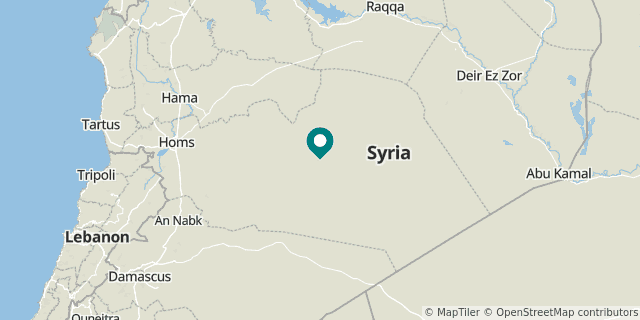
Palmyra, Syrien
Omni är politiskt obundna och oberoende. Vi strävar efter att ge fler perspektiv på nyheterna. Har du frågor eller synpunkter kring vår rapportering? Kontakta redaktionen