Lastbilsdådet används i flyktingdebatten i Ungern
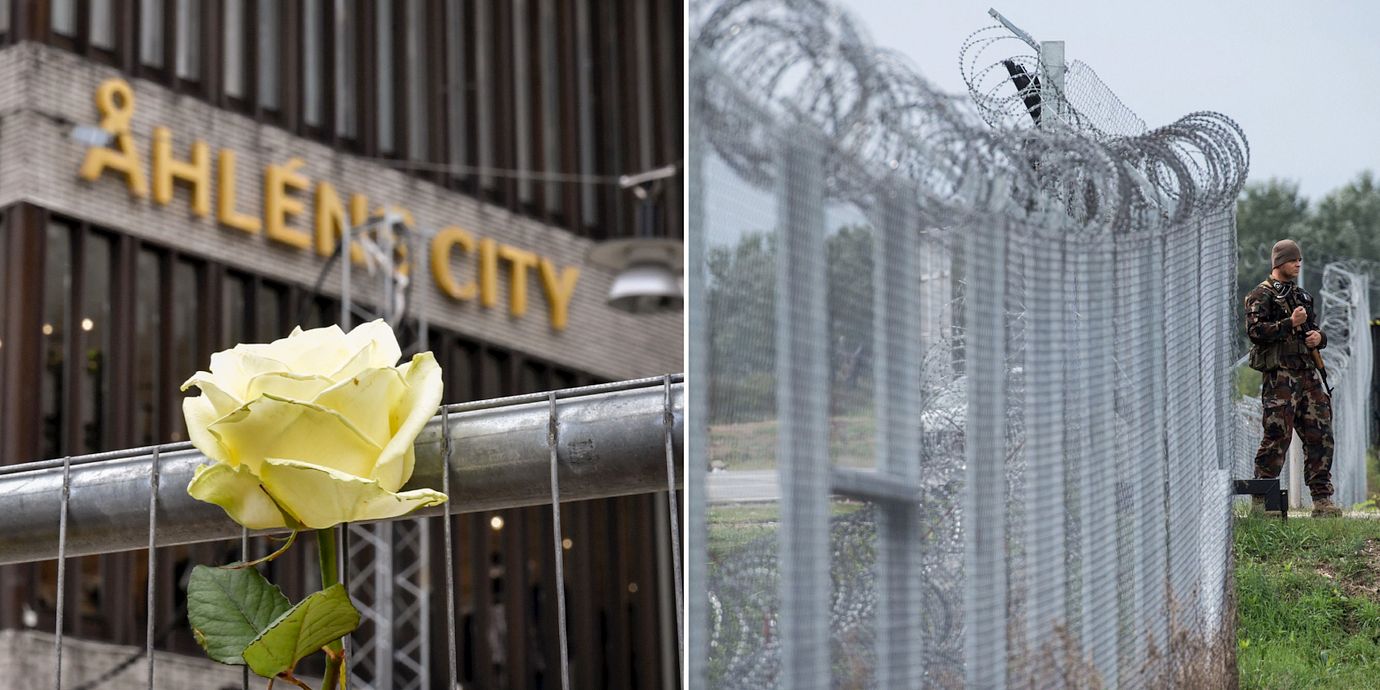
Terrordådet i Stockholm används för politiska syften i Ungern, rapporterar Sveriges Radio. Landets politiker menar att dådet är ett exempel på varför dess strikta flyktingpolitik behövs.
– Terrorattackerna i andra länder de senaste dagarna har bekräftat att striktare regler är nödvändiga, sa Károly Kontrát, statssekreterare vid det ungerska inrikesministeriet, i en intervju.
Han hänvisade till lastbilsdådet i Stockholm och att gärningsmannen fått avslag på sin asylansökan.
Människorättsorganisationer har kritiserat den ungerska regeringen för att den bryter mot internationell rätt genom att till exempel spärra in asylsökande, däribland barn.
FN:s flyktingorgan UNHCR har uppmanat EU-länder att inte skicka tillbaka asylsäkande till Ungern.
bakgrund
Ungern
Wikipedia (en)
Hungary (/ˈhʌŋɡəri/; Hungarian: Magyarország [ˈmɒɟɒrorsaːɡ]) is a unitary parliamentary republic in Central Europe. It covers an area of 93,030 square kilometres (35,920 sq mi), situated in the Carpathian Basin and bordered by Slovakia to the north, Romania to the east, Serbia to the south, Croatia to the southwest, Slovenia to the west, Austria to the northwest, and Ukraine to the northeast. With about 10 million inhabitants, Hungary is a medium-sized member state of the European Union. The official language is Hungarian, which is the most widely spoken non-Indo-European language in Europe. Hungary's capital and largest metropolis is Budapest, a significant economic hub, classified as a global city. Major urban areas include Debrecen, Szeged, Miskolc, Pécs and Győr.
Following centuries of successive habitation by Celts, Romans, Slavs, Gepids and Avars, the foundation of Hungary was laid in the late 9th century by the Hungarian grand prince Árpád in the conquest of the Carpathian Basin. His great-grandson Stephen I ascended to the throne in 1000, converting the country to a Christian kingdom. By the 12th century, Hungary became a middle power within the Western world, reaching a golden age by the 15th century. Following the Battle of Mohács in 1526 and about 150 years of partial Ottoman occupation (1541–1699), Hungary came under Habsburg rule, and later formed the great power Austro–Hungarian Empire together with Austria.
Hungary's current borders were established in 1920 by the Treaty of Trianon after World War I, when the country lost 71% of its territory, 58% of its population, and 32% of ethnic Hungarians. Following the interwar period, Hungary joined the Axis Powers in World War II, suffering significant damage and casualties. Hungary became a satellite state of the Soviet Union, which contributed to the establishment of a four-decade-long communist dictatorship (1947–1989). The country gained widespread international attention regarding the Revolution of 1956 and the seminal opening of its previously-restricted border with Austria in 1989, which accelerated the collapse of the Eastern Bloc. On 23 October 1989, Hungary became again a democratic parliamentary republic.
In the 21st century, Hungary is a middle power and has the world's 57th largest economy by nominal GDP, as well as the 58th largest by PPP, out of 188 countries measured by the IMF. As a substantial actor in several industrial and technological sectors, it is both the world's 36th largest exporter and importer of goods. Hungary is a high-income economy with a very high standard of living. It keeps up a social security and universal health care system, and a tuition-free university education. Hungary performs well in international rankings, it is 20th in Quality of life, 25th in inequality-adjusted human development, 32nd in Social Progress Index and ranks as the 19th safest country in the world.
Hungary joined the European Union in 2004 and part of the Schengen Area since 2007. Hungary is a member of the United Nations, NATO, WTO, World Bank, the AIIB, the Council of Europe and Visegrád Group. Well known for its rich cultural history, Hungary has been contributed significantly to arts, music, literature, sports and science and technology. Hungary is the 11th most popular country as a tourist destination in Europe, attracting 14.3 million international tourists in 2015. It is home to the largest thermal water cave system, the second largest thermal lake in the world, the largest lake in Central Europe, and the largest natural grasslands in Europe.
Omni är politiskt obundna och oberoende. Vi strävar efter att ge fler perspektiv på nyheterna. Har du frågor eller synpunkter kring vår rapportering? Kontakta redaktionen