Minskad smitta i Pakistan förbryllar virusexperter
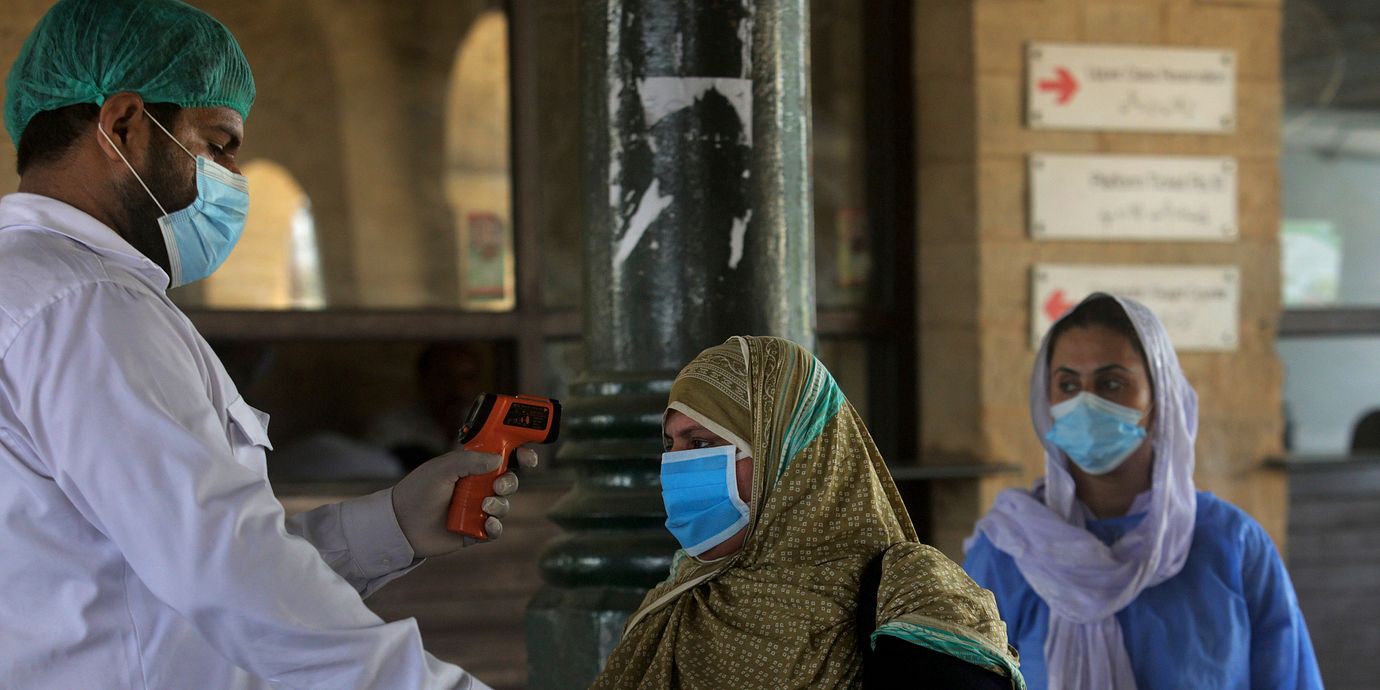
Efter en snabb ökning har antalet coronasmittade i Pakistan minskat kraftigt de senaste veckorna. Utvecklingen förbryllar experterna, skriver AFP.
Pakistan är känt för att misslyckas med att stoppa spridningen av en rad olika infektionssjukdomar så som polio, tuberkulos och hepatit och landets sjukvårdssektor har länge varit underfinansierad. Dessutom lever många i befolkningen i trånga generationsboenden.
– Ingen har kunnat förklara den här minskningen, säger Salman Haseeb, läkare vid ett sjukhus i Lahore, till nyhetsbyrån.
bakgrund
Covid-19 i Pakistan
Wikipedia (en)
The COVID-19 pandemic in Pakistan is part of the ongoing pandemic of coronavirus disease 2019 (COVID-19) caused by severe acute respiratory syndrome coronavirus 2 (SARS-CoV-2). The virus was confirmed to have reached Pakistan on 26 February 2020, when two cases were recorded (a student in Karachi who had just returned from Iran and another person in the Islamabad Capital Territory). On 18 March, cases had been registered in all four provinces, the two autonomous territories, and Islamabad Capital Territory, and by 17 June, each district in Pakistan had recorded at least one confirmed case of COVID-19.
Pakistan currently has the 6th-highest number of confirmed cases in Asia, after India, Russia, Iran, Saudi Arabia, and Bangladesh, the 3rd-highest number of confirmed cases in South Asia after India and Bangladesh, and the 16th highest number of confirmed cases in the world. On 15 June, daily new confirmed case numbers reached their peak, with 6,825 new cases recorded, but since then, new daily cases and the percentage of people testing positive have trended downwards. In late June, the number of active cases in Pakistan stabilized and beginning in July, started showing a significant decrease. On 2 July, recoveries exceeded active cases for the first time as 8,929 recoveries were recorded, meaning that 51% of all confirmed cases in the country to date had recovered. As of 29 August 2020, the recovery rate in Pakistan stands at 94.9%.Despite the relatively high number of confirmed COVID-19 cases, the case fatality rate of COVID-19 in Pakistan stands at about 2.13%. This fatality rate is similar to the fatality rate across Asia, which stands at about 1.99%, but is significantly lower than the global average at approximately 3.4% (as of 28 August 2020). While Pakistan has the world's 16th highest case count, it only has the world's 23rd highest death count.
As of 28 August 2020, there have been about 295,000 confirmed cases, 280,000 recoveries, and 6,300 deaths in the country. Sindh has recorded the most cases at about 129,000, and has also recorded the most deaths due to COVID-19, about 2,400 to date. The country was put under a nation-wide lockdown from April 1 and extended twice until 9 May. Upon its end, the lockdown was eased in phases.The distribution of COVID-19 in Pakistan is heavily concentrated in a few key areas. The city of Karachi (as of 28 August 2020) has recorded about 92,000 confirmed cases, making up more than 30% of all cases of COVID-19 in Pakistan. Meanwhile, Lahore, the country's second-largest city, has recorded (as of 28 August 2020) 49,000 cases of COVID-19, making up about 17% of the country's cases. Islamabad Capital Territory and Peshawar District have also both recorded over 10,000 cases. Karachi, Lahore, Islamabad, and Peshawar account for about 169,000 cases, which make up nearly 60% of the country's total confirmed cases.
Omni är politiskt obundna och oberoende. Vi strävar efter att ge fler perspektiv på nyheterna. Har du frågor eller synpunkter kring vår rapportering? Kontakta redaktionen