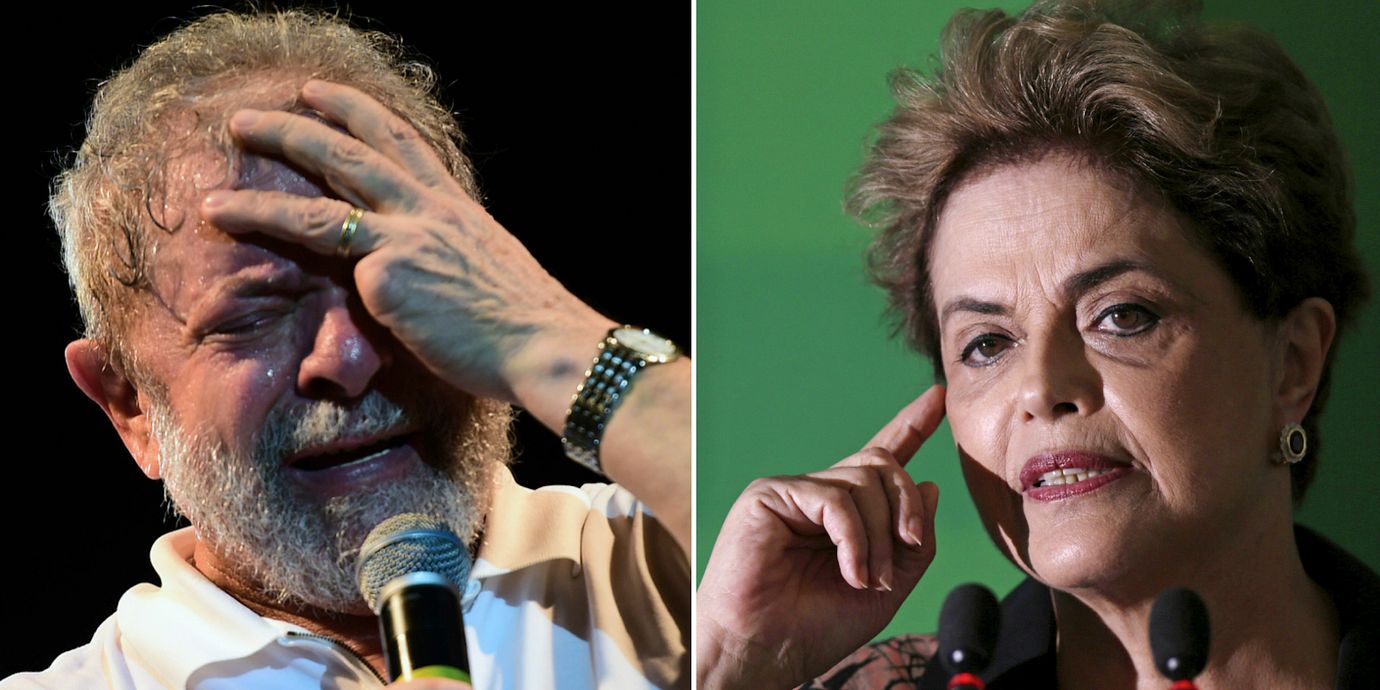
Nytt bakslag för Rousseff – HD-beslut om Lula dröjer
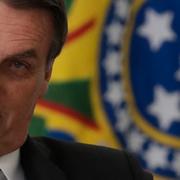
Högsta domstolen i Brasilien skjuter upp domen kring president Dilma Rousseffs utnämnande av expresidenten Luiz Inácio ”Lula” da Silva som stabschef. Rousseff hade hoppats på ett positivt besked på onsdagen, men det är nu oklart när frågan behandlas igen, skriver AFP.
Den höga regeringsposten skulle innebära att Lula får immunitet mot åtal i en vanlig domstol – och ses även som ett sätt för Rousseff att komma undan riksrätt.
bakgrund
Protesterna i Brasilien
Wikipedia (en)
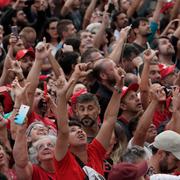
In early 2015, a series of protests began in Brazil against corruption and to denounce the government of President Dilma Rousseff. The protests were triggered by revelations that numerous politicians, mostly from Brazil's Workers' Party, were being investigated for accepting bribes from the state-owned energy company Petrobras from 2003 to 2010, during which time Rousseff was on the company's board of directors. The initial protests occurred on March 15, with protesters generally estimated to number from around one million to nearly 3 million, taking to the streets to protest the scandal, as well as the country's poor economic situation. In response, the government introduced anti-corruption legislation. A second day of major protesting occurred on April 12, with the estimated turnout of protesters, according to Globo News of Grupo Globo, ranging from 696,000 to 1,500,000. On August 16, protests were staged in all of Brazil’s 26 states, in 200 cities.
In March 2016, following allegations of Rousseff's predecessor, Luiz Inácio Lula da Silva, participating in money laundering and a prosecutors order for his arrest, record numbers of Brazilians protested against the Rousseff government on 13 March 2016, with as many as nearly 7 million citizens demonstrating.
bakgrund
Luiz Inácio Lula da Silva
Wikipedia (en)
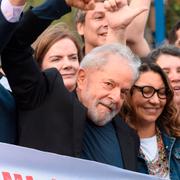
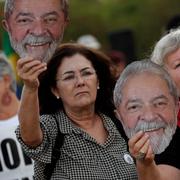
Luiz Inácio Lula da Silva (born 27 October 1945), known simply as Lula, is a Brazilian politician who served as President of Brazil from 1 January 2003 to 1 January 2011. He is a founding member of the Workers' Party (PT – Partido dos Trabalhadores) and ran for president three times unsuccessfully, first in the 1989 election, then again in 1994 and 1998. Lula achieved victory in the 2002 election, and was inaugurated as president on 1 January 2003. In the 2006 election he was elected for a second term as president, which ended on 1 January 2011. Succeeded by his former Chief of Staff, Dilma Rousseff, he left an enduring mark on Brazilian politics in the form of Lulism.
He is often regarded as one of the most popular politicians in the history of Brazil and, at the time of his mandate, one of the most popular in the world. Social programs like Bolsa Família and Fome Zero are hallmarks of his time in office. Lula played a prominent role in recent international relations developments, including the nuclear program of Iran and global warming, and was described as "a man with audacious ambitions to alter the balance of power among nations." He was featured in Time's The 100 Most Influential People in the World for 2010, and has been called "the most successful politician of his time." In October 2011, Lula—who was a smoker for 40 years—was diagnosed with throat cancer and quickly started chemotherapy treatment. Since the cancer was found, he has successfully recovered and has since resumed his roles.
In early 2016, Lula was to become the Chief of Staff under Rousseff's administration; however, a federal judge blocked the appointment, due to ongoing federal investigations.
Omni är politiskt obundna och oberoende. Vi strävar efter att ge fler perspektiv på nyheterna. Har du frågor eller synpunkter kring vår rapportering? Kontakta redaktionen