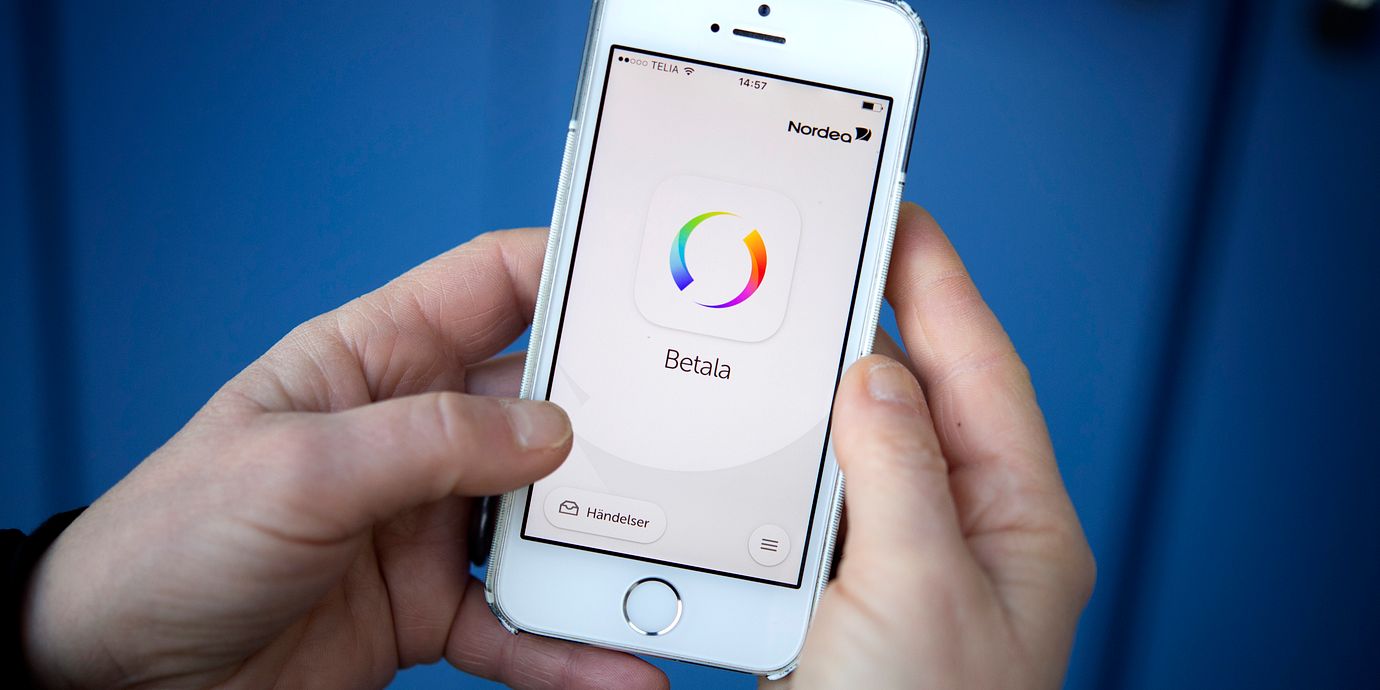
Swishproblemen lösta – går att betala igen
Efter att ha legat nere under hela morgonen kom betalfunktionen i Swish i gång igen vid 12.30-tiden.
– Vi har hittat felet och vi har åtgärdat det, säger Per Ekwall, pressansvarig för Swish.
Problemen uppstod strax före klockan 07.00 på tisdagsmorgonen. Enligt företaget uppstod problemet när man gjorde en ny uppdatering av appen natten till tisdagen.
– Det påverkar alla anslutna banker och gör att du som kund inte kan genomföra betalningar, sa han då.
bakgrund
Swish
Wikipedia (en)
Swish is a mobile payment system in Sweden. The service was launched in 2012 by six large Swedish banks, in cooperation with the Central Bank of Sweden. It had 6.5 million users as of September 2018.
The service works through a smartphone application, through which the user's phone number is connected to their bank account, and which makes it possible to transfer money in real time, a few seconds until confirmation is received by both parts. The user must have a second mobile application called Mobilt BankID Säkerhetsapp, which is an electronic identification issued by several banks in Sweden. This requires that the user has a bank account in a Swedish bank participating in the system, and also a national id number. User who have a Swedish bank account but no suitable phone can register for reception of payments. The phone number can be of another country.
Swish was originally intended for transactions between individuals, but soon it started to be used for flea markets and collections at church services, and by sports clubs and other organisations as payment at small events where a credit card reader would be too expensive. Small companies who wished to avoid credit card charges and simplify online payments soon followed suit. In January 2017 Swish was launched for web based sales which quickly became popular, for example used by the train operator SJ. You can also pay by scanning a QR-code.
Prior to the implementation of Swish, cash was the primary means for many of these types of real-time transactions. As such, Swish is used for transactions that used to be mostly cash-based.Until now (2018), the service is free for private users, although some banks have had plans on introducing a service fee. Companies and registered organisations pay the same yearly fee plus about 2 SEK (depending on bank) per received payment, and are not allowed to charge the customer for their Swish fee. Since the minimum Swish payment may be lower (currently 1 SEK but depends on the bank), an organisation may lose money if many small Swish payments are made to it. In some cases of media attention towards such cases banks have donated their Swish profit to the organisations.
Tidigare
Omni är politiskt obundna och oberoende. Vi strävar efter att ge fler perspektiv på nyheterna. Har du frågor eller synpunkter kring vår rapportering? Kontakta redaktionen