”Älskar överraskningar och ignorerar gamla tabun”
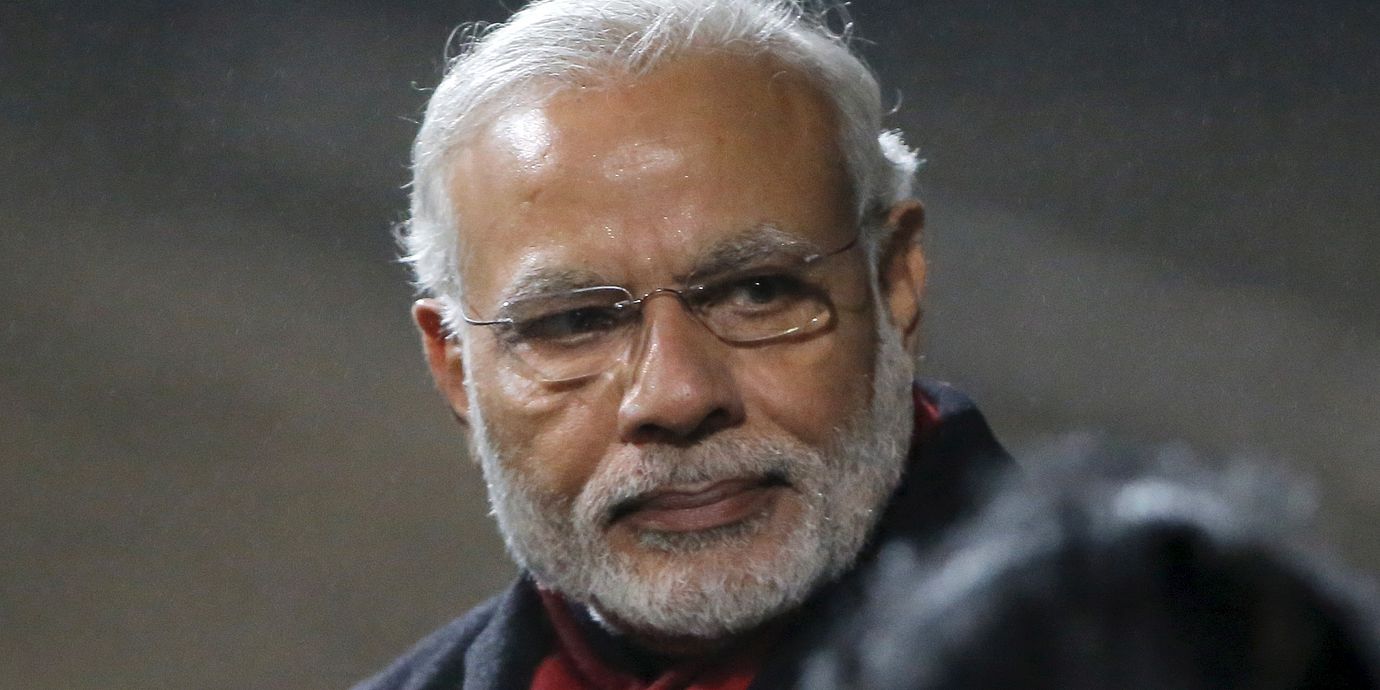
Många har tagits på sängen av att Indiens premiärminister Narendra Modi besökt ärkefienden Pakistan och premiärministern Nawaz Sharif.
Oppositionen anser att det hela är ett spel för gallerierna. Samtidigt får han beröm för sin diplomatiska ådra av bedömare.
– Modi älskar överraskningar. Han är oberäknelig och ignorerar gamla tabun, säger Neelam Deo, direktör för tankesmedjan Gateway House i Bombay, till AFP.
Vid fredagens möte ska de båda ledarna ha druckit te och diskuterat relationen mellan länderna, bland annat det omtvistade området Kashmir.
Det var första gången på över tio år en indisk premiärminister besökte Pakistan.
Kashmir
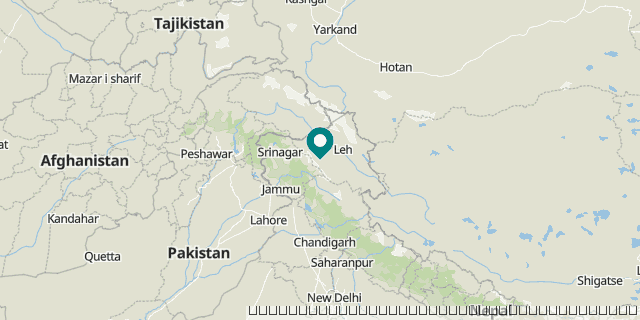
bakgrund
India–Pakistan relations
Wikipedia (en)
Relations between India and Pakistan have been complex due to a number of historical and political events. Relations between the two states have been defined by the violent partition of British India in 1947, the Kashmir conflict and the numerous military conflicts fought between the two nations. Consequently, even though the two South Asian nations share linguistic, cultural, geographic, and economic links, their relationship has been plagued by hostility and suspicion.
After the dissolution of the British Raj in 1947, two new sovereign nations were formed—the Dominion of India and the Dominion of Pakistan. The subsequent partition of the former British India displaced up to 12.5 million people, with estimates of loss of life varying from several hundred thousand to 1 million. India emerged as a secular nation with a Hindu majority population and a large Muslim minority while Pakistan was established as an Islamic republic with an overwhelming Muslim majority population; although its constitution guarantees freedom of religion to people of all faiths.
Soon after their independence, India and Pakistan established diplomatic relations but the violent partition and numerous territorial claims would overshadow their relationship. Since their independence, the two countries have fought three major wars, one undeclared war and have been involved in numerous armed skirmishes and military standoffs. The Kashmir conflict is the main centre-point of all of these conflicts with the exception of the Indo-Pakistan War of 1971 and Bangladesh Liberation War, which resulted in the secession of East Pakistan (now Bangladesh).
There have been numerous attempts to improve the relationship—notably, the Shimla summit, the Agra summit and the Lahore summit. Since the early 1980s, relations between the two nations soured particularly after the Siachen conflict, the intensification of Kashmir insurgency in 1989, Indian and Pakistani nuclear tests in 1998 and the 1999 Kargil war. Certain confidence-building measures — such as the 2003 ceasefire agreement and the Delhi–Lahore Bus service – were successful in deescalating tensions. However, these efforts have been impeded by periodic terrorist attacks. The 2001 Indian Parliament attack almost brought the two nations to the brink of a nuclear war. The 2007 Samjhauta Express bombings, which killed 68 civilians (most of whom were Pakistani), was also a crucial point in relations. Additionally, the 2008 Mumbai attacks carried out by Pakistani militants resulted in a severe blow to the ongoing India-Pakistan peace talks.
Relations between the countries remained frigid into the early 2010s, following repeated acts of cross-border terrorism. According to a 2014 BBC World Service Poll, 17% of Indians view Pakistan's influence positively, with 49% expressing a negative view, while 21% of Pakistanis view India's influence positively, with 58% expressing a negative view. Since the election of new governments in both India and Pakistan, however, significant steps are being taken to improve relations, in particular developing a consensus on the agreement of Non-Discriminatory Market Access on Reciprocal Basis (NDMARB) status for each other, which will liberalize trade. From late 2015, a gradual thaw in relations has resumed, following meetings between the foreign secretaries and the national security advisers of both nations, at which both sides agreed to thoroughly discuss hurdles remaining in the relationship. In November 2015, the new Indian Prime Minister, Narendra Modi and Pakistani Prime Minister Nawaz Sharif agreed to the resumption of bilateral talks; the following month, Prime Minister Modi made a brief, unscheduled visit to Pakistan while en route to India, becoming the first Indian Prime Minister to visit Pakistan since 2004.
Omni är politiskt obundna och oberoende. Vi strävar efter att ge fler perspektiv på nyheterna. Har du frågor eller synpunkter kring vår rapportering? Kontakta redaktionen