Bosättare tvingar beduiner att fly: ”Jag är rädd att dö”
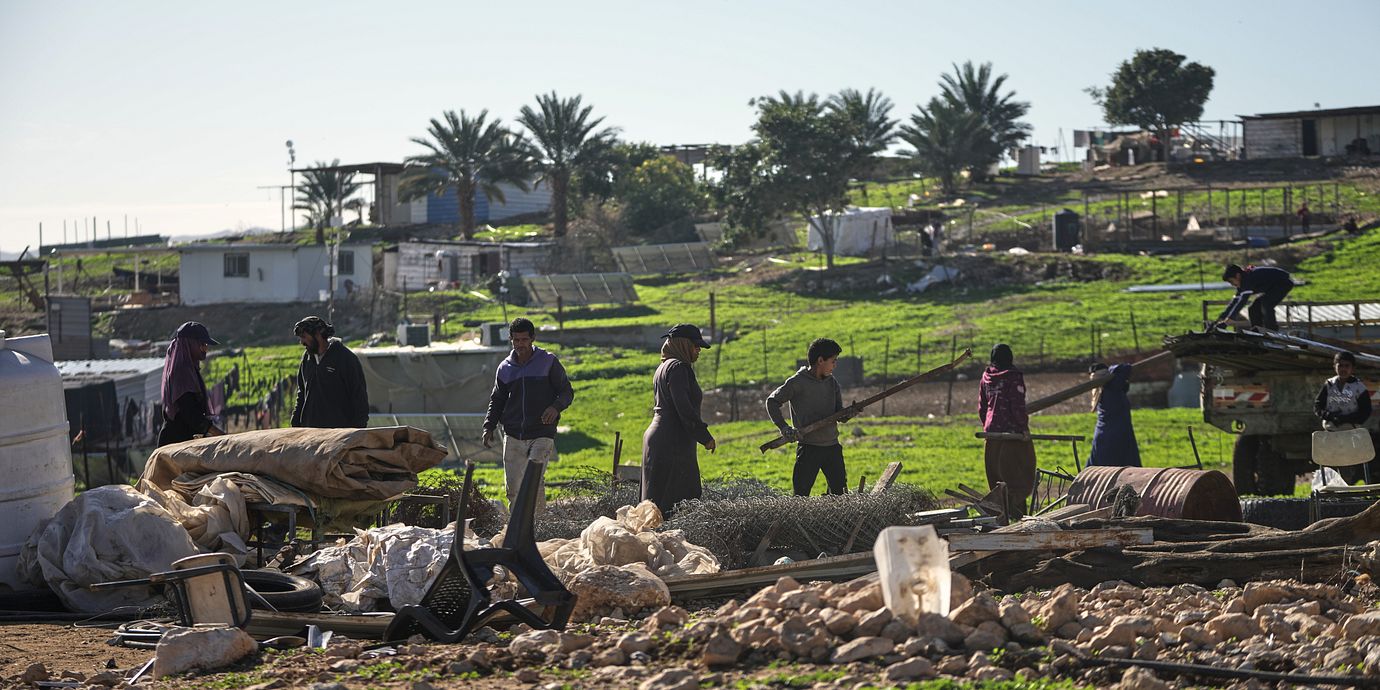
Beduiner på Västbanken vittnar om att attacker från israeliska bosättare tvingar dem att lämna sina hem, skriver Haaretz.
I veckan har minst 20 av 120 familjer i bosättningen Ras Ein al-Auja i jordandalen övergett sina bostäder.
– Jag är rädd att djuren ska stjälas eller huset ska stickas i brand. Jag är rädd för att dö, för våra barn, säger Salamah Ka'abana.
Den israeliska militären hävdar att det finns motstridiga uppgifter om vem som äger marken i området kring Ras Ein al-Auja. Enligt internationella domstolen i Haag är Israels närvaro på Västbanken en olaglig ockupation.
bakgrund
Israels ockupation av Västbanken
Wikipedia (en)
The West Bank, including East Jerusalem, has been under military occupation by Israel since 7 June 1967, when Israeli forces captured the territory, then ruled by Jordan, during the Six-Day War. The West Bank is part of the state of Palestine, and its status as a militarily occupied territory has been affirmed by the International Court of Justice (ICJ) and, with the exception of East Jerusalem, by the Israeli Supreme Court. The West Bank, excepting East Jerusalem, is administered by the Israeli Civil Administration, a branch of the Israeli Ministry of Defense. Considered to be a classic example of an "intractable conflict", Israel's occupation is now the longest in modern history. Though its occupation is illegal, Israel has cited several reasons for retaining the West Bank within its ambit: historic rights stemming from the Balfour Declaration; security grounds, both internal and external; and the area's symbolic value for Jews.
Israel has controversially, and in contravention of international law, established numerous Jewish settlements throughout the West Bank. The United Nations Security Council has repeatedly affirmed that settlements in that territory are a "flagrant violation of international law", most recently in 2016 with United Nations Security Council Resolution 2334. The ICJ has also found that the establishment of Israeli settlements is illegal under international law. The creation and ongoing expansion of the settlements have led to Israel's policies being criticized as an example of settler colonialism.
Israel has been accused of major violations of international human rights law, including collective punishment, in its administration of the occupied Palestinian territories. Israeli settlers and civilians living or traveling through the West Bank are subject to Israeli law, and are represented in the Knesset; in contrast, Palestinian civilians, mostly confined to scattered enclaves, are subject to martial law and are not permitted to vote in Israel's national elections. This two-tiered system has caused Israel to be accused of committing apartheid, a charge that Israel rejects entirely. Israel's vast military superiority, with a modern army and air force, compared to the Palestinian use of guerrilla tactics, has led to accusations of war crimes on both sides, with Israel being accused of disproportionality and the Palestinians accused of indiscriminate attacks.
The occupation also has numerous critics within Israel itself, with some Israeli conscripts refusing to serve due to their objections to the occupation. The legal status of the occupation itself, and not just the actions taken as a part of it, have been increasingly scrutinized by the international community and by scholars in the field of international law, with most finding that regardless of whether the occupation had been legal when it began, it has become illegal over time.
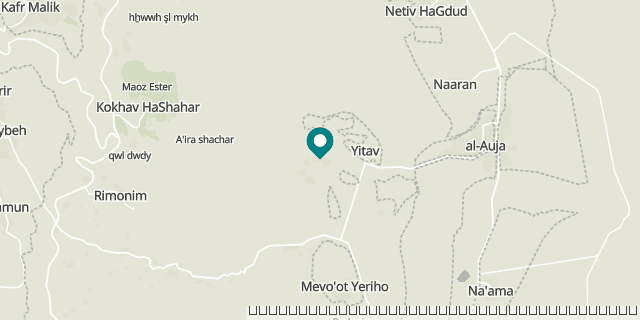
Ras Ein al-Auja, Västbanken
Omni är politiskt obundna och oberoende. Vi strävar efter att ge fler perspektiv på nyheterna. Har du frågor eller synpunkter kring vår rapportering? Kontakta redaktionen