”Det var en gåva till alla som förringar Tibets sak”
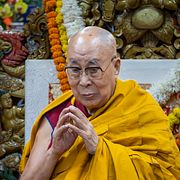
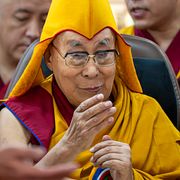
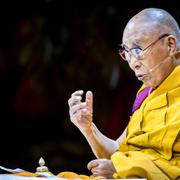
Alla som förespråkar tibetansk självständighet från Kina har drabbats av ett bakslag i och med kontroversen kring Dalai lama. Det säger Tibetaktivisten John Jones till BBC.
– Det finns en frustration över att Tibet inte får någon uppmärksamhet i medierna men nu är i blickfånget av den här anledningen, säger han.
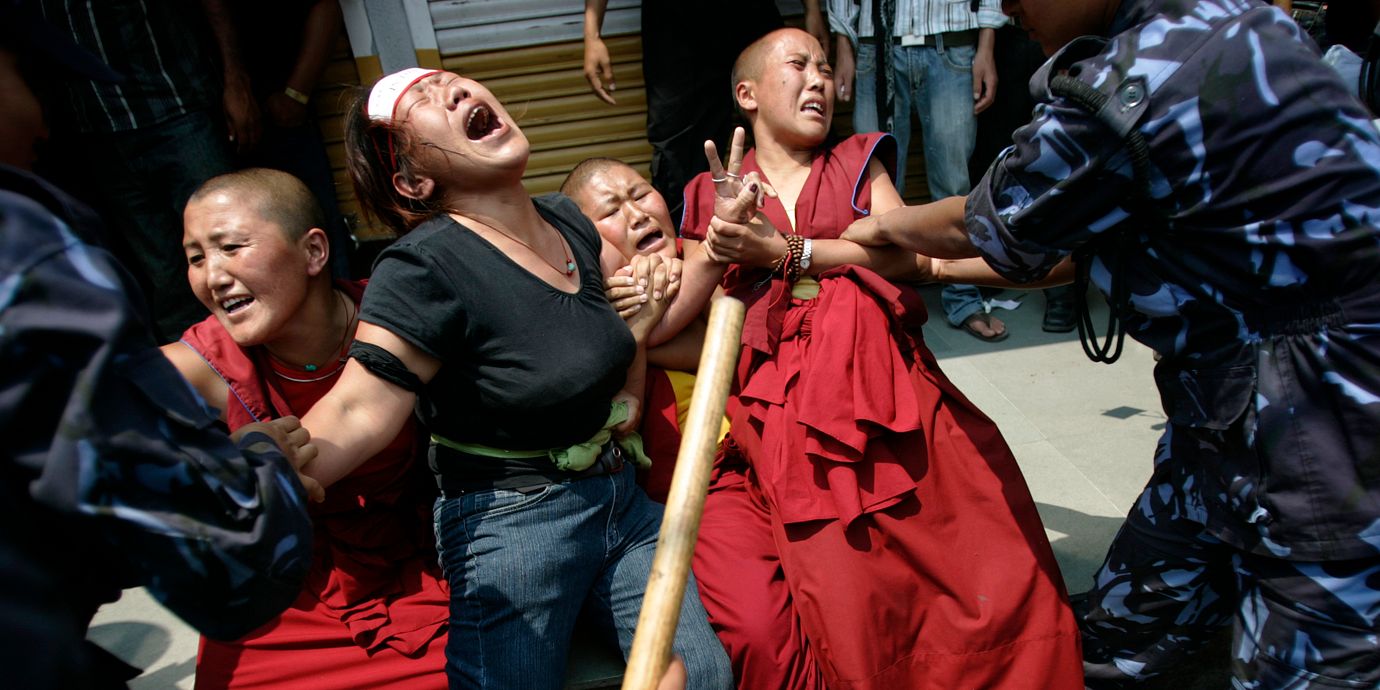
Aktivister har länge slagit larm om att det pågår brott mot mänskliga rättigheter i regionen. Bland annat uppger FN att Kina tvingat en miljon tibetanska barn att ”assimileras” genom att placera dem i särskilda skolor.
– Det här [uppmärksamheten kring Dalai lama] har varit en gåva för alla som vill förringa de problem som finns i Tibet, säger Jones.
bakgrund
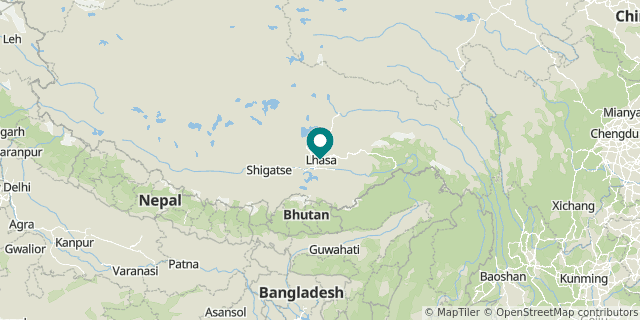
Tibet
Wikipedia (en)
Tibet ( (listen); Tibetan: བོད་, Lhasa dialect: [pʰøː˨˧˩] Böd; Chinese: 西藏; pinyin: Xīzàng) is a region in Asia, covering much of the Tibetan Plateau and spanning about 2,500,000 km2 (970,000 sq mi). It is the homeland of the Tibetan people. Also resident on the plateau are some other ethnic groups such as the Monpa, Tamang, Qiang, Sherpa and Lhoba peoples and, since the 20th century, considerable numbers of Han Chinese and Hui settlers. Since the 1951 annexation of Tibet by the People's Republic of China, the entire plateau has been under the administration of the People's Republic of China. Tibet is divided administratively into the Tibet Autonomous Region, and parts of the Qinghai and Sichuan provinces. Tibet is also constitutionally claimed by the Republic of China (Taiwan) as the Tibet Area since 1912.
Tibet is the highest region on Earth, with an average elevation of 4,380 m (14,000 ft). Located in the Himalayas, the highest elevation in Tibet is Mount Everest, Earth's highest mountain, rising 8,848.86 m (29,032 ft) above sea level.The Tibetan Empire emerged in the 7th century. At its height in the 9th century, the Tibetan Empire extended far beyond the Tibetan Plateau, from the Tarim Basin and Pamirs in the west, to Yunnan and Bengal in the southeast. It then divided into a variety of territories. The bulk of western and central Tibet (Ü-Tsang) was often at least nominally unified under a series of Tibetan governments in Lhasa, Shigatse, or nearby locations. The eastern regions of Kham and Amdo often maintained a more decentralized indigenous political structure, being divided among a number of small principalities and tribal groups, while also often falling under Chinese rule; most of this area was eventually annexed into the Chinese provinces of Sichuan and Qinghai. The current borders of Tibet were generally established in the 18th century.Following the Xinhai Revolution against the Qing dynasty in 1912, Qing soldiers were disarmed and escorted out of the Tibet Area (Ü-Tsang). The region subsequently declared its independence in 1913, although this was not recognised by the subsequent Chinese Republican government. Later, Lhasa took control of the western part of Xikang. The region maintained its autonomy until 1951 when, following the Battle of Chamdo, Tibet was occupied and annexed by the People's Republic of China. The Tibetan government was abolished after the failure of the 1959 Tibetan uprising. Today, China governs western and central Tibet as the Tibet Autonomous Region while the eastern areas are now mostly autonomous prefectures within Sichuan, Qinghai and other neighbouring provinces. The Tibetan independence movement is principally led by the Tibetan diaspora.
Human rights groups have accused the Chinese government of abuses of human rights in Tibet, including torture.With the growth of tourism in recent years, the service sector has become the largest sector in Tibet, accounting for 50.1% of the local GDP in 2020. The dominant religion in Tibet is Tibetan Buddhism; other religions include Bön, an indigenous religion similar to Tibetan Buddhism, Islam, and Christianity. Tibetan Buddhism is a primary influence on the art, music, and festivals of the region. Tibetan architecture reflects Chinese and Indian influences. Staple foods in Tibet are roasted barley, yak meat, and butter tea.
Tibet
Omni är politiskt obundna och oberoende. Vi strävar efter att ge fler perspektiv på nyheterna. Har du frågor eller synpunkter kring vår rapportering? Kontakta redaktionen