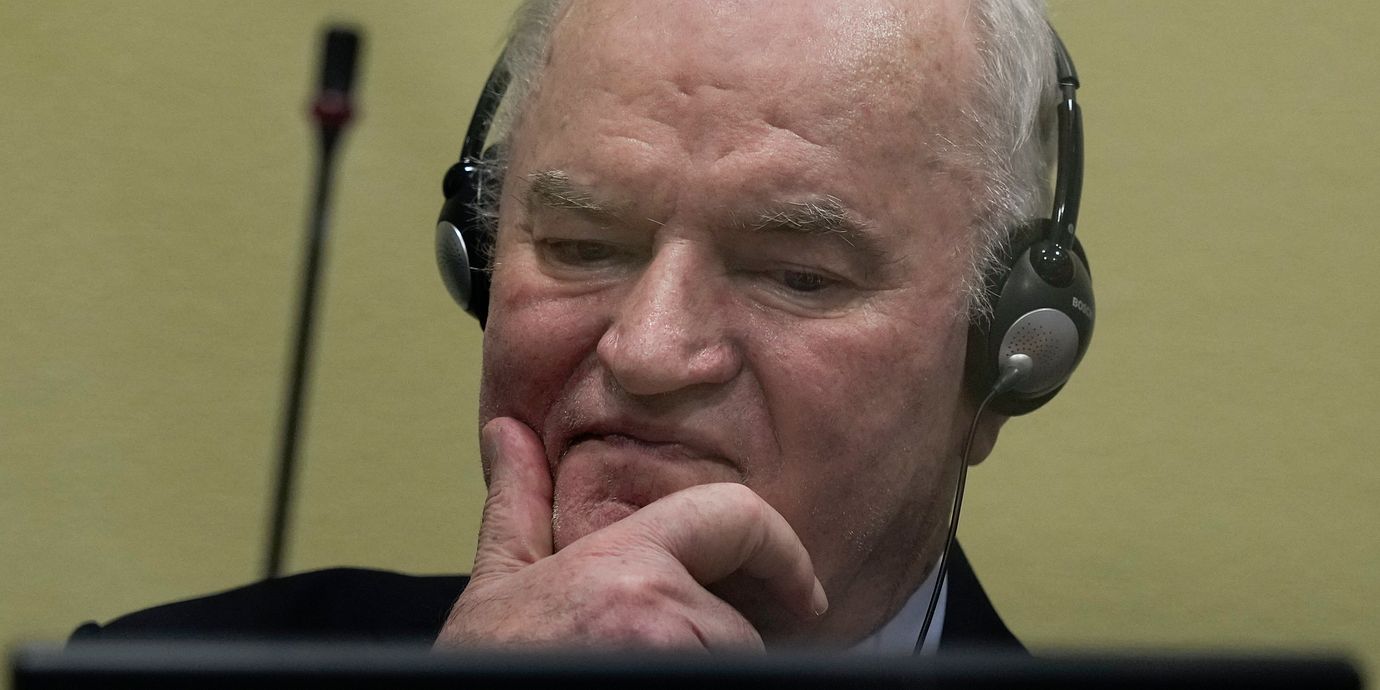
Ratko Mladic. (Peter Dejong / AP)

EU-vrede mot Serbiens hyllning av Ratko Mladic

EU reagerar starkt mot Serbiens offentliga hyllningar av den bosnienserbiske krigsförbrytaren Ratko Mladic, som dog förra veckan, rapporterar Politico.

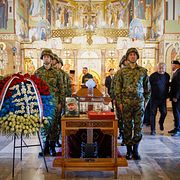
Mladics kista sveptes in i en serbisk flagga och flögs hem i ett regeringsplan från Haag, där han avtjänade sitt straff för krigsbrott vid sin död. På måndag hålls en begravningsceremoni i Arméns hus i Belgrad, där tusentals väntas delta.

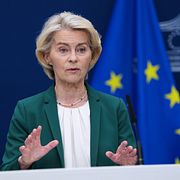
EU:s utvidgningskommissionär Marta Kos har ställt in ett Serbienbesök i protest.

– Det finns inget utrymme för att glorifiera krigsförbrytare. Det går starkt, starkt emot europeiska värderingar och har ingen plats i vare sig EU:s medlemsländer eller kandidatländer, säger hon.

Mladic var general i den bosnienserbiska armén under Bosnienkriget 1992 till 1995. 2017 dömdes han till livstids fängelse för krigsbrott mot bosniaker.
bakgrund
 
Ratko Mladic
Wikipedia (en)
Ratko Mladić (Serbian Cyrillic: Ратко Младић, pronounced [râtko mlǎːdit͡ɕ]; 12 March 1942 – 27 August 2026) was a Bosnian Serb military officer who led the Army of Republika Srpska (VRS) during the Yugoslav Wars. Referred to as the "Butcher of Bosnia", he was found guilty in 2017 of committing war crimes, crimes against humanity, and genocide by the International Criminal Tribunal for the former Yugoslavia (ICTY). He served a life sentence for these crimes in The Hague until his death in 2026. A long-time member of the League of Communists of Yugoslavia, Mladić began his career in the Yugoslav People's Army (JNA) in 1965. He came to prominence during the Yugoslav Wars, initially as a high-ranking officer of the JNA and subsequently as the chief of staff of the VRS in the Bosnian War of 1992–1995. In July 1996, the Trial Chamber of the ICTY, proceeding in the absence of Mladić under the ICTY's Rule 61, confirmed all counts of the original indictments, finding there were reasonable grounds to believe he had committed the alleged crimes, and issued an international arrest warrant. The Serbian and United States governments offered €5 million for information leading to Mladić's capture and arrest, but he remained at large for nearly sixteen years, initially sheltered by Serbian and Bosnian Serb security forces and later by family. In 2011, Mladić was arrested in Lazarevo, Serbia, and extradited to The Hague. His capture was considered to be one of the pre-conditions for Serbia being awarded candidate status for European Union membership. His trial formally commenced in 2012 and lasted until 2017, when he was sentenced to life in prison by the ICTY after being found guilty of ten charges: one of genocide, five of crimes against humanity and four of violations of the laws or customs of war. He was cleared of one further count of genocide. As the top military officer with command responsibility, Mladić was deemed by the ICTY to be responsible for both the siege of Sarajevo and the Srebrenica massacre. Mladić was denied numerous requests for compassionate release due to terminal illness while incarcerated.
Omni är politiskt obundna och oberoende. Vi strävar efter att ge fler perspektiv på nyheterna. Har du frågor eller synpunkter kring vår rapportering? Kontakta redaktionen