Expert om Trumps fartyg: ”Löjligt och desperat”
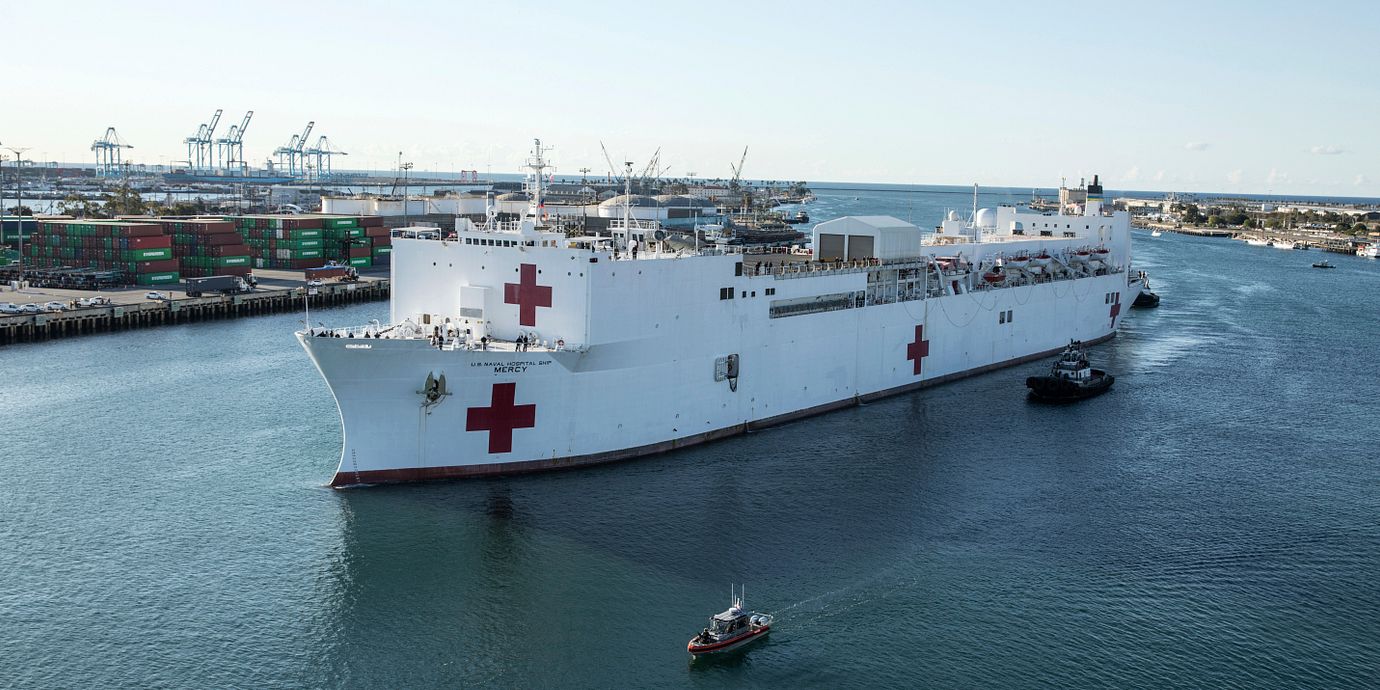
Donald Trumps utspel om att skicka ett sjukhusfartyg som vanligtvis används i krigszoner till Grönland är löjligt, och visar hur begränsade hans kunskaper om Europa är. Det säger USA-experten Jan Hallenberg till DN.
Fartyget, USNS Mercy, ligger fortfarande förtöjt i Alabama. Enligt Hallenberg lär det inte röra sig någonstans.
– Trump letar desperat efter försök som ska få grönländarna att bli positiva till att bli en del av USA. Men jag kan inte se att det här kommer att bidra till det precis, säger han.
DR:s Lasse Lindegaard har gett sig ut på Nuuks gator för att höra vad grönlänningarna säger om det hela.
– Folk skrattar lite och kallar det fånigt, och några frågar: ”Vad ska vi med det till?” säger han.
bakgrund
USNS Mercy
Wikipedia (en)
USNS Mercy (T-AH-19) is the lead ship of her class of hospital ships in non-commissioned service with the United States Navy. Her sister ship is USNS Comfort (T-AH-20). She is the third US Navy ship to be named after the virtue mercy. In accordance with the Geneva Conventions, Mercy and her crew do not carry any offensive weapons, though defensive weapons are available.
United States Naval Ship (USNS) Mercy was built as a San Clemente-class oil tanker, SS Worth, by National Steel and Shipbuilding Company, San Diego, California, in 1976. Starting in July 1984, she was renamed and converted to a hospital ship by the same company. Launched on 20 July 1985, Mercy was placed in service on 8 November 1986. She has a raised forecastle, a transom stern, a bulbous bow, an extended deckhouse with a forward bridge, and a helicopter-landing deck with a flight-control facility.
The conversions from oil tankers cost $208 million per ship and took 35 months to complete. The Mercy-class hospital ships are the third largest ships in the US Navy Fleet by length, surpassed only by the nuclear-powered Nimitz- and Gerald R. Ford-class supercarriers.
Her primary mission is to provide medical and surgical services to support Marine Corps Air/Ground Task Forces deployed ashore, Army and Air Force units deployed ashore, and naval amphibious task forces and battle forces afloat. Secondarily, she provides mobile surgical hospital service for use by appropriate US Government agencies in disaster and humanitarian relief, and limited humanitarian care incident to these missions and to peacetime military operations.
Mercy, homeported in San Diego, is normally in reduced operating status. Her crew remains a part of the staff of Naval Medical Center San Diego until ordered to sea, at which time they have five days to fully activate the ship to a NATO Role III Medical Treatment Facility, with the only higher level being filled by onshore fixed facilities outside the theater of operations. Like most USNS ships, mariners from the US Navy's Military Sealift Command are responsible for navigation, propulsion, and most deck duties on board. Mercy is as of 2012 part of MSC's Service Support Program. The "Medical Treatment Facility", or hospital on the ship, is commanded by a captain of the Navy Medical Corps or Navy Nurse Corps.
Omni är politiskt obundna och oberoende. Vi strävar efter att ge fler perspektiv på nyheterna. Har du frågor eller synpunkter kring vår rapportering? Kontakta redaktionen