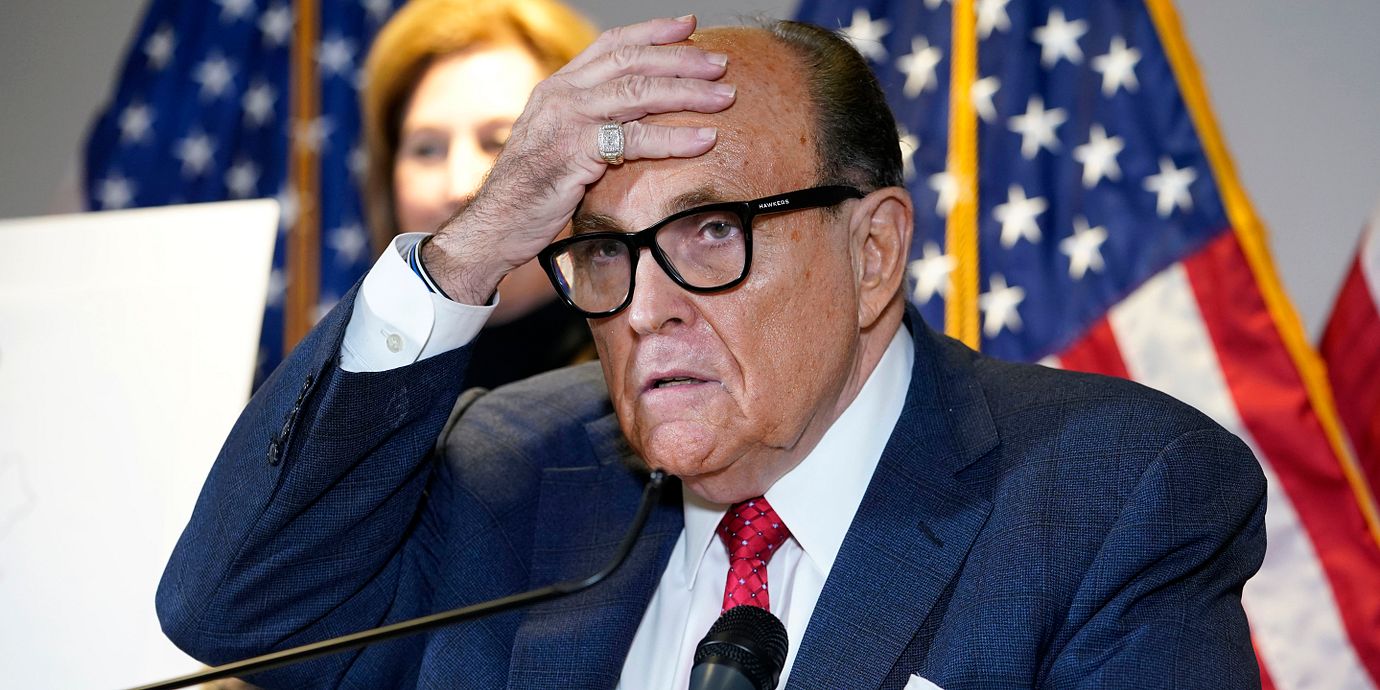
FBI hemma hos Giuliani – genomförde husrannsakan
FBI genomförde en husrannsakan i Rudolph Giulianis lägenhet på Upper East Side på Manhattan under onsdagen, skriver New York Times med hänvisning till källor. Man ska bland annat ha konfiskerat stadens tidigare borgmästares digitala enheter.
Utredningen handlar om Giulianis förehavanden i Ukraina 2019 och rör frågan om han i bedrev olaglig lobbying mot Trumpkampanjen 2019 å tjänstemän och oligarkers vägnar.
NYT skriver att utfärdandet av husrannsakan inte ska tolkas som en formell anklagelse utan snarare som att utredningen inträtt i en mer aggressiv fas.
bakgrund
Lobbying i USA
Wikipedia (en)
Lobbying in the United States describes paid activity in which special interest groups hire well-connected professional advocates, often lawyers, to argue for specific legislation in decision-making bodies such as the United States Congress. It is a highly controversial phenomenon, often seen in a negative light by journalists and the American public, with some critics describing it as a legal form of bribery or influence peddling or extortion. While lobbying is subject to extensive and often complex rules which, if not followed, can lead to penalties including jail, the activity of lobbying has been interpreted by court rulings as constitutionally protected free speech and a way to petition the government for the redress of grievances, two of the freedoms protected by the First Amendment of the Constitution. Since the 1970s, lobbying activity has grown immensely in the United States in terms of the numbers of lobbyists and the size of lobbying budgets, and has become the focus of much criticism of American governance.
Since lobby rules require extensive disclosure, there is a large amount of information in the public sphere about which entities lobby, how, at whom, and for how much. The current pattern suggests much lobbying is done primarily by corporations, although a wide variety of coalitions representing diverse groups also occurs. Lobbying takes place at every level of government, including federal, state, county, municipal, and local governments. In Washington, D.C., lobbying usually targets members of Congress, although there have been efforts to influence executive agency officials as well as Supreme Court appointments. Lobbying can have an important influence on the political system; for example, a study in 2014 suggested that special interest lobbying enhanced the power of elite groups and was a factor shifting the nation's political structure toward an oligarchy in which average citizens have "little or no independent influence".The number of lobbyists in Washington is estimated to be over twelve thousand, but most lobbying (in terms of expenditures), is handled by fewer than 300 firms with low turnover. A report in The Nation in 2014 suggested that while the number of registered lobbyists in 2013 (12,281) decreased compared to 2002, lobbying activity was increasing and "going underground" as lobbyists use "increasingly sophisticated strategies" to obscure their activity. Analyst James A. Thurber estimated that the actual number of working lobbyists was close to 100,000 and that the industry brings in $9 billion annually. Wall Street spent a record $2 billion trying to influence the 2016 United States presidential election.Lobbying has been the subject of academic inquiry in various fields, including law, public policy, economics and even marketing strategy.
Omni är politiskt obundna och oberoende. Vi strävar efter att ge fler perspektiv på nyheterna. Har du frågor eller synpunkter kring vår rapportering? Kontakta redaktionen