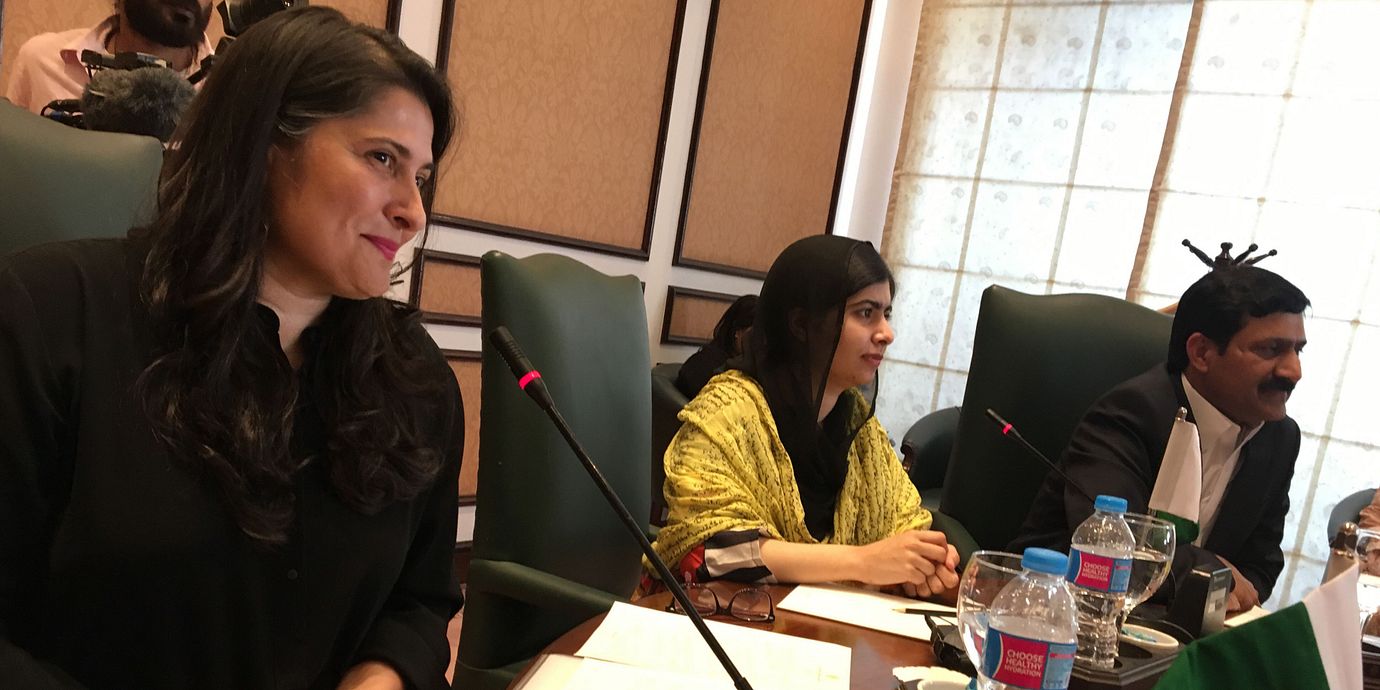
Filmskaparen vill förändra samhället – med ilska
Sharmeen Obaid-Chinoy är Pakistans kanske mest framgångsrika dokumentärfilmare. Hon har belönats med två Oscars och tre Emmys för sina filmer, som behandlar en rad olika ämnen men ständigt återkommer till en av hennes hjärtefrågor: Situationen för kvinnor i hemlandet.
I en intervju i The New Yorkers aprilnummer berättar hon om sin relation till ilska, en känsla starkt förknippad med hennes eget skapande och något hon hoppas att människor känner när de ser hennes filmer:
– Ilska är nödvändigt för att människor ska göra mer än att ogilla vad de ser. Tillräckligt många som ser mina filmer måste bli berörda, arga, och göra något åt det, säger hon.
Läs hela intervjun med Sharmeen Obaid-Chinoy via länken.
bakgrund
Sharmeen Obaid-Chinoy
Wikipedia (en)
Sharmeen Obaid-Chinoy (Urdu: شرمین عبید چنائے; born 12 November 1978) is a Pakistani journalist, filmmaker and activist. She is known for her work in films that highlight the inequality with women. She is the recipient of two Academy Awards, six Emmy Awards and a Lux Style Award. In 2012, the Government of Pakistan honoured her with the Hilal-i-Imtiaz, the second highest civilian honour of the country, and Time magazine named her one of the 100 most influential people in the world.
Sharmeen Obaid Chinoy was born in Karachi in 1978. She did her early schooling at the Convent of Jesus and Mary, and subsequently went on to study at Karachi Grammar School. Later she studied mass communications at Stanford University in the US, where she received her bachelor's degree in economics and government from Smith College in 2002. She returned to Pakistan and launched her career as a filmmaker with her first film Terror's Children for The New York Times. In 2003 and 2004 she made two award-winning films while a graduate student at Stanford University. Her most notable films includes, the animated adventure 3 Bahadur (2015), the musical journey Song of Lahore (2015) and the two Academy Award-winning films, the documentary Saving Face (2012) and the biographical A Girl in the River: The Price of Forgiveness (2016). Her visual contributions have earned her numerous awards, including two Academy Awards in the Best Short Subject in 2012 and 2016 and two Emmy Awards in the same category in 2010 and 2011.
Obaid-Chinoy has also won six Emmy Awards, including two of which are in the International Emmy Award for Current Affairs Documentary category for the films, the terrorist drama Pakistan's Taliban Generation and the documentary Saving Face (2012) Throughout her career, she has made many records, her Academy Award win for Saving Face made her the first Pakistani to win an Academy Award, and she is one of only eleven female directors who have ever won an Oscar for a non-fiction film. She is also the first non-American to win the Livingston Award for Young Journalists. The 2015 animated adventure 3 Bahadur made her the first Pakistani to make a computer-animated feature-length film. In 2017, Obaid-Chinoy became the first artist to co-chair the World Economic Forum.
Omni är politiskt obundna och oberoende. Vi strävar efter att ge fler perspektiv på nyheterna. Har du frågor eller synpunkter kring vår rapportering? Kontakta redaktionen