FN:s säkerhetsråd manar till lugn på Västbanken
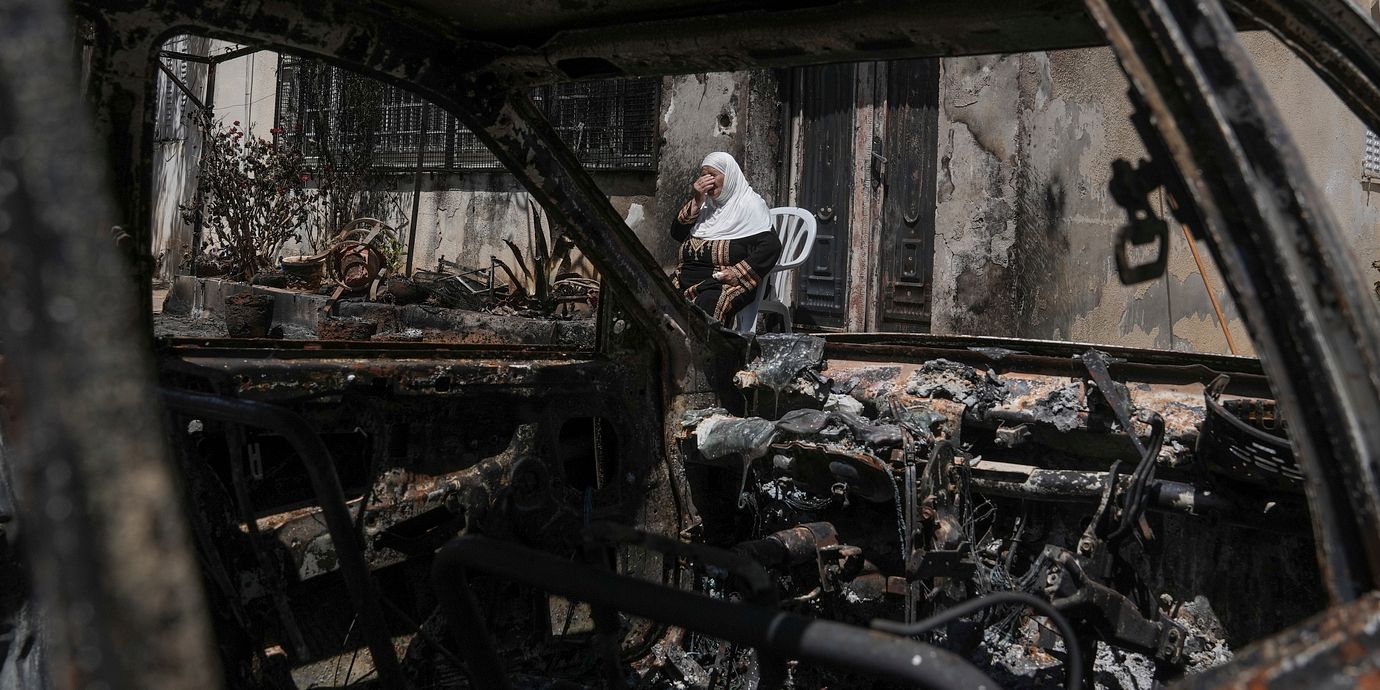
Efter den senaste tidens eskalerande våld på Västbanken uppmanar nu FN:s säkerhetsråd Israel och Palestina att undvika handlingar som eldar på konflikten ytterligare. Det skriver TT.
Uttalandet kom efter att FN:s sändebud för Mellanöstern, Tor Wennesland, varnat säkerhetsrådet för att den ”alarmerande upptrappning av våldet” riskerar att förvärras ytterligare.
Både USA och Ryssland står bakom uttalandet, något som enligt TT ses som ett tecken på att våldsspiralen på Västbanken skapat ”stor oro internationellt”.
bakgrund
Israel–Palestina-konflikten
Wikipedia (en)
The Israeli–Palestinian conflict is one of the world's most enduring conflicts, beginning in the mid-20th century. Various attempts have been made to resolve the conflict as part of the Israeli–Palestinian peace process, alongside other efforts to resolve the broader Arab–Israeli conflict. Public declarations of claims to a Jewish homeland in Palestine, including the First Zionist Congress of 1897 and the Balfour Declaration of 1917, created early tensions in the region. Following World War I, the Mandate for Palestine included a binding obligation for the "establishment in Palestine of a national home for the Jewish people". Tensions grew into open sectarian conflict between Jews and Arabs. The 1947 United Nations Partition Plan for Palestine was never implemented and provoked the 1947–1949 Palestine War. The current Israeli-Palestinian status quo began following Israeli military occupation of the Palestinian territories in the 1967 Six-Day War.
Progress was made towards a two-state solution with the Oslo Accords of 1993–1995. Final status issues include the status of Jerusalem, Israeli settlements, borders, security and water rights as well as Palestinian freedom of movement and the Palestinian right of return. The violence of the conflict in the region—rich in sites of historic, cultural, and religious interest worldwide—has been the subject of numerous international conferences dealing with historic rights, security issues, and human rights; and has been a factor hampering tourism in, and general access to, areas that are hotly contested. The majority of peace efforts have been centred around the two-state solution, which involves the establishment of an independent Palestinian state alongside Israel. However, public support for a two-state solution, which formerly enjoyed support from both Israeli Jews and Palestinians, has dwindled in recent years.Within Israeli and Palestinian society, the conflict generates a wide variety of views and opinions. Since its inception, the conflict's casualties have not been restricted to combatants, with a large number of civilian fatalities on both sides. A minority of Jewish Israelis (32 per cent) support a two-state solution with the Palestinians. Israeli Jews are divided along ideological lines, and many favor maintaining the status quo. Approximately 60 per cent of Palestinians (77% in the Gaza Strip and 46% in the West Bank), support armed attacks against Israelis within Israel as a means of ending the occupation, while 70% believe that a two-state solution is no longer practical or possible as a result of the expansion of Israeli settlements. More than two-thirds of Israeli Jews say that if the West Bank was annexed by Israel, Palestinians resident there should not be permitted to vote. Mutual distrust and significant disagreements are deep over basic issues, as is the reciprocal skepticism about the other side's commitment to upholding obligations in an eventual bilateral agreement. Since 2006, the Palestinian side has been fractured by conflict between Fatah, the traditionally dominant party and its later electoral challenger, Hamas, a militant Islamist group that gained control of the Gaza Strip. Attempts to remedy this have been repeated and continuing. Since 2019, the Israeli side has also been experiencing political upheaval, with four inconclusive legislative elections having been held over a span of two years. The latest round of peace negotiations began in July 2013 but were suspended in 2014. Since 2006, Hamas and Israel have fought four wars, the most recent in 2021.The two parties that engage in direct negotiation are the Israeli government and the Palestine Liberation Organization (PLO). Official negotiations are mediated by the Quartet on the Middle East, which consists of the United Nations, the United States, Russia, and the European Union. The Arab League, which has proposed an alternative peace plan, is another important actor. Egypt, a founding member of the Arab League, has historically been a key participant in the Arab–Israeli conflict and related negotiations, more so since the Egypt–Israel peace treaty. Another equally key participant is Jordan, which annexed the West Bank in 1950 and held it until 1967, relinquishing its territorial claim over it in 1988; the Jordanian royal Hashemites are responsible for custodianship over Muslim holy sites in Jerusalem.
Omni är politiskt obundna och oberoende. Vi strävar efter att ge fler perspektiv på nyheterna. Har du frågor eller synpunkter kring vår rapportering? Kontakta redaktionen