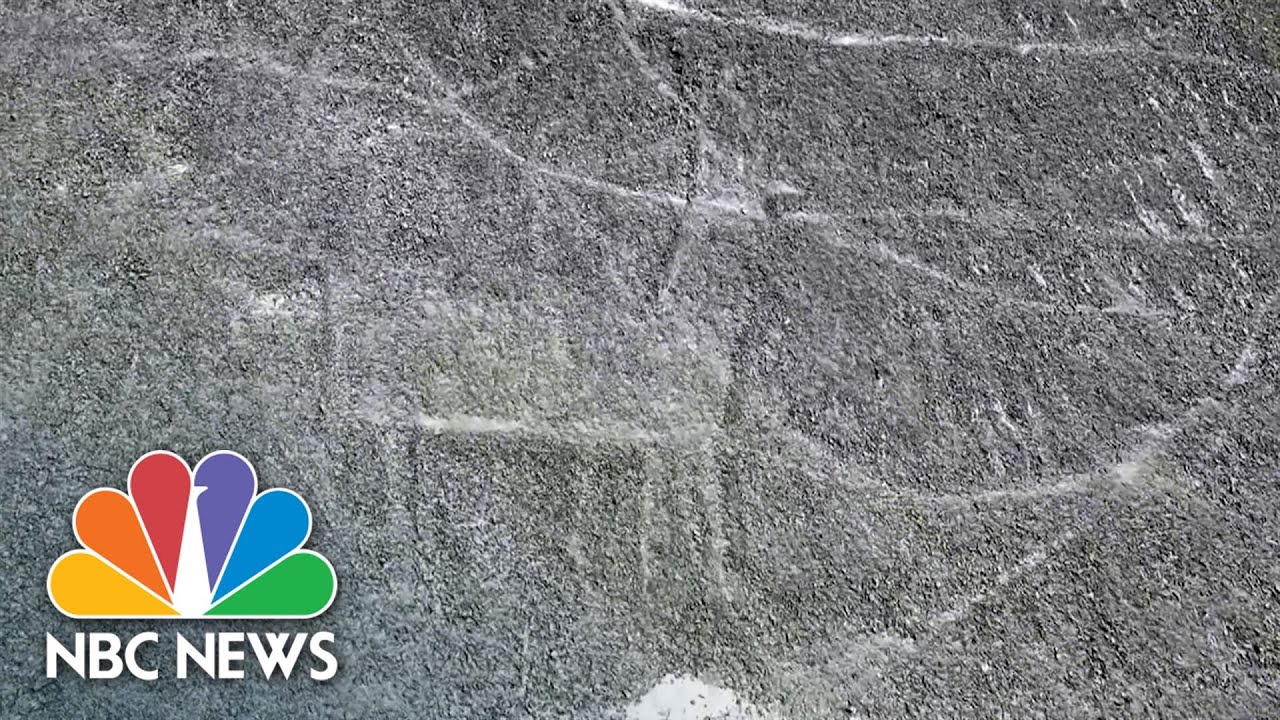
Forskare har upptäckt 168 geoglyfer på Nascaslätten
168 tidigare okända figurer har upptäckts på Nascaslätten i Peru, rapporterar NBC News. Fynden meddelas efter två års fältstudier och granskningar av flygfoton.
De berömda Nasca-geoglyferna är minst 2 000 år gamla och föreställer växter, djur och geometriska figurer. De har i årtionden fascinerat och förbryllat forskare och besökare, skriver TT.
Trots omfattande studier är det fortfarande okänt varför linjerna skapades. Teorier om ceremoniella platser, bevattningssystem och stjärnobservatorium har lagts fram.
bakgrund
Nascalinjerna
Wikipedia (en)
The Nazca Lines are a group of geoglyphs made in the soil of the Nazca Desert in southern Peru. They were created between 500 BCE and 500 CE by people making depressions or shallow incisions in the desert floor, removing pebbles and leaving differently colored dirt exposed. There are two major phases of the Nazca lines, Paracas phase, from 400 to 200 BCE, and Nazca phase, from 200 BCE to 500 CE. In the years leading up to 2020, between 80 and 100 new figures had been found with the use of drones, and archaeologists believe that there are more to be found.Most lines run straight across the landscape, but there are also figurative designs of animals and plants. The individual figurative geoglyph designs measure between 400 and 1,100 metres (440–1,200 yd) across. The combined length of all the lines is more than 1,300 km (800 mi), and the group covers an area of about 50 km2 (19 sq mi). The lines are typically 10 to 15 cm (4–6 in) deep. They were made by removing the top layer of reddish-brown iron oxide-coated pebbles to reveal a yellow-grey subsoil. The width of the lines varies considerably, but more than half are slightly more than 33 cm (13 in) wide. In some places they may be only 30 cm (12 in) wide, and in others reach 1.8 m (6 ft) wide.Some of the Nazca lines form shapes that are best seen from the air (at around 500 m [1,600 ft]), although they are also visible from the surrounding foothills and other high places. The shapes are usually made from one continuous line. The largest ones are about 370 m (400 yd) long. Because of its isolation and the dry, windless, stable climate of the plateau, the lines have mostly been preserved naturally. Extremely rare changes in weather may temporarily alter the general designs. As of 2012, the lines are said to have been deteriorating because of an influx of squatters inhabiting the lands.The figures vary in complexity. Hundreds are simple lines and geometric shapes; more than 70 are zoomorphic designs, including a hummingbird, spider, fish, condor, heron, monkey, lizard, dog, cat, and a human. Other shapes include trees and flowers. Scholars differ in interpreting the purpose of the designs, but in general, they ascribe religious significance to them. They were designated in 1994 as a UNESCO World Heritage Site.
Omni är politiskt obundna och oberoende. Vi strävar efter att ge fler perspektiv på nyheterna. Har du frågor eller synpunkter kring vår rapportering? Kontakta redaktionen