Gränsövergång till Gaza öppnas efter nio år
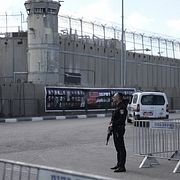
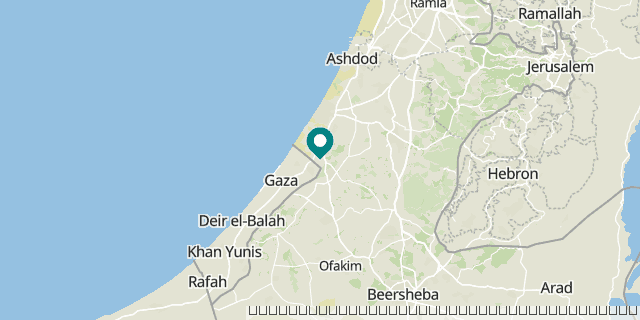
För första gången på nio år öppnas gränsövergången Erez mellan Israel och Gaza för varutransporter, uppger israeliska myndigheter. Gränsövergången i norra Gaza har sedan 2007 enbart varit öppen för människor.
Åtgärden har genomförts för att underlätta för palestinska importörer och därigenom stödja ekonomin på Gazaremsan, säger en talesperson på COGAT som ansvarar för samordningen av Israels aktiviteter i de palestinska områdena.
bakgrund
Blockade mot Gazaremsan
Wikipedia (en)
The blockade of the Gaza Strip refers to a land, air, and sea blockade on the Gaza Strip by Israel and Egypt from 2007 to present. After the 2005 disengagement from the Gaza Strip by Israel, in 2006, Hamas won the Palestinian legislative election, triggering the 2006–07 economic sanctions against the Palestinian National Authority by Israel and the Quartet on the Middle East after Hamas refused to quit violence, respect previous agreements and recognize Israel. In March 2007, Hamas and Fatah formed a Palestinian authority national unity government headed by Ismail Haniya. Shortly after, in June, Hamas took control of the Gaza Strip in the course of the Battle of Gaza, seizing government institutions and replacing Fatah and other government officials with its own. Following the takeover, Egypt and Israel largely sealed their border crossings with Gaza, on the grounds that Fatah had fled and was no longer providing security on the Palestinian side.
Israel maintains that the blockade is necessary to limit Palestinian rocket attacks from the Gaza Strip on its cities and to prevent Hamas from obtaining other weapons. Prior to its 2011 opening of the Rafah crossing, Egypt maintained that it could not fully open its side of the border since completely opening the border would represent Egyptian recognition of the Hamas control of Gaza, undermine the legitimacy of the Palestinian National Authority and consecrate the split between Gaza and the West Bank.
The blockade has been criticized by UN Secretary-General Ban Ki-moon, the United Nations Human Rights Council (UNHRC ) and other human rights organizations, a criticism that has been officially supported by United States administrations. In June 2010 Secretary of State Hillary Clinton said the humanitarian needs in the Hamas-controlled area must be met along with legitimate Israeli security concerns.
In September 2011, a UN Panel of Inquiry, assigned by UN Secretary-General Ban Ki-moon, concluded in the Palmer Report that the naval blockade was legal, based on the right of self-defense during a period of war, and had to be judged isolated from the restrictions on goods reaching Gaza via the land crossings. Concerning the restrictions on goods reaching Gaza via the land crossings the Palmer report stated that they were "a significant cause" of Gaza's unsustainable and unacceptable humanitarian situation. A Fact-Finding Mission for the UN Human Rights Council (2009) chaired by Richard Goldstone, a former judge of the International Criminal Court, as well as a group of five independent U.N. rights experts concluded that the blockade constituted collective punishment of the population of Gaza and was therefore unlawful. UN envoy Desmond Tutu, United Nations Human Rights Council head Navi Pillay, the International Committee of the Red Cross and most experts on international law consider the blockade illegal.
Omni är politiskt obundna och oberoende. Vi strävar efter att ge fler perspektiv på nyheterna. Har du frågor eller synpunkter kring vår rapportering? Kontakta redaktionen