Källor: Trump har drivit på om riksrätt i kulisserna
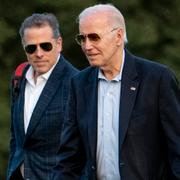
USA:s tidigare president Donald Trump har agerat i kulisserna för att det ska inledas en process för att ställa Joe Biden inför riksrätt på grund av sonen Hunter Bidens affärer, rapporterar Politico.
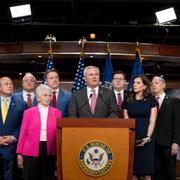
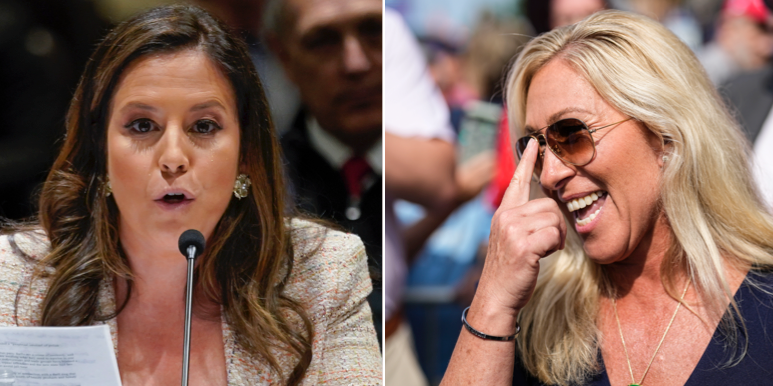
Trump uppges ha haft tät kontakt med Elise Stefanik, gruppledare för Republikanerna i kongressen, som var den första inom partiets toppskikt som öppet stödde en sådan process. Enligt Politicos källor pratade de i telefon under tisdagen efter att representanthusets talman Kevin McCarthy meddelat man inleder en riksrättsutredning mot Biden.
I söndags åt Trump middag på sin golfklubb i New Jersey med en annan allierad, republikanen Marjorie Taylor Greene. De diskuterade bland annat en riksrättsprocess mot Biden.
Läs mer
bakgrund
Första riksrätten mot Trump
Wikipedia (en)
The first impeachment of Donald Trump, the 45th president of the United States from 2017 to 2021, began on December 18, 2019, during the 116th United States Congress. The House of Representatives adopted two articles of impeachment against Trump: abuse of power and obstruction of Congress. Trump was acquitted by the Senate on February 5, 2020.Trump's impeachment came after a formal House inquiry found that he had solicited foreign interference in the 2020 U.S. presidential election to help his re-election bid and then obstructed the inquiry itself by telling his administration officials to ignore subpoenas for documents and testimony. The inquiry reported that Trump withheld military aid and an invitation to the White House to Ukrainian president Volodymyr Zelenskyy in order to influence Ukraine to announce an investigation into Trump's political opponent Joe Biden and to promote a discredited conspiracy theory that Ukraine, not Russia, was behind interference in the 2016 presidential election. A phone call between Trump and Zelenskyy on July 25, 2019 was particularly important according to Congressional testimony from Lt. Col. Alexander Vindman, a member of the National Security Council who listened to the call from the White House Situation Room.The inquiry stage of Trump's impeachment lasted from September to November 2019 in the wake of Vindman's August whistleblower complaint alleging Trump's abuse of power. In October, three congressional committees (Intelligence, Oversight, and Foreign Affairs) deposed witnesses. In November, the House Intelligence Committee held a number of public hearings in which witnesses testified publicly; on December 3, the committee voted 13–9 along party lines to adopt a final report. The total number of witnesses testifying either publicly or in closed door sessions was 17. A set of impeachment hearings before the House Judiciary Committee began on December 4; on December 13, it voted 23–17 along party lines to recommend two articles of impeachment for abuse of power and obstruction of Congress. The committee released a lengthy report on the impeachment articles on December 16. Two days later, the full House approved both articles in a mostly party-line vote, with all Republicans opposing, along with three Democrats. This made Trump the third U.S. president in history to be impeached and marked the first fully partisan impeachment where a U.S. president was impeached without support for the impeachment from the President's own party.
The articles were submitted to the Senate on January 16, 2020, initiating the trial. The trial saw no witnesses or documents being subpoenaed, as Republican senators rejected attempts to introduce subpoenas. On February 5, Trump was acquitted on both counts by the Senate, as neither count received 67 votes to convict. On Article I, abuse of power, the vote was 48 for conviction, 52 for acquittal. On Article II, obstruction of Congress, the vote was 47 for conviction, 53 for acquittal. Republican Mitt Romney, the only senator to break party lines, became the first U.S. senator to vote to convict a president of his own party in an impeachment trial, as he voted for conviction on abuse of power. Trump remained in office for the remainder of his term.
Two days after the acquittal, Trump fired two witnesses who had testified about his conduct in the impeachment inquiry: Ambassador Gordon Sondland and Alexander Vindman, together with Vindman's twin brother Yevgeny.On June 23, 2023, Republican House Speaker Kevin McCarthy said that he supported an effort to hold a vote "expunging" both impeachments of Trump.
bakgrund
Andra riksrätten mot Trump
Wikipedia (en)
Donald Trump, the 45th president of the United States, was impeached for the second time on January 13, 2021, one week before his term expired. It was the fourth impeachment of a U.S. president, and the second for Trump after his first impeachment in December 2019. Ten Republican representatives voted for the second impeachment, the most pro-impeachment votes ever from a president's party. This was also the first presidential impeachment in which the majority caucus voted unanimously for impeachment. Trump was indicted on August 1, 2023, for the conduct he was impeached for. The House of Representatives of the 117th U.S. Congress adopted one article of impeachment against Trump of "incitement of insurrection", stating that he had incited the January 6 attack of the U.S. Capitol. These events were preceded by attempts by Trump to overturn the 2020 presidential election, as well as his pushing of voter fraud conspiracy theories on his social media channels before, during, and after the election.A single article of impeachment charging Trump with "incitement of insurrection" against the U.S. government and "lawless action at the Capitol" was introduced to the House of Representatives on January 11, 2021. The article was introduced with more than 200 co-sponsors. The same day, House Speaker Nancy Pelosi gave Vice President Mike Pence an ultimatum to invoke Section 4 of the 25th Amendment to assume the role of acting president within 24 hours, or the House would proceed with impeachment proceedings. Pence said that he would not do so in a letter to Pelosi the following day, arguing that to do so would not "be in the best interest of our Nation or consistent with our Constitution". Nevertheless, a House majority, including Republican Adam Kinzinger, passed a resolution urging Pence to invoke the 25th Amendment.The House impeachment managers formally triggered the start of the impeachment trial on January 25 by delivering to the Senate the charge against Trump. The nine managers walked into the Senate chamber led by the lead impeachment manager, Representative Jamie Raskin, who read the article of impeachment. The trial in the Senate was scheduled to start on February 9. The trial was the first of its kind for a departed U.S. president, with Andrew Johnson, Bill Clinton, and Trump having each been the incumbent in prior impeachment trials. The impeachment trial of a sitting president constitutionally requires the Chief Justice of the Supreme Court to oversee the trial rather than the Vice President, in his role as presiding officer of the Senate, who would benefit if the trial resulted in conviction. Because Trump had left office, Chief Justice John Roberts chose not to preside, since he was not constitutionally bound to, unlike Trump's first impeachment trial. The president pro tempore of the Senate, Vermont senator Patrick Leahy, presided instead.Many Republican senators challenged the validity of holding an impeachment trial for a president no longer in office while proponents cited the Senate's 1876 trial of William W. Belknap, the Secretary of War under President Ulysses S. Grant, who was impeached but not convicted, after leaving office. At the trial, 57 senators voted "guilty", which was less than the two-thirds majority needed (67) to convict Trump, and 43 senators voted "not guilty", resulting in Trump being acquitted of the charges on February 13, 2021.On June 23, 2023, Republican House Speaker Kevin McCarthy said that he supported an effort to hold a vote "expunging" both impeachments of Trump. In 2023, former President Trump was twice indicted for the conduct at question in his impeachment, federally by Special Counsel Jack Smith and in Georgia by Fulton County District Attorney Fani Willis.
Omni är politiskt obundna och oberoende. Vi strävar efter att ge fler perspektiv på nyheterna. Har du frågor eller synpunkter kring vår rapportering? Kontakta redaktionen