Kanada: Nafta-samtalen fortsatt konstruktiva
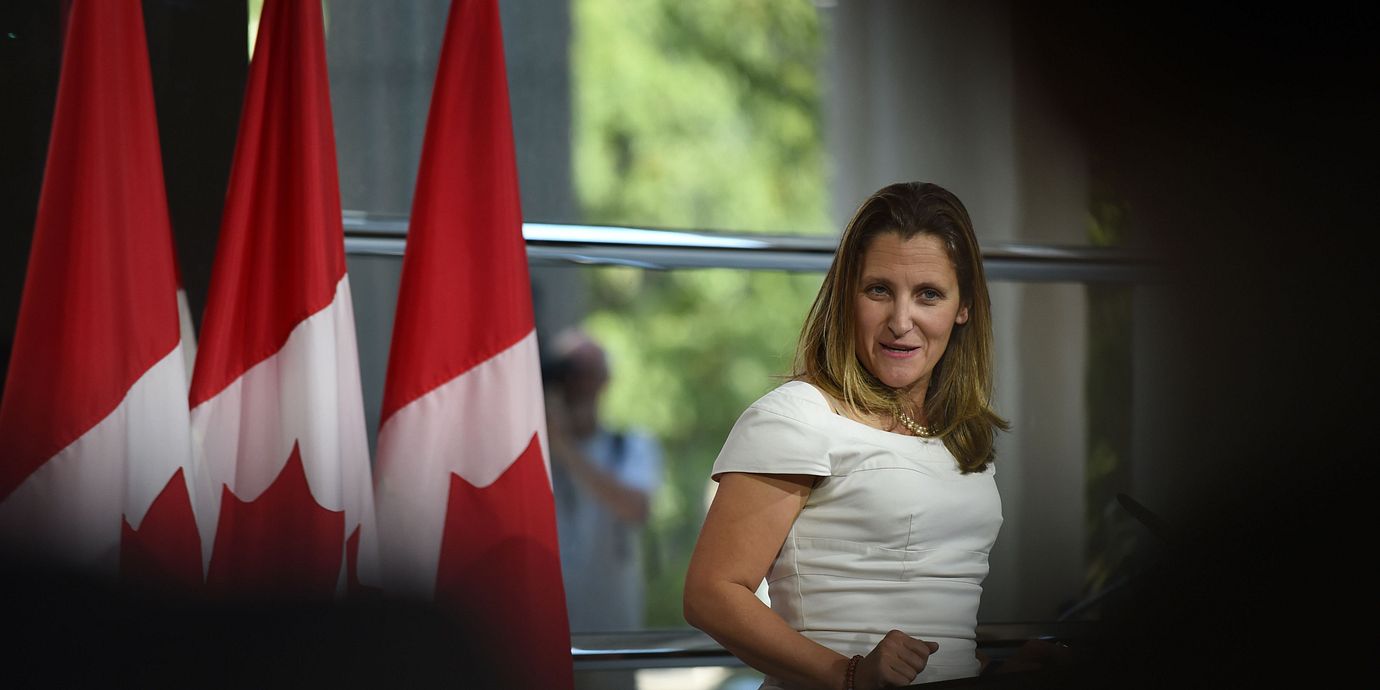
Kanadas utrikesminister Chrystia Freeland säger att dagens diskussioner med USA om ett nytt Nafta-avtal var konstruktiva och att parterna kommer träffas snart igen för fortsatta förhandlingar, skriver Reuters.
Enligt Financial Times var planen att återuppta samtalen senare i veckan men Freeland kom överens med USA:s handelsrepresentant Robert Lighthizer om att träffas redan i dag.
Tidigare artiklar
bakgrund
North American Free Trade Agreement (Nafta)
Wikipedia (en)
The North American Free Trade Agreement (NAFTA; Spanish: Tratado de Libre Comercio de América del Norte, TLCAN; French: Accord de libre-échange nord-américain, ALÉNA) is an agreement signed by Canada, Mexico, and the United States, creating a trilateral trade bloc in North America. The agreement came into force on January 1, 1994. It superseded the Canada–United States Free Trade Agreement between the U.S. and Canada.NAFTA has two supplements: the North American Agreement on Environmental Cooperation (NAAEC) and the North American Agreement on Labor Cooperation (NAALC).
Most economic analyses indicate that NAFTA has been beneficial to the North American economies and the average citizen, but harmed a small minority of workers in industries exposed to trade competition. Economists hold that withdrawing from NAFTA or renegotiating NAFTA in a way that reestablishes trade barriers will adversely affect the U.S. economy and cost jobs. However, Mexico would be much more severely affected by job loss and reduction of economic growth in both the short term and long term.
Omni är politiskt obundna och oberoende. Vi strävar efter att ge fler perspektiv på nyheterna. Har du frågor eller synpunkter kring vår rapportering? Kontakta redaktionen