Kina fördömer USA:s affär med Taiwan
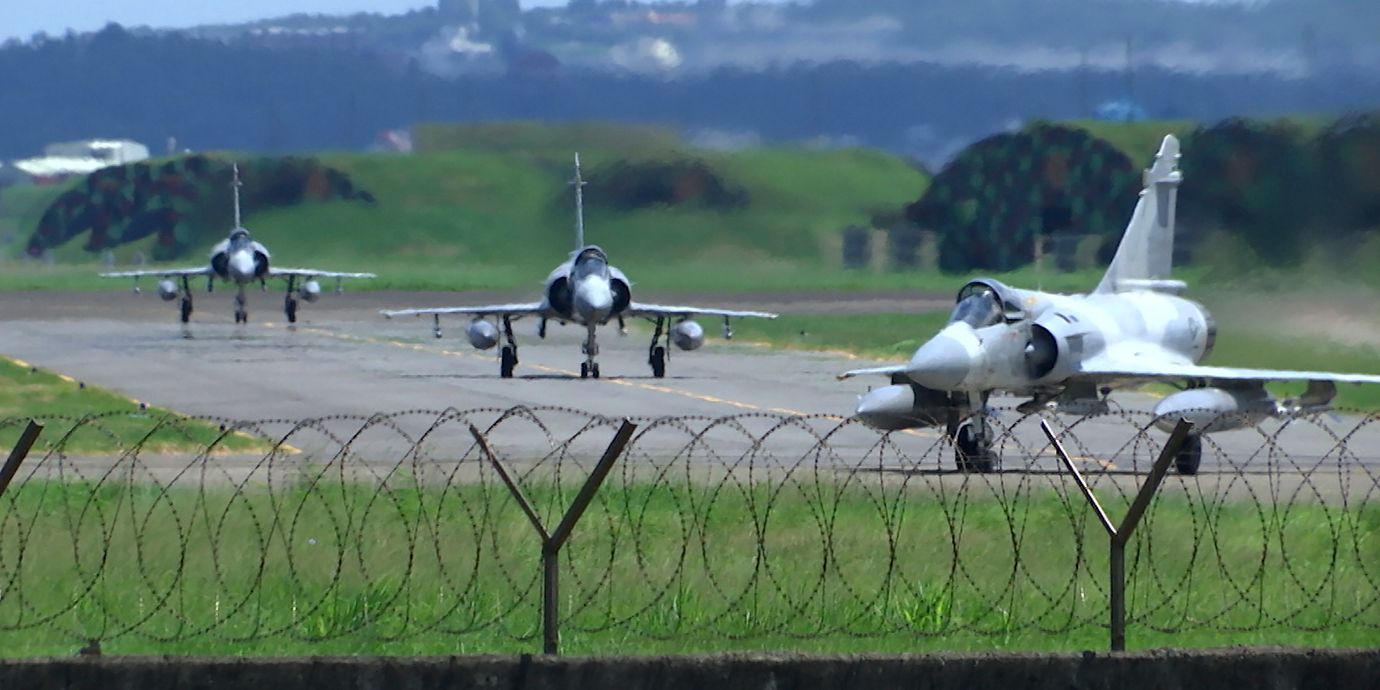
Beskedet att USA godkänt en stor vapenaffär med Taiwan leder till hård kritik från Kina. Kinesiska utrikesdepartementet uppmanar USA att genast stoppa de ”farliga åtgärderna”, rapporterar Reuters.
– Det här kommer bara öka risken för militär konfrontation och krig i Taiwansundet, säger talespersonen Guo Jiakun.
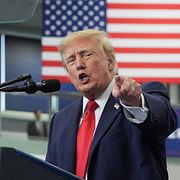
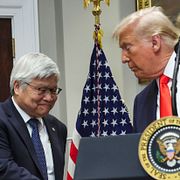
Det är andra gången som USA säljer vapen till Taiwan sedan Donald Trump tillträdde som president under sin andra mandatperiod.
bakgrund
Kinas relation med Taiwan
Wikipedia (en)
Cross-strait relations (sometimes called Mainland–Taiwan relations, China–Taiwan relations, or PRC–ROC relations) are the political and economic relations between China (officially the People's Republic of China, or PRC) and Taiwan (officially the Republic of China, or ROC) across the Taiwan Strait. Due to the existing controversy over the status of Taiwan and the Chinese legitimacy question, they are also not defined as diplomatic relations by either side.
The relationship has been complex and controversial due to the dispute regarding the political status of Taiwan after the island's administration was transferred from Japan to the Republic of China in 1945, and the split between the PRC and ROC in 1949 as a result of the ROC's retreat to the island after losing the Chinese Civil War. The essential questions are whether the two governments are still in a state of civil war over One China, each holding one of two "regions" or parts of the same country (i.e. "one nation, two states"); whether they can be unified under a "one country, two systems" framework; or whether they are now separate countries (either as Two Chinas, or as "one China, one Taiwan"). The English expression "cross-strait relations" is considered to be a neutral term that avoids reference to the political status of either side.
After the Japanese surrender at the end of the Second World War in 1945, the administration of Taiwan was transferred from the Empire of Japan (who had annexed Taiwan as a spoil of war through the First Sino-Japanese War) to the Republic of China, who was one of the "Big Four" of Allied Nations, although questions remain regarding the legal language used in the Treaty of San Francisco. In 1949, with the Chinese Civil War turning decisively in favor of the Chinese Communist Party (CCP), the Republic of China Government led by the Nationalist Party of China (Kuomintang, or KMT) evacuated to Taiwan and established a provisional capital in Taipei, while still claiming to be the legitimate government of all of China. CCP chairman Mao Zedong proclaimed the establishment of the Central People's Government with Beijing as the capital, and the People's Liberation Army (PLA) subsequently conquered and quelled all of mainland China, although the disastrous landing attempt at Kinmen, the unexpected outbreak of the Korean War and the subsequent American involvement halted any further plans to invade Taiwan. The two sides then entered decades of stalemate and de facto ceasefire with sporadic episodes of naval skirmishes and island shellings, but no armistice or peace treaty has ever been signed, and debate continues as to whether the civil war has legally ended.
Since then, the relations between the governments in Beijing and Taipei have been characterized by limited contact, tensions, and instability. In the early years, military conflicts continued, while diplomatically both governments competed to be the "legitimate government of China". Since the democratization of Taiwan, the question regarding the political and legal status of Taiwan has shifted focus to the choice between political unification with the mainland or de jure Taiwanese independence. The PRC remains hostile to any formal declaration of independence and maintains its claim over Taiwan, citing its status as the only internationally recognized government of all of China since the United Nations General Assembly Resolution 2758 in 1971.
The administration of cross-strait relations of both sides are independent from the official diplomatic system. The Taiwanese government established the Mainland Affairs Council led by the Executive Yuan, and China established the Taiwan Affairs Office in both the State Council and the CCP Central Committee, while the top decision-making body is Central Leading Group for Taiwan Affairs of the CCP. The communication between both sides are through two semi-official institutions: Straits Exchange Foundation by the ROC side, and the Association for Relations Across the Taiwan Straits by the PRC side.
Omni är politiskt obundna och oberoende. Vi strävar efter att ge fler perspektiv på nyheterna. Har du frågor eller synpunkter kring vår rapportering? Kontakta redaktionen