analys
Hongkong-protesterna
Wikipedia (en)
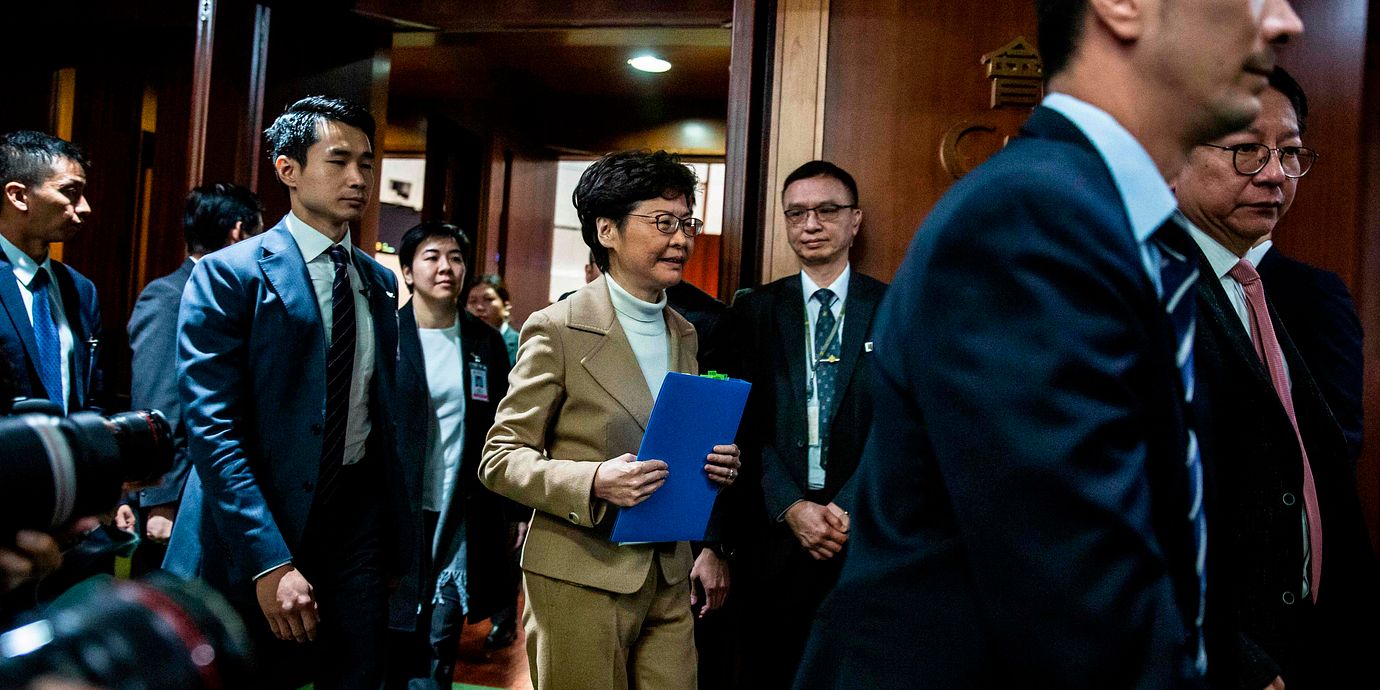
The 2019–20 Hong Kong protests are ongoing demonstrations in Hong Kong triggered by the introduction of the Fugitive Offenders amendment bill by the Hong Kong government. If enacted, the bill would have allowed the extradition of criminal fugitives who are wanted in territories with which Hong Kong does not currently have extradition agreements, including Taiwan and mainland China. This led to concerns that the bill would subject Hong Kong residents and visitors to the jurisdiction and legal system of mainland China, thereby undermining the region's autonomy and Hong Kong people's civil liberties. As the protests progressed, the protesters laid out five key demands, namely the withdrawal of the bill, investigation into alleged police brutality and misconduct, the release of arrested protesters, a complete retraction of the official characterisation of the protests as "riots", and Chief Executive Carrie Lam's resignation along with the introduction of universal suffrage for election of the Legislative Council and the Chief Executive.Despite a demonstration attended by hundreds of thousands on 9 June, the government proceeded with the bill. Protesters gathered outside the Legislative Council Complex to stall the bill's second reading on 12 June, resulting in an intense standoff between the protesters and the police, who deployed tear gas and rubber bullets. An even bigger march took place on 16 June, just one day after the suspension of the bill, as protesters insisted on the complete withdrawal of the bill and reacted to the perceived excessive use of force by the police on 12 June. The anniversary of the handover on 1 July saw the storming of the Legislative Council Complex, which was largely viewed as a watershed moment for the protest. Subsequent protests throughout the summer spread to different districts, and there were confrontations involving the police, activists on both sides, and suspected triad gangs. The police's inaction when suspected triad members assaulted protesters and commuters in Yuen Long on 21 July and the police storming of Prince Edward station on 31 August caused further escalation of the protests.Lam suspended the extradition bill on 15 June and declared the bill "had passed away" on 9 July, but refused to withdraw it until 4 September. The bill was finally withdrawn on 23 October, but the government refused to concede on the other four demands. Large-scale demonstrations occurred on 1 October, the 70th anniversary of the People's Republic of China. During a skirmish in Tsuen Wan, an 18-year-old protester was shot whilst swinging a rod at a police officer. Claiming to curb further protests, Lam invoked the Emergency Regulations Ordinance on 4 October to implement an anti-mask law, to counterproductive effect. As the protests dragged on, confrontations escalated as both sides became increasingly violent. The number of police brutality and misconduct allegations increased, with Amnesty International accusing the police of torturing some detainees. Some protesters escalated their use of radical methods such as throwing petrol bombs to confront the police. Rifts within society widened as activists from both sides have assaulted each other, in which hardcore protesters conducted vigilante attacks against perceived provocateurs in response, and vandalised supposed pro-Beijing entities. The deaths of students Chan Yin-lam in September and Chow Tsz-lok in November, as well as the shooting of an unarmed 21-year-old protester in November, further intensified the protests. Protesters have also occupied university campuses to block key thoroughfares. The police reacted by besieging the Chinese University of Hong Kong (CUHK) and Hong Kong Polytechnic University (PolyU) which resulted in a large number of injuries and arrests.The government and the police have received the lowest approval ratings since the 1997 handover in public opinion polls. Their performance contributed to the unprecedented landslide victory of the pro-democratic bloc in the 2019 District Council election, which was widely viewed as a de facto referendum on the protest movement. The Central People's Government has characterised the protests as the "worst crisis in Hong Kong" since the handover in 1997. The protests, which continued through to 2020, have been largely described as "leaderless", though the Beijing government alleged that foreign powers were instigating the conflict. The United States passed the Hong Kong Human Rights and Democracy Act on 27 November to support the protest movement; solidarity rallies were held in dozens of cities abroad. Counter-protesters have held several pro-police rallies.Since the protest movement began in June, there have been two deaths: Chow Tsz-lok, a student who fell to his death inside a car park, and Luo Changqing, an elderly man who died after being struck in the head by a brick thrown by a protester during a clash between between anti government protesters and local residents that were "trying to clear a roadblock" in Sheung Shui. In addition, public health experts have identified the protests as a significant stressor related to suicides and protesters have linked it to at least nine suicides.