Venezuelas högsta domstol: ”Beslutet är slutgiltigt”
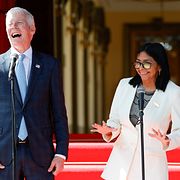
Det kommande utslaget om valresultatet från Venezuelas högsta domstol är ”slutgiltigt”. Det sa domstolens ordförande Carylsia Rodriguez under ett sammanträde på lördagen, skriver AFP.
Domstolens besked väntades under fredagen men har ännu inte getts. Rodriguez sa inte heller när det kan komma.
Valkomissionen har officiellt förklarat att den sittande presidenten Nicolás Maduro vann, något som har ifrågasatts. Oppositionen, flera latinamerikanska länder och USA har krävt att ett verifierbart resultat presenteras.
Domstolen är i praktiken lojal mot president Maduro och få bedömare väntar sig ett resultat som går emot honom.
bakgrund
Valet i Venezuela
Wikipedia (en)
Presidential elections were held in Venezuela on 28 July 2024 to choose a president for a six-year term beginning on 10 January 2025. The election has been politically contentious, with international monitors calling it neither free nor fair, citing the incumbent Maduro administration having controlled most institutions and repressed the political opposition before and during the election.
President Nicolás Maduro ran for a third consecutive term, while former diplomat Edmundo González Urrutia represented the Unitary Platform (Spanish: Plataforma Unitaria Democrática; PUD), the main opposition political alliance. The government disqualified other leading candidates of the Venezuelan opposition from participating in the election during their campaign or in previous elections. In June 2023, the Venezuelan government barred leading candidate María Corina Machado from participating. This move was regarded by the opposition as a violation of political human rights and has been condemned by international bodies such as the Organization of American States (OAS), the European Union, and Human Rights Watch, as well as numerous states.
Academics, news outlets and the opposition provided "strong evidence" according to The Guardian to suggest that González won the election by a wide margin, with the opposition releasing copies of official tally sheets collected by poll watchers from a majority of polling centers showing a landslide victory for González. The government-controlled National Electoral Council (CNE) announced falsified results claiming a narrow Maduro victory on 29 July. The CNE's results were rejected by the Carter Center and by the OAS. Analyses by media sources including the Associated Press, The Washington Post and El Espectador found the results statistically improbable and lacking in credibility.
In the aftermath of the government's announcement of falsified results, protests broke out across the country, and the Maduro administration detained opposition political figures while refusing to relinquish power; criminalization of protest was widely condemned by human rights organizations. Some world leaders rejected the CNE's claimed results and recognized González as the election winner, while some other countries, including Russia, China, and Iran, recognized Maduro as the winner. The first country to recognize González as Venezuela's president-elect was Peru, on 30 July. Political scientist Steven Levitsky called the official results "one of the most egregious electoral frauds in modern Latin American history."
Tidigare
Omni är politiskt obundna och oberoende. Vi strävar efter att ge fler perspektiv på nyheterna. Har du frågor eller synpunkter kring vår rapportering? Kontakta redaktionen