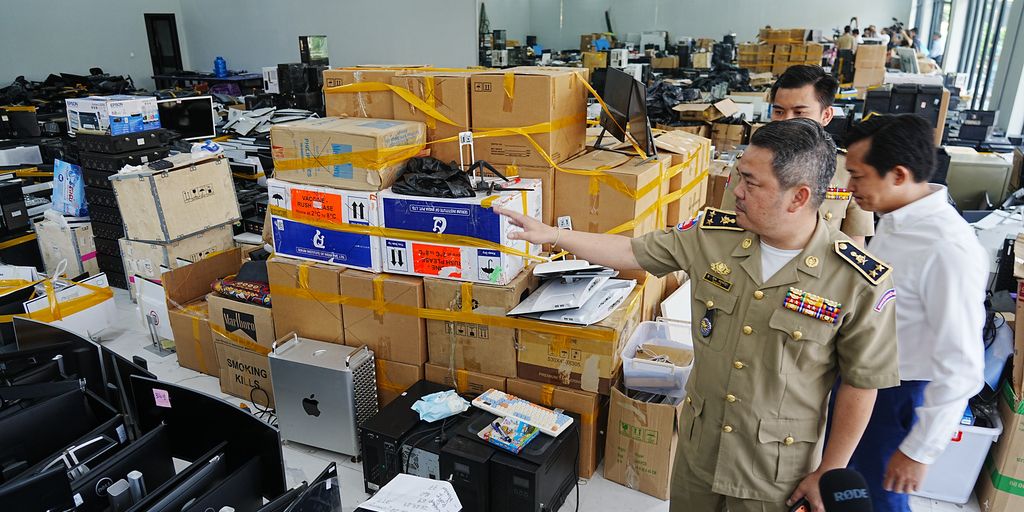
Ny lag ska klämma åt Kambodjas nätbedragare
I början av april godkände Kambodjas parlament en första ny lag för att tackla den bedrägeriindustri som vuxit till landets största, skriver Reuters.
Justitieminister Keut Rith beskriver det som en ”reningsoperation”.
– Lagen är tät som ett fiskenät, säger han.
Om lagen godkänns av kungen fastställs straffskalan för nätbedragare till två till fem års fängelse och böter på upp till motsvarande 1,1 miljoner kronor.
bakgrund
Kambodjas bedrägeriindustri
Wikipedia (en)
Scam centers in Cambodia are clandestine fraud operations, controlled by international and organized criminal networks specializing in online fraud and operating in Cambodia. Policy analysis has characterized Cambodia as a global nexus and among the global epicenters of trafficking-linked transnational cyber-fraud, with scam networks recruiting coerced and voluntary workers from dozens of countries and targeting victims worldwide. The operations of organized crime in the country is a serious regional issue, and their activities are estimated to generate between $12.5 and $19 billion annually, a figure that could represent up to 60% of the Cambodia's gross domestic product (GDP).
According to a 2024 United Nations (UN) report, an estimated 100,000 to 150,000 people, many of them foreign nationals deceived by fraudulent job offers, are believed to have been trafficked and held in Cambodian compounds where they are forced to engage in online scam operations under exploitative conditions. Across Cambodia, Myanmar and Laos, the cybercriminal labor force has been estimated to exceed 350,000 people, with conservative estimates placing annual revenue generated by regional scam syndicates at $50 to $75 billion.
Several non-governmental organizations (NGOs) and eyewitness accounts report cases of human trafficking, forced labor, torture, child exploitation and other forms of abuse from Cambodian scam centers. While these centers operate de jure in violation of Cambodian law, they are reportedly based openly in casinos, hotels, office buildings, or residential areas, including in cities such as Sihanoukville and the country's capital of Phnom Penh. According to various international reporting bodies, they appear to benefit from a degree of impunity, or even complicity, from various Cambodian officials.
Omni är politiskt obundna och oberoende. Vi strävar efter att ge fler perspektiv på nyheterna. Har du frågor eller synpunkter kring vår rapportering? Kontakta redaktionen