Nyfödd tapir ger nytt hopp åt skogarna i Brasilien
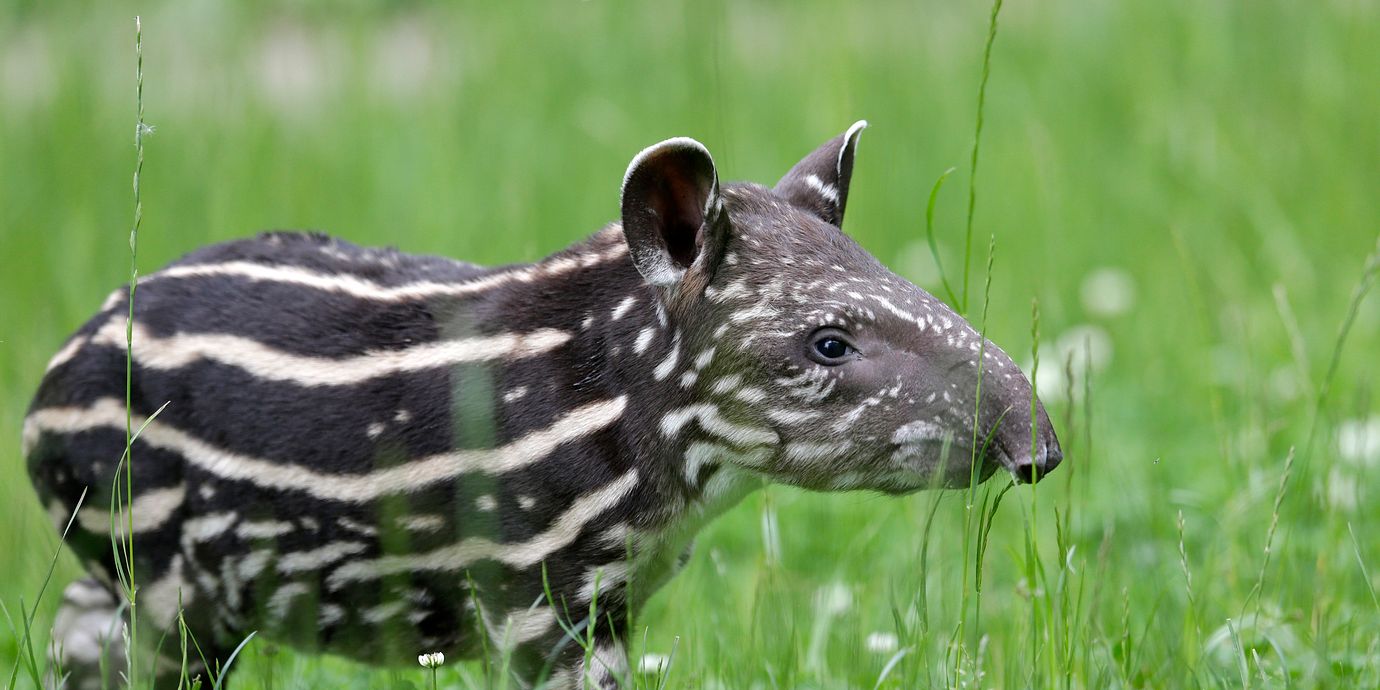
Den första vilda tapiren på över ett sekel har fötts i Brasiliens Atlantskog – något som ger hopp åt landets svårt hotade ekosystem, rapporterar The Guardian.
Tapiren brukar ofta kallas för ”skogens trädgårdsmästare” eftersom den spelar en vital roll för att sprida frön och den nya lilla tapiren hoppas kunna ge en välbehövlig boost åt skogen.
Biologiprofessorn Maron Galliez ser födelsen som en viktig milstolpe.
– Tapirens födelse i det vilda indikerar att en ny population håller på att växa fram. Det är nödvändigt för att ekosystemet ska kunna återhämta sig.
Forskare tror att den nya tapiren föddes i januari och att ännu en kan vara på väg, då en tapirhona verkar dräktig.
bakgrund
Tapir
Wikipedia (en)
A tapir ( TAY-pər, TAY-peer or tə-PEER, TAY-pee-ər) is a large, herbivorous mammal, similar in shape to a pig, with a short, prehensile nose trunk. Tapirs inhabit jungle and forest regions of South America, Central America, and Southeast Asia. There are four widely recognized extant species of tapirs, all of the family Tapiridae and the genus Tapirus. They are the Brazilian tapir, the Malayan tapir, the Baird's tapir, and the mountain tapir. In 2013, a group of researchers claimed to have identified a fifth species of tapir, the kabomani tapir. However, the existence of the kabomani tapir as a distinct species has been widely disputed, and recent genetic evidence further suggests it is actually nested within T. terrestris. The four species that have been evaluated (all except the kabomani) are all classified on the IUCN Red List as Endangered or Vulnerable. The tapirs have a number of extinct relatives in the superfamily Tapiroidea. The closest extant relatives of the tapirs are the other odd-toed ungulates, which include horses, donkeys, zebras and rhinoceroses.
Omni är politiskt obundna och oberoende. Vi strävar efter att ge fler perspektiv på nyheterna. Har du frågor eller synpunkter kring vår rapportering? Kontakta redaktionen