Rapport: Båda sidor begick krigsbrott i slag om Aleppo
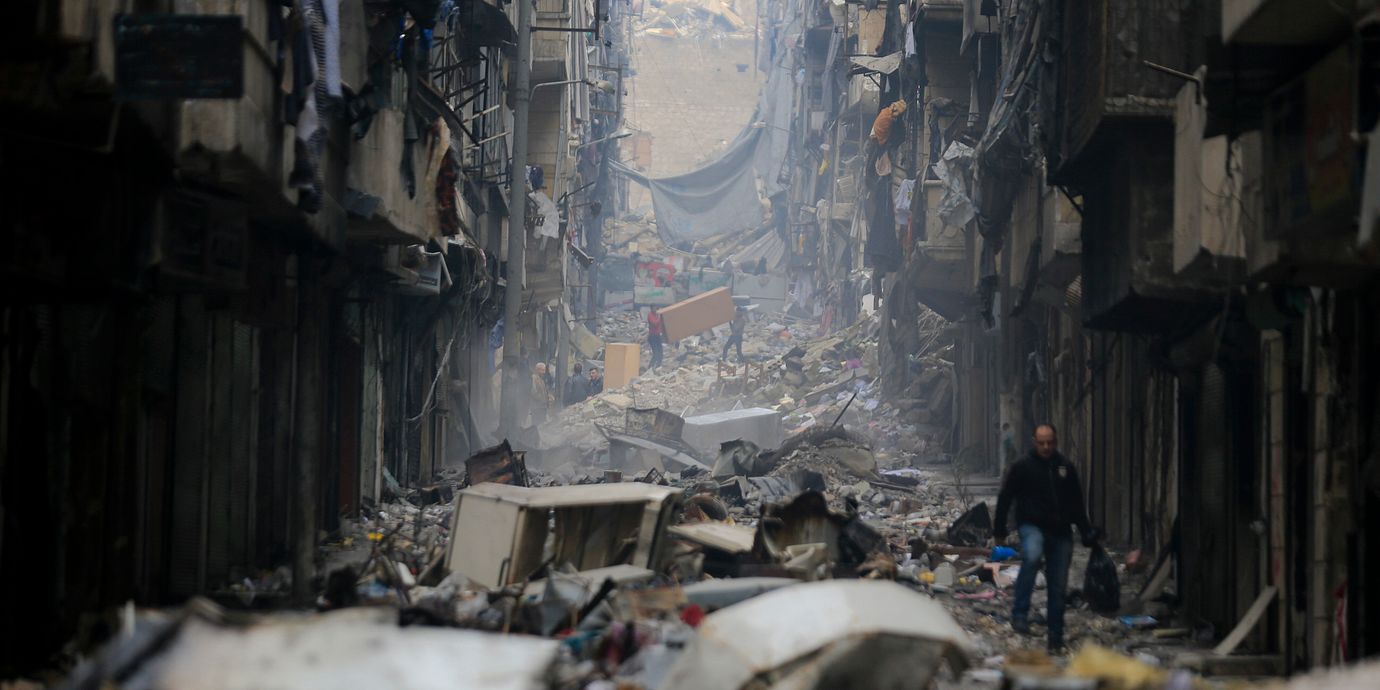
Båda sidor i slaget om den syriska staden Aleppo har gjort sig skyldiga till krigsbrott. Det slår en FN-utredare fast, enlig Reuters. Syrisk och rysk militär utförde dagliga flyganfall mot de östra delarna av staden, från juli förra året till slutet av december, och enligt rapporten dödades hundratals människor. Enligt utredarna användes ofta klusterbomber och de fälldes över tätbefolkade områden i sådan omfattning att det rör sig om krigsbrott.
Oppositionella grupper ska bland annat ha hindrat människor från att fly från östra Aleppo och använt dem som mänskliga sköldar. De attackerade också den kurdiska stadsdelen Sheikh Maqsud, vilket även det betrakas som krigsbrott av utredarna.
bakgrund
Striderna om Aleppo
Wikipedia (en)
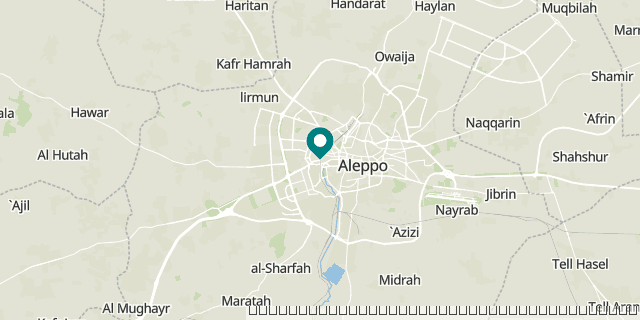
The Battle of Aleppo (Arabic: معركة حلب) was a major military confrontation in Aleppo, the largest city in Syria, between the Syrian opposition (including the Free Syrian Army (FSA) and other Sunni groups, such as the Levant Front and the Al-Qaeda-affiliated Al-Nusra Front), against the government of Bashar al-Assad, supported by Hezbollah, Shia militias and Russia, and against the Kurdish People's Protection Units. The battle began on 19 July 2012 and was part of the ongoing Syrian Civil War. A stalemate that had been in place for four years finally ended in July 2016, when Syrian government troops closed the rebels' last supply line into Aleppo with the support of Russian airstrikes. In response, rebel forces launched unsuccessful counteroffensives in September and October that failed to break the siege; in November, government forces embarked on a decisive campaign that resulted in the recapture of all of Aleppo by December 2016. The Syrian government victory was widely seen as a potential turning point in Syria's civil war.
The large scale devastation of the battle and its importance led combatants to name it the "mother of battles" or "Syria's Stalingrad". The battle was marked by widespread violence against civilians, repeated targeting of hospitals and schools, and indiscriminate aerial strikes and shelling against civilian areas. For a few years it was also marked by the inability of the international community to resolve the conflict peacefully. The UN special envoy to Syria proposed to end the battle by giving East Aleppo autonomy, but the idea was rejected by the Syrian government. Hundreds of thousands of residents were displaced by the fighting and efforts to provide aid to civilians or facilitate evacuation were routinely disrupted by continued combat and mistrust between the opposing sides.
Various claims of war crimes emerged during the battle, including the extensive use of barrel bombs by the Syrian Air Force, the dropping of cluster munitions on populated areas by Russian and Syrian forces and claims that they conducted "double tap" airstrikes to target rescue workers responding to previous strikes, the use of highly inaccurate improvised artillery by rebel forces. During the 2016 Syrian government offensive, the UN High Commissioner for Human Rights warned that "crimes of historic proportions" were being committed in Aleppo. Fighting also caused severe destruction to the Old City of Aleppo, a UNESCO World Heritage site. An estimated 33,500 buildings have been either damaged or destroyed. After four years of fighting, the battle represents one of the longest sieges in modern warfare and one of the bloodiest battles of the Syrian Civil War, leaving an estimated 31,000 people dead, almost a tenth of estimated overall war casualties.
Omni är politiskt obundna och oberoende. Vi strävar efter att ge fler perspektiv på nyheterna. Har du frågor eller synpunkter kring vår rapportering? Kontakta redaktionen