Storbank ser stora intäkter i Indiens digitalisering
Indiens pågående digitalisering kan innebära investeringsmöjligheter värda tusentals miljarder dollar, spår storbanken Morgan Stanley enligt CNBC.
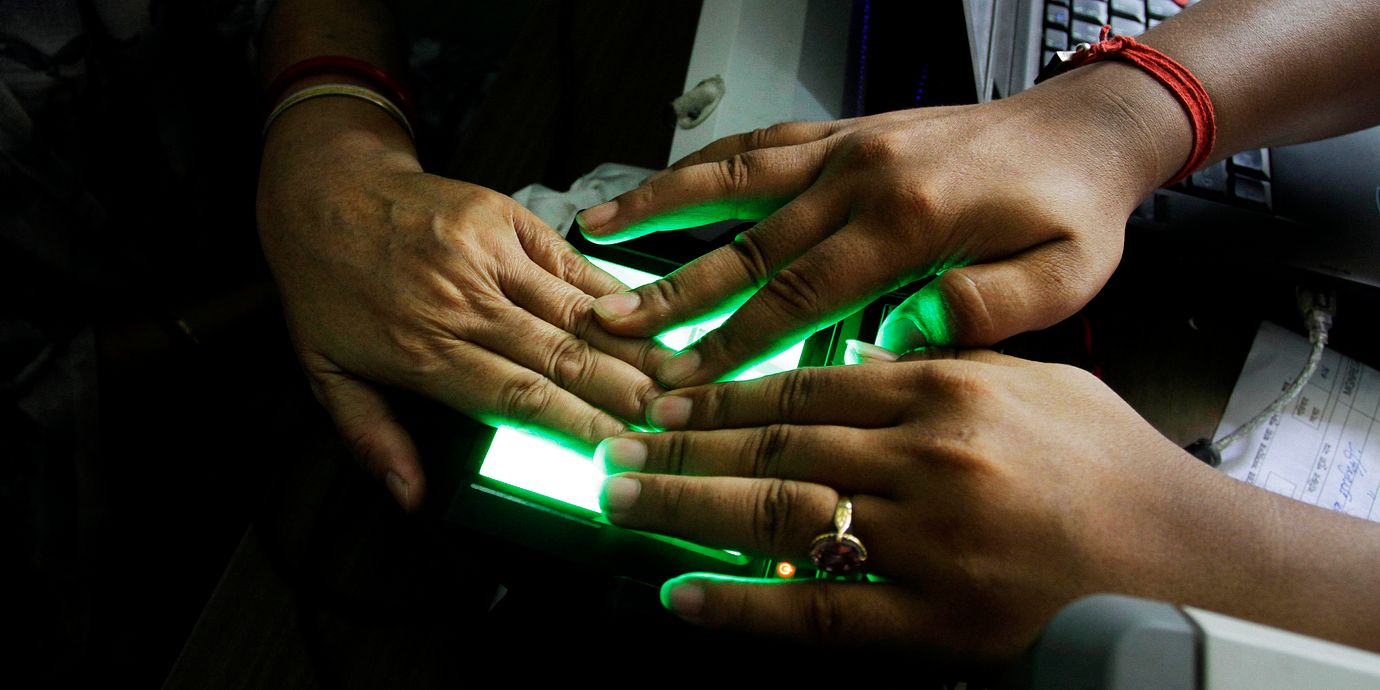
Lejonparten av all utlåning i Indien sker i dag till stora företag. Projektet där alla medborgare får ett biometriskt id-nummer samt försöken att minska kontantbehovet i Indien kan ge banker nya möjligheter, menar Morgan Stanley. Bland annat blir det lättare att låna ut till individer eller små eller medelstora företag som behöver kredit.
– Banker kommer att kunna låna mycket mer effektivt, så krediten kommer att flöda till rätt del i ekonomin, säger Anir Agarwal vid Morgan Stanley till CNBC.
bakgrund
Id-projektet Aadhaar
Wikipedia (en)
Aadhaar, which means ' foundation' is a 12 digit unique-identity number issued to all Indian residents based on their biometric and demographic data. The data is collected by the Unique Identification Authority of India (UIDAI), a statutory authority established in January 2009 by the Government of India, under the Ministry of Electronics and Information Technology, under the provisions of the Aadhaar (Targeted Delivery of Financial and other Subsidies, benefits and services) Act, 2016.
Aadhaar is the world's largest biometric ID system, with over 1.171 billion enrolled members as of 15 Aug 2017. As of this date, over 99% of Indians aged 18 and above had been enrolled in Aadhaar. World Bank Chief Economist Paul Romer described Aadhar as "the most sophisticated ID programme in [the] world".
Prior to the enactment of the Act, UIDAI functioned as an attached office of Planning Commission (now NITI Aayog) since 28 January 2009. On 3 March 2016, a money bill was introduced in the Parliament to give legislative backing to Aadhaar. On 11 March 2016, the Aadhaar (Targeted Delivery of Financial and other Subsidies, benefits and services) Act, 2016 was passed in the Lok Sabha. On 26 March 2016, this Act was notified in the Gazette of India.
Aadhaar is a proof of residence and not a proof of citizenship. It does not itself grant any rights to domicile in India. In June 2017, the Home Ministry clarified that Aadhaar is not a valid identification document for Indians traveling to Nepal and Bhutan. Despite the comparisons, India's Aadhaar project is nothing like America's Social Security number as it has more uses and fewer safeguards.
As of April 2017, a Constitution Bench of the Supreme Court of India is considering the legal validity of Aadhaar on right to privacy grounds. On 23 September 2013, the Supreme Court issued an interim order saying that "no person should suffer for not getting Aadhaar" as the government cannot deny a service to a resident if s/he does not possess Aadhaar, as it is voluntary and not mandatory. In another interim order on 11 August 2015, the Supreme Court of India ruled that "UIDAI/Aadhaar will not be used for any other purposes except PDS, kerosene and LPG distribution system" (which order was later amended to include Mahatma Gandhi National Rural Employment Guarantee Scheme, all types of pensions schemes, employee provident fund and the Prime Minister Jan Dhan Yojana), and made it clear that even for availing these facilities Aadhaar card will not be mandatory. On 27 March 2017, the Supreme Court affirmed that Aadhaar can not be mandatory for availing benefits under welfare schemes, though it can be mandatory for other purposes (such as income tax filings, bank accounts etc.). On June 9, 2017, the Supreme Court of India partially read down a legal provision (Section 139AA of the Income Tax Act) which mandated an individual to link their Aadhaar for filing their Income Tax Returns. On 24 August 2017, Indian Supreme Court delivered a landmark verdict on Right to Privacy. The Court declared Right to Privacy as a fundamental right which is intrinsic to right to life. The order affects all 134 crore Indians. The apex court overruled previous judgments on the privacy issue and overruled an eight-judge bench judgment in the MP Sharma case and a six-judge bench judgment in Kharak Singh case. Some excerpts from the judgement are given below:
" ...privacy is not lost or surrendered merely because the individual is in a public place. Privacy attaches to the person since it is an essential facet of the dignity of the human being".
" The right of privacy is a fundamental right. It is a right which protects the inner sphere of the individual from interference from both State, and non-State actors and allows the individuals to make autonomous life choices..."
Some civil liberty groups, like Citizens Forum for Civil Liberties and Indian Social Action Forum (INSAF), have opposed the project over privacy concerns.
Omni är politiskt obundna och oberoende. Vi strävar efter att ge fler perspektiv på nyheterna. Har du frågor eller synpunkter kring vår rapportering? Kontakta redaktionen