Hem
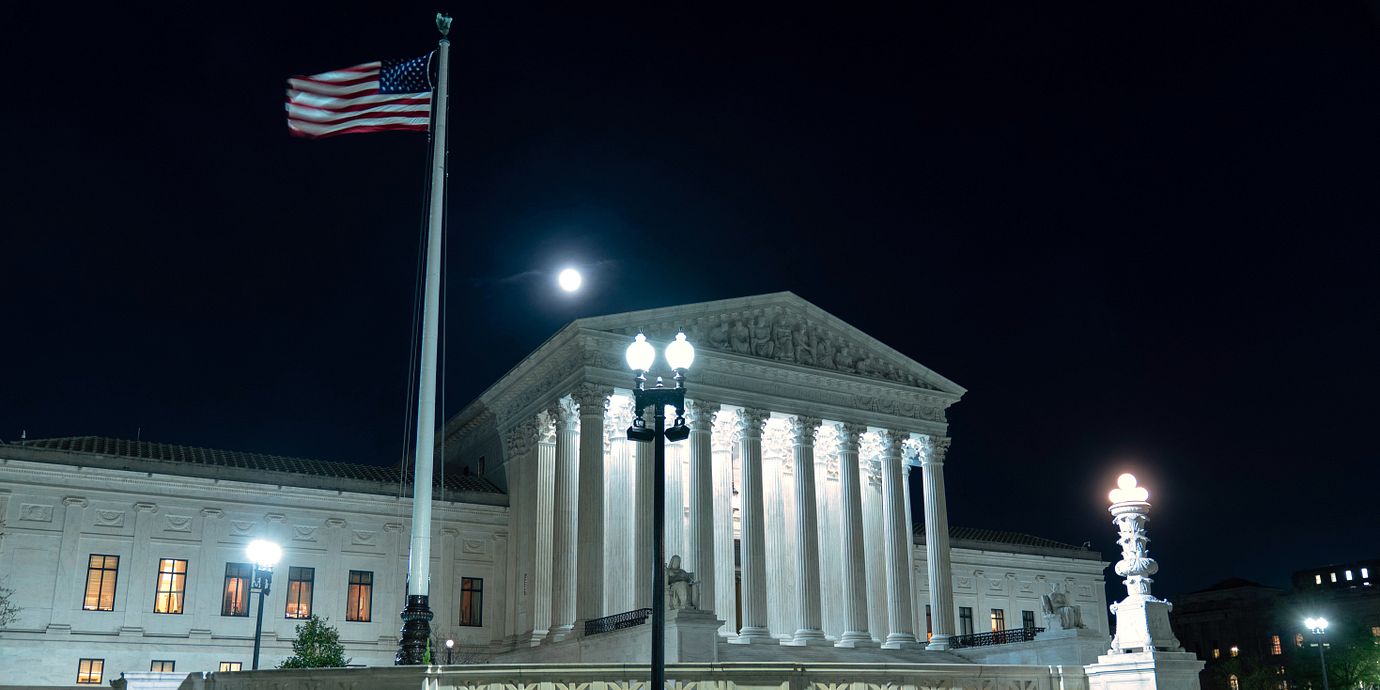
USA:s högsta domstol. (Jose Luis Magana /AP/TT / AP)

Trump sitter med: ”Som det vore en direkt konfrontation”

Donald Trump planerar i dag att sitta med som åhörare under USA:s högsta domstols muntliga överläggningar, rapporterar NBC News. Trump skulle då bli den första sittande presidenten att göra det i USA:s historia.

Det är frågan om födslorätt som ska debatteras. Donald Trump vill riva upp grundlagen som ger de som föds i USA amerikanskt medborgarskap. Han vill genom lagändringen sätta stopp för så kallade ankarbarn, vilket är när gravida kvinnor tar sig till USA för att ge sitt barn amerikanskt medborgarskap med förhoppningen att själv få stanna.

Richard Pildes, professor i konstitutionell rätt vid New York University, säger att Trumps närvaro under överläggningen sätter press på domarna.

”Genom att närvara personligen skulle presidenten i stället göra det till en personlig fråga, som om det vore en direkt konfrontation mellan honom och domarna”, skriver han till kanalen.


bakgrund
 
Födslorätt i USA
Wikipedia (en)
United States citizenship can be acquired by birthright in two situations: by virtue of the person's birth within United States territory while under the jurisdiction thereof (jus soli), or because at least one of their parents was a U.S. citizen at the time of the person's birth (jus sanguinis). Birthright citizenship contrasts with citizenship acquired in other ways, for example by naturalization. Birthright citizenship is explicitly guaranteed to anyone born under the legal "jurisdiction" of the U.S. federal government by the Citizenship Clause of the Fourteenth Amendment to the United States Constitution (adopted July 9, 1868), which states: All persons born or naturalized in the United States, and subject to the jurisdiction thereof, are citizens of the United States and of the State wherein they reside. This clause was a late addition to the Amendment, made in order to clarify what some of the drafters felt was already the law of the land: that all those born to parents beholden to U.S. law ("even of aliens") were guaranteed citizenship. Nonetheless, contrary laws in multiple states had culminated in the Dred Scott v. Sandford decision (1857), wherein the Supreme Court universally denied U.S. citizenship to African Americans regardless of the jurisdiction of their birth. Since the Supreme Court decision United States v. Wong Kim Ark (1898) the Citizenship Clause has generally been understood to guarantee citizenship to all persons born in the United States and "subject to the jurisdiction thereof", which at common law excluded the children of foreign diplomats and occupying foreign forces. Native Americans living under tribal sovereignty were excluded from birthright citizenship until the Indian Citizenship Act of 1924. Over time Congress and the courts did the same for unincorporated territories of Puerto Rico, the Marianas (Guam and the Northern Mariana Islands), and the U.S. Virgin Islands (notably excluding American Samoa). The Immigration and Nationality Technical Corrections Act of 1994 granted birthright citizenship to children born elsewhere in the world if either parent is a U.S. citizen (with certain exceptions); this is known as jus sanguinis ("right of blood"). Political opposition to jus soli birthright citizenship has arisen in the United States over the past several decades, punctuated by the election of Donald Trump—who explicitly opposes jus soli citizenship for children of undocumented immigrants—as President of the United States in 2016 and 2024. Upon taking office in 2025, Trump issued an executive order asserting that the federal government would not recognize jus soli birthright citizenship for the children of people who are not US citizens or permanent residents. The executive order is currently being challenged in court.
Omni är politiskt obundna och oberoende. Vi strävar efter att ge fler perspektiv på nyheterna. Har du frågor eller synpunkter kring vår rapportering? Kontakta redaktionen