Turist förstörde antika statyer: ”Avgudadyrkan”
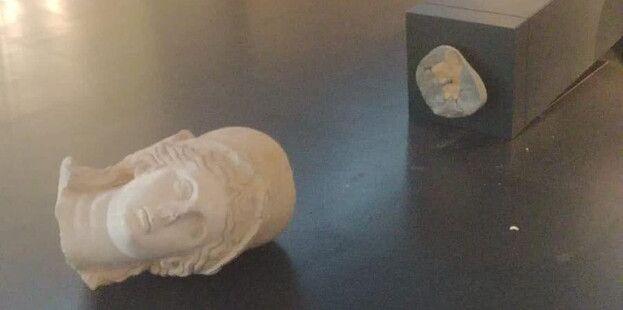
En 40-årig amerikansk turist greps på Israel Museum i Jerusalem på torsdagen efter att ha orsakat ”betydande skada” på uråldriga statyer, rapporterar NBC News.
Enligt polisen har mannen i förhör uppgett att han såg de romerska statyerna från 100-talet som ”avgudadyrkan” och ”inte i enlighet med Toran”.
Hans advokat hävdar att mannen inte är en religiös fanatiker, utan lider av det så kallade Jerusalemsyndromet. Det drabbar årligen ett flertal turister i staden och ger dem psykotiska vanföreställningar med religiösa undertoner, såsom inbillningen att de är Messiasfigurer.
Mannen ska nu ges en rättspsykiatrisk undersökning.
bakgrund
Jerusalemsyndromet
Wikipedia (en)
Jerusalem syndrome is a group of mental phenomena involving the presence of religiously themed obsessive ideas, delusions, or other psychosis-like experiences that are triggered by a visit to the city of Jerusalem. It is not endemic to one single religion or denomination but has affected Jews, Christians, and Muslims of many different backgrounds. It is not listed as a recognised condition in the Diagnostic and Statistical Manual of Mental Disorders or the International Classification of Diseases.
The best known, although not the most prevalent, manifestation of Jerusalem syndrome is the phenomenon whereby a person who seems previously balanced and devoid of any signs of psychopathology becomes psychotic after arriving in Jerusalem. The psychosis is characterised by an intense religious theme and typically resolves to full recovery after a few weeks or after being removed from the area. The religious focus of Jerusalem syndrome distinguishes it from other phenomena, such as Stendhal syndrome in Florence or Paris syndrome in Paris.
In a 2000 article in the British Journal of Psychiatry, Bar-El et al. claim to have identified and described a specific syndrome which emerges in tourists with no previous psychiatric history. However, this claim has been disputed by M. Kalian and E. Witztum. Kalian and Witztum stressed that nearly all of the tourists who demonstrated the described behaviours were mentally ill prior to their arrival in Jerusalem. They further noted that, of the small proportion of tourists alleged to have exhibited spontaneous psychosis after arrival in Jerusalem, Bar-El et al. had presented no evidence that the tourists had been well prior to their arrival in the city.
Omni är politiskt obundna och oberoende. Vi strävar efter att ge fler perspektiv på nyheterna. Har du frågor eller synpunkter kring vår rapportering? Kontakta redaktionen