”Västerländska muslimer ständigt ifrågasatta”
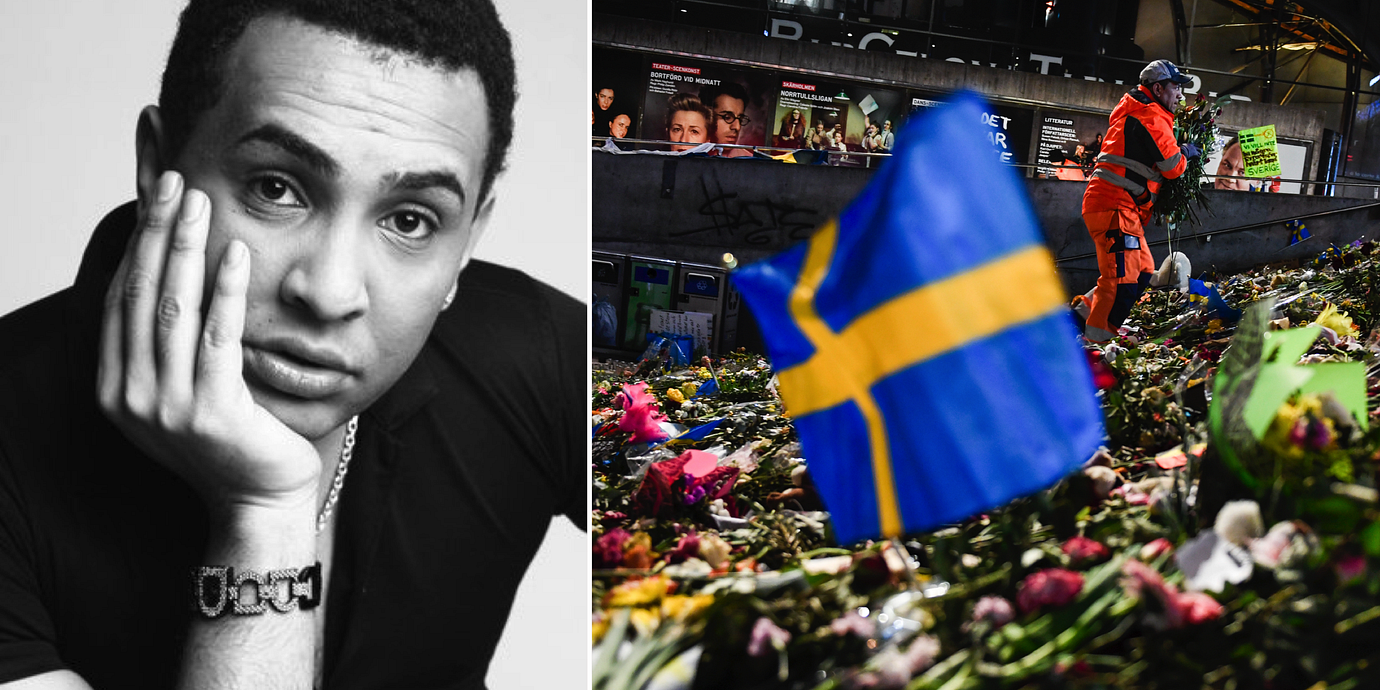
I ett debattinlägg i Aftonbladet skriver statsvetaren och muslimen Akbar Abdul Rasul om sin upplevelse under och efter terrordådet i Stockholm. Han berättar att han stängdes in i ett kafé efter tumultet under terrorattacken. Där uppmanade någon honom och två andra kvinnor att konvertera till en ”fredligare religion.”
Akbar Abdul Rasul skriver vidare om den islamofobi han och muslimer möter i vardagen och att medier bör rapportera mer om att islamistiska terrorister är en minoritet bland muslimer. ”Västerländska muslimer är – och känner sig – ständigt ifrågasatta gällande sin lojalitet mot det land de lever i”, skriver han. Hans uppmaning till andra muslimer är ändå att: ”Bidra till att skapa en mer diversifierad bild av vilka vi är!”
bakgrund
Islam
Wikipedia (en)
Islam (/ˈɪslɑːm/; Arabic: الإسلام, IPA: [alʔisˈlaːm]) is an Abrahamic monotheistic religion which professes that there is only one and incomparable God (Allah) and that Muhammad is the last messenger of God. It is the world's second-largest religion and the fastest-growing major religion in the world, with over 1.7 billion followers or 23% of the global population, known as Muslims. Islam teaches that God is merciful, all-powerful, and unique; and He has guided mankind through revealed scriptures, natural signs, and a line of prophets sealed by Muhammad. The primary scriptures of Islam are the Quran, viewed by Muslims as the verbatim word of God, and the teachings and normative example (called the sunnah, composed of accounts called hadith) of Muhammad (c. 570–8 June 632 CE). The cities of Mecca, Medina and Jerusalem are home to the three holiest sites in Islam.
Muslims believe that Islam is the original, complete and universal version of a primordial faith that was revealed many times before through prophets including Adam, Noah, Abraham, Moses, and Jesus. As for the Quran, Muslims consider it to be the unaltered and final revelation of God. Religious concepts and practices include the five pillars of Islam, which are obligatory acts of worship, and following Islamic law, which touches on virtually every aspect of life and society, from banking and welfare to women and the environment. Like other Abrahamic religions, Islam also teaches resurrection of the dead, a final tribulation and eternal division of the righteous and wicked. Islamic apocalyptic literature describing Armageddon is often known as fitna, malahim, or ghaybah in Shia Islam. The righteous are rewarded with pleasures of "Paradise", while the unrighteous are punished in "Hell". The Mahdi (prophesied redeemer) will be sent and with the help of Jesus, will battle the Antichrist. They will triumph, liberating Islam from cruelty, and this will be followed by a time of serenity with people living true to religious values.
In 610 CE, Muhammad began receiving what Muslims consider to be divine revelations. Muhammad's message won over a handful of followers and was met with increasing opposition from notables of Mecca. In 618, after he lost protection with the death of his influential uncle Abu Talib, Muhammad took flight to the city of Yathrib (Medina). With Muhammad's death in 632, disagreement broke out over who would succeed him as leader of the Muslim community which eventually led to the First Fitna. The dispute intensified greatly after the Battle of Karbala, in which Hussein ibn Ali was killed by the ruling Umayyad Caliph Yazid I, and the outcry for revenge divided the early Islamic community. By the 8th century, the Islamic empire extended from Iberia in the west to the Indus river in the east. The Delhi Sultanate took over northern parts of Indian subcontinent. Under the Ottoman Empire, Islam spread to Southeast Europe. By the 19th century the British Empire had formally ended the Mughal Empire in India. The Ottoman Empire disintegrated after World War I and the Caliphate was abolished in 1924.
Most Muslims are of one of two denominations: Sunni (75–90%) or Shia (10–20%). Islam is the dominant religion in the Middle East, North Africa, the Sahel, Central Asia, Indonesia and some other parts of Asia. About 13% of Muslims live in Indonesia, the largest Muslim-majority country, 31% in South Asia, the largest population of Muslims in the world, 23% in the Middle East-North Africa (MENA), and 15% in Sub-Saharan Africa. Sizable Muslim communities are also found in Horn of Africa, Swahili coast, Europe, China, Russia, Mainland Southeast Asia, Philippines, Caucasus and the Americas. Converts and immigrant communities are found in almost every part of the world.
Omni är politiskt obundna och oberoende. Vi strävar efter att ge fler perspektiv på nyheterna. Har du frågor eller synpunkter kring vår rapportering? Kontakta redaktionen