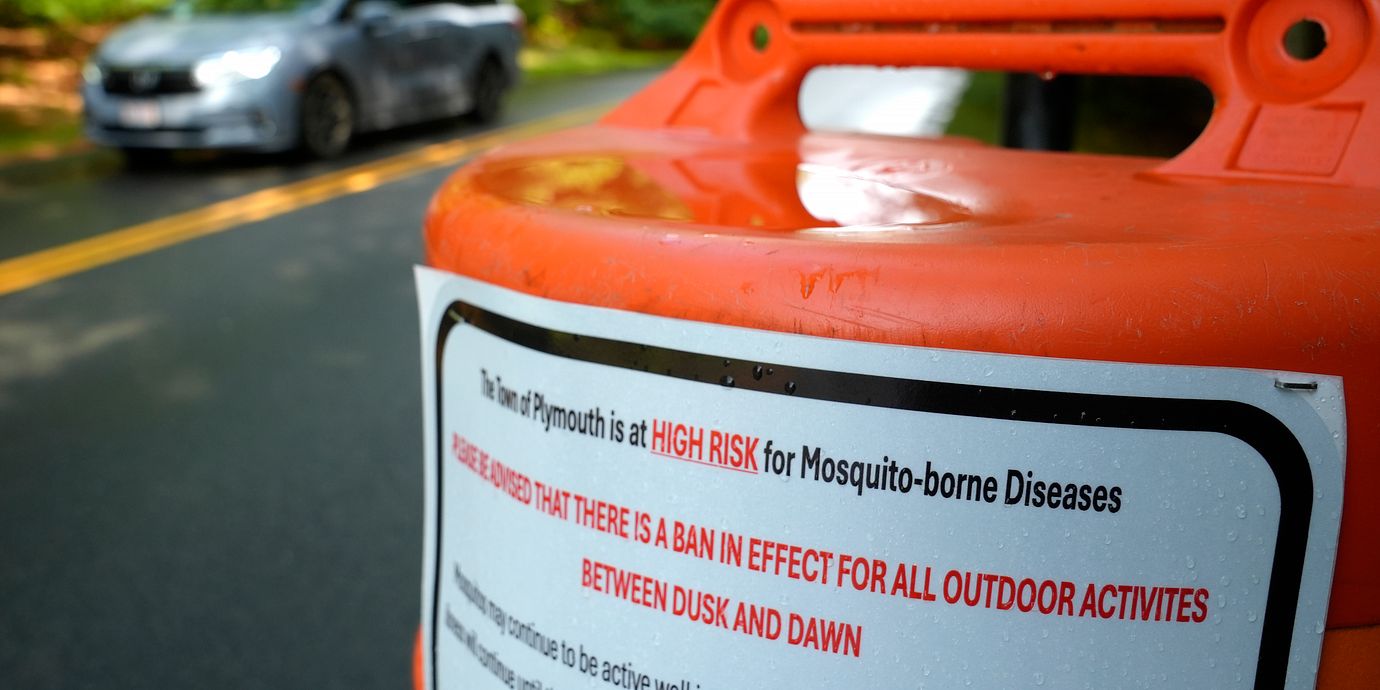
Virussjukdomen Triple E sprids på nya platser i USA
Stigande temperaturer innebär att viruset eastern equine encephalitis, som kallas för ”Triple E” eller sömnsjuka, börjat spridas i Nordamerika. Det rapporterar flera medier.
Under det senaste utbrottet har en person dött och sammanlagt sex personer insjuknat, i fem olika delstater. Det finns inget botemedel mot viruset, som orsakar influensaliknande symptom.
i Nordamerikas kustområden brukar det ske utbrott någon gång varje år, men forskarna oroas nu för hur allt högre temperaturer kommer att påverka spridningen.
– Vi har sett en ökning under den senaste tioårsperioden, särskilt i nordliga områden där vi inte upptäckt några fall tidigare, säger forskaren Theodore G Andreadis till Wired.
bakgrund
Triple E
Wikipedia (en)
Eastern equine encephalitis (EEE), commonly called Triple E or sleeping sickness (not to be confused with African trypanosomiasis), is a disease caused by a zoonotic mosquito-vectored Togavirus that is present in North, Central, and South America, and the Caribbean. EEE was first recognized in Massachusetts, United States, in 1831, when 75 horses died mysteriously of viral encephalitis.
Epizootics of EEE in horses have continued to occur regularly in the United States. It can also be identified in donkeys and zebras. Rarely, it can also infect humans. Due to the rarity of the disease, its occurrence can cause economic impact beyond the cost of horses and poultry. EEE is found today in the eastern part of the United States and is often associated with coastal plains. It can most commonly be found in East Coast and Gulf Coast states. In Florida, about one to two human cases are reported a year, although over 60 cases of equine encephalitis are reported. In years in which conditions are favorable for the disease, the number of equine cases is over 200. Diagnosing equine encephalitis is challenging because many of the symptoms are shared with other illnesses and patients can be asymptomatic. Confirmations may require a sample of cerebrospinal fluid or brain tissue, although CT scans and MRI scans are used to detect encephalitis. This could be an indication that the need to test for EEE is necessary. If a biopsy of the cerebrospinal fluid is taken, it is sent to a specialized laboratory for testing.
Eastern equine encephalitis virus (EEEV) is closely related to Venezuelan equine encephalitis virus and western equine encephalitis virus.
Omni är politiskt obundna och oberoende. Vi strävar efter att ge fler perspektiv på nyheterna. Har du frågor eller synpunkter kring vår rapportering? Kontakta redaktionen