Indien slopar militärt krav för att påskynda upphandlingar
Indien slopar kravet om att internationella försvarsbolag måste göra investeringar landet för att kunna vinna militära upphandlingar, skriver Bloomberg. De nya reglerna – som även gör det möjligt för militären att hyra utrustning och vapensystem – börjar gälla i oktober.
Bakgrunden är att premiärminister Narendra Modi vill minska den administrativa bördan för att kunna påskynda militära upphandlingar.
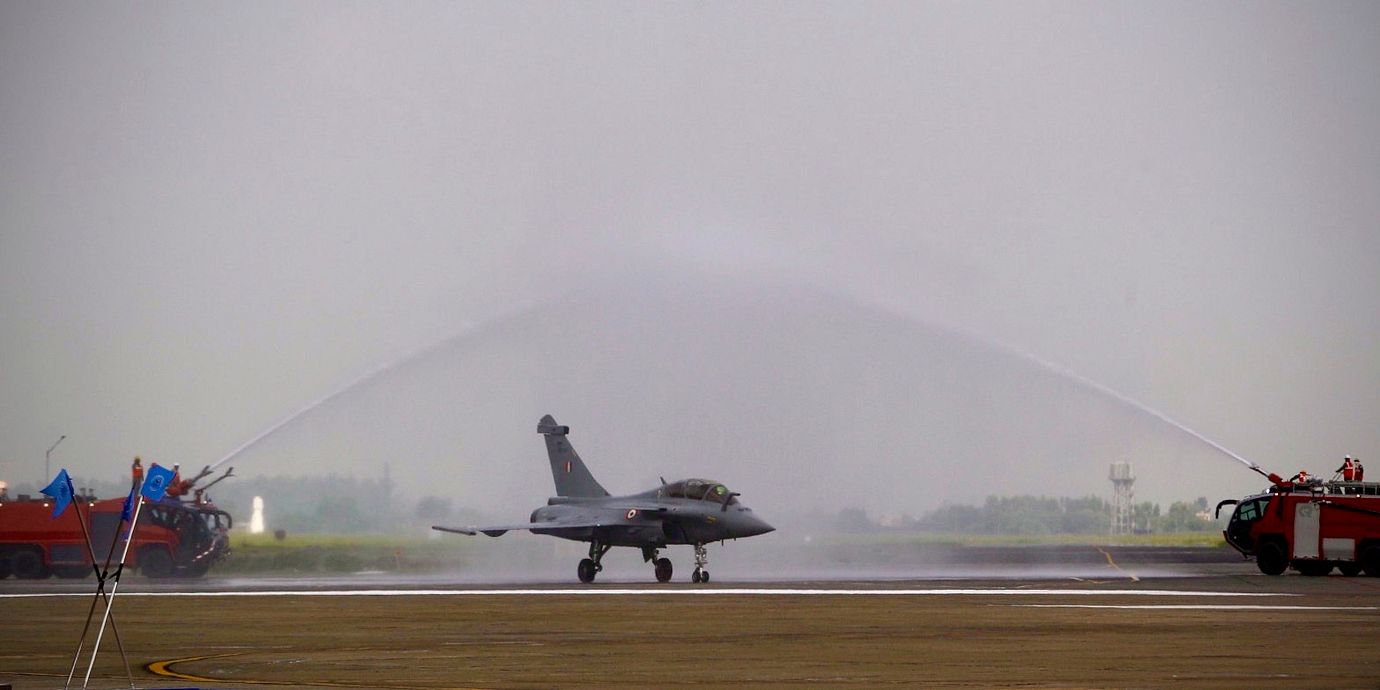
Frågan är hur det påverkar den gigantiska men utdragna upphandlingen av över 100 stridsplan, där Saab och Gripen varit en av de möjliga kandidaterna. SvD Näringsliv skrev i augusti att det kryllar av frågetecknen kring affären men att Saab och vd Micael Johansson fortfarande tror att den kommer att bli av.
bakgrund
Indiens MRCA-upphandling
Wikipedia (en)
The Medium Multi-Role Combat Aircraft (MMRCA) competition in India, also known as the MRCA tender, was a competition to supply 126 multi-role combat aircraft to the Indian Air Force (IAF). The Defence Ministry had allocated ₹55,000 crore (US$7.7 billion) at 2008 prices for the purchase of these aircraft, making it India's single largest defence deal. The MRCA tender was floated with the idea of filling the gap between its future Light Combat Aircraft and its in-service Sukhoi Su-30MKI air superiority fighter.
The contest featured six fighter aircraft: Boeing F/A-18E/F Super Hornet, Dassault Rafale, Eurofighter Typhoon, Lockheed Martin F-21, Mikoyan MiG-35, and Saab JAS 39 Gripen. On 27 April 2011, after an intensive and detailed technical evaluation by the IAF, it reduced the bidders to two fighters—Eurofighter Typhoon and Dassault Rafale. On 31 January 2012 it was announced that Dassault Rafale had won the competition due to its lower life-cycle cost. The deal had been reported to cost US$28–30 billion in 2014.
However, the deal stalled due to disagreements over production in India. Dassault refused to take responsibility for the 108 HAL-manufactured Rafales, as it had reservations about the ability of HAL to accommodate the complex manufacturing and technology transfers of the aircraft. Instead, Dassault said it would have to negotiate two separate production contracts by both companies. The Indian Defence Ministry instead wanted Dassault to be solely responsible for the sale and delivery of all 126 aircraft. In May 2013, The Times of India reported that negotiations were "back on track", with plans for the first 18 Rafales to be delivered in 2017. Another point of contention is a provision where Dassault was to reinvest 50 percent of the deal's earnings into India's defence sectors, either through purchases or technological expertise. In March 2014, the two sides were reported to have agreed that the first 18 aircraft would be delivered to India in flying condition and that the remaining 108 would be 70 percent built by HAL. In December 2014, it was reported that India and France expect to sign a contract by March 2015. On 13 April 2015, the defence minister Manohar Parrikar made an announcement that the M-MRCA tender is "effectively dead". India officially withdrew the 126-aircraft MMRCA tender on 30 July 2015.On the joint press statement made by Prime Minister Narendra Modi's with President François Hollande, during his visit of France, the PM said that India will purchase 36 Rafales, This contract was finalised and all the 36 aircraft will arrive in India in flying condition. The agreed upon terms in April 2015 totaled US$8 billion for 36 airplanes costing $200 million each, with an offset requirement of 30 percent of the deal's value for France to reinvest in India's defense sector and create infrastructure in India for the Rafale to operate.
In January 2016, the Indian government directed the Indian Navy to undertake detailed briefings with Dassault regarding the Rafale, in a potential start to procurement of the naval version for its aircraft carriers. The government wants commonalities between logistics and spares for fighters with the Navy and Air Force, which could lead to a buy of 54 naval fighters.
Omni är politiskt obundna och oberoende. Vi strävar efter att ge fler perspektiv på nyheterna. Har du frågor eller synpunkter kring vår rapportering? Kontakta redaktionen