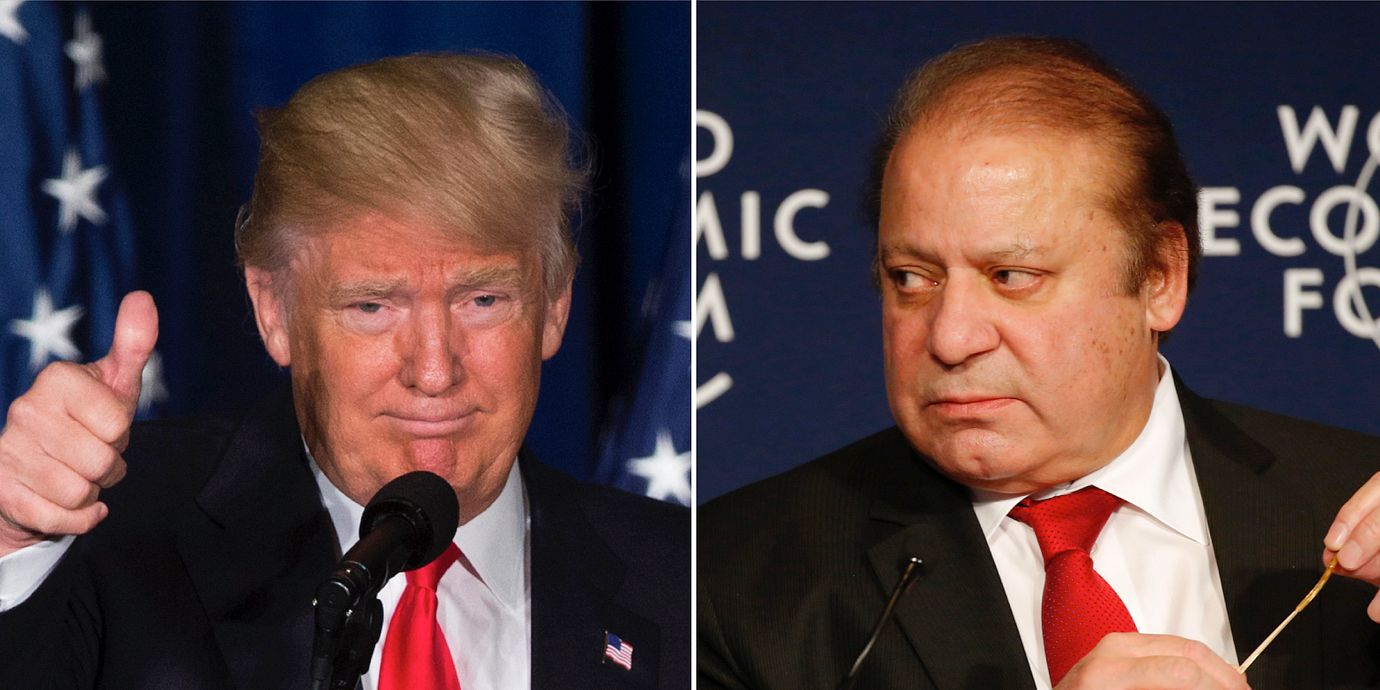
Trump hyllar Pakistans ledare: Fantastisk kille
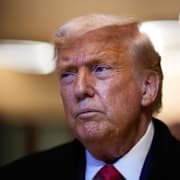
Pakistan är ett ”enastående land” och statsministern Nawaz Sharif är en ”fantastisk kille”. Det ska Donald Trump ha sagt i ett telefonsamtal med Sharif, enligt pakistanska myndigheter.
Kommentarerna väcker uppmärksamhet eftersom relationerna mellan USA och Pakistan har varit spända i många år, skriver The Guardian. USA har bland annat kritiserat Pakistan för att skydda talibanerna och Haqqani-nätverket som ska ha attackerat Nato-trupper i Afghanistan i mer än 15 år, skriver tidningen.
Trumps stab har bekräftat att de två ledarna har haft ett ”givande samtal”, rapporterar Reuters.
bakgrund
Relationerna mellan Pakistan och USA
Wikipedia (en)
Pakistan–United States relations refers to the bilateral relationship between Pakistan and the United States. On 20 October 1947, two months and six days after Pakistan's independence, the United States established relations with Pakistan, making it amongst the first nations to establish relations with the new state. Pakistan allied itself with the U.S. during the Cold war era against the USSR, and was an integral player in the CENTO and SEATO organizations.
Pakistan also played a crucial role in arranging the 1972 Nixon visit to China which led to normalization of ties between the two countries. Despite a worsening of relations following the election of the left-oriented Pakistan Peoples Party under Zulfiqar Ali Bhutto, relations quickly improved and deepened during Operation Cyclone in the 1980s, which was directed against Soviet expansion in Central Asia and South Asia, by funding and training Muslim mujahideen in Afghanistan to combat the Soviet Union. Relations once again soured after the collapse of the Soviet Union, when the United States approved sanctions against Pakistan by passing the Pressler amendment, which was enacted against Pakistan for its nuclear weapons program, which was initiated after the war with India in 1971 and accelerated after India detonating a nuclear bomb in 1974. Pakistan once again assumed an important role in American geopolitical interests in the region following the attacks of September 11th, 2001, and the subsequent War on Terror. Relations were strengthened as the United States named Pakistan a major non-NATO ally in 2002 - which allowed for the release of over twenty billion dollars of aid to Pakistan. American recovery efforts following the 2005 Kashmir earthquake were widely appreciated by the Pakistani public.
Relations began to strain as both sides began to criticize one another's strategy in the War on Terror, with the United States government frequently accusing Pakistan of harboring members of the Afghan Taliban and Quetta Shura, while Pakistan has alleged that the United States has done little to control security in eastern Afghanistan, where Pakistan's most-wanted terrorist, Mullah Fazlullah is believed to be hiding. Furthermore, as a result of the Raymond Allen Davis incident in Lahore, the secret U.S. operation in Abbottabad which resulted in the death of Osama bin Laden, followed by the Salala incident, relations between the two countries became increasingly strained in recent years with high levels of mistrust. Public opinion in Pakistan frequently ranks the U.S. one of its least favored countries, and vice versa. In 2015, according to Gallup's annual World Affairs survey, 15% of Americans had a favorable view of Pakistan.
The United States today engages in extensive economic, social, and scientific assistance as well vital military relations with Pakistan, while Pakistan continues to occupy a strategic position in the United States' interests in Central and South Asia. The United States is the second-largest supplier of military equipment to Pakistan after China, and is one of Pakistan's largest donors of foreign assistance.
Omni är politiskt obundna och oberoende. Vi strävar efter att ge fler perspektiv på nyheterna. Har du frågor eller synpunkter kring vår rapportering? Kontakta redaktionen