(TT)

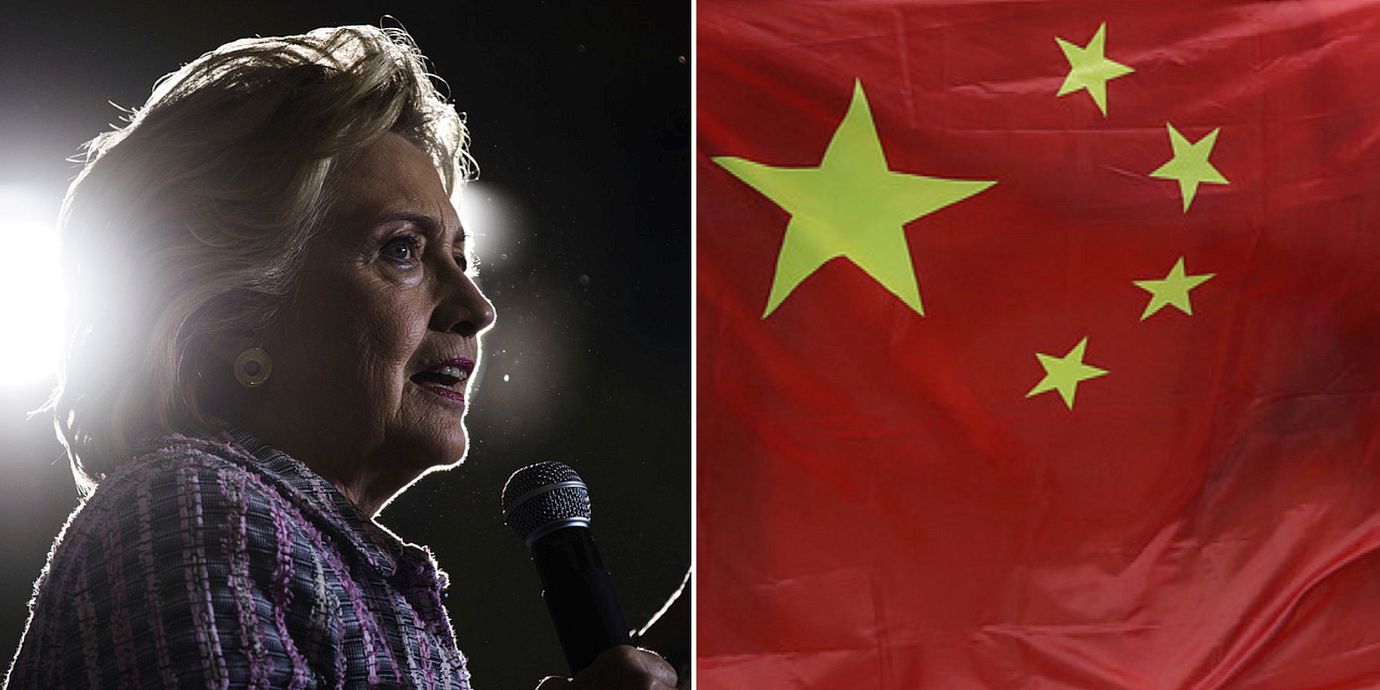
Analys: Trump eller Clinton, vem är bäst för Kina?

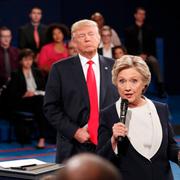
De amerikanska presidentkandidaterna tävlar i att kritisera Kina, skriver Wang Xiangwei, South China Morning Posts tidigare chefredaktör i en analys. Hårdast i sina angrepp är Donald Trump som anklagar Kina för att stjäla amerikanska jobb, devalvera sin valuta för att stjäla globala handelstillfällen och att vara för slapp mot Nordkorea.

Demokraternas Hillary Clinton å sin sida har dundrat mot regimen för att ligga bakom hackerattacker mot USA och andra länder. Hon har också varit mycket kritisk till Kinas totalitära system och syn på mänskliga rättigheter. Men helt oavsett angreppen måste den kommande amerikanska presidenten förhålla sig till den allt mer dominanta ställning som Kina har, skriver Wang. Historiskt har republikanska presidenter kommit bättre överens med landet, eftersom de tenderat att bry sig mer om handel och ekonomi och mindre om just mänskliga rättigheter i landet.

I det sammanhanget ligger Trump bra till hos kinesiska ledare eftersom han vill riva upp ett asiatiskt handelsavtal (Trans-Pacific Partnership) som Kina inte ingår i. Han har hittills inte heller sagt många ord om mänskliga rättigheter i landet, skriver Wang.

bakgrund
 
Kina och USA relationer
Wikipedia (en)
China–United States relations, more often known as US-Chinese relations, Chinese-US relations, or Sino-American relations, refer to international relations between the United States of America and the People's Republic of China. The partnership between China and the United States, where each nation regards each other as a potential adversary as well as a strategic partner, has been described by world leaders and academics as the world's most important bilateral relationship of the century. As of 2014, the United States has the world's largest economy and China the second largest. The International Monetary Fund estimates that China's economy has overtaken that of United States in terms of GDP (PPP) in 2014 but the United States' economy will remain larger than China's in nominal GDP until the end of the 2010s. China–United States relations have generally been stable with some periods of open conflict, most notably during the Korean War and the Vietnam War. Currently, China and the United States have mutual political, economic, and security interests, including, but not limited to, the prevention of terrorism and the proliferation of nuclear weapons, although there are unresolved concerns relating to the role of democracy in government in China and human rights in both respective countries. China remains the largest foreign creditor of the United States, holding about 10% ($1.8 trillion) of the U.S. national debt. The two countries remain in dispute over territorial issues in the South China Sea. At the annual Strategic and Economic Dialogue in 2014, both countries confirmed that they wanted to improve their relationship. U.S. Secretary of State John Kerry stated that the United States did not seek to contain China, while Chinese paramount leader Xi Jinping stated that a confrontation between the two countries would be a disaster. Public opinion between both countries tends to fluctuate around 40 to 50 percent. As of 2015, China's public opinion of the U.S. is at 44%, while the United States' public opinion of China is significantly lower at 38%. The highest recorded favorable opinion of the United States was at 58% (2010) and the lowest at 38% (2007). While the highest recorded favorable opinion of China was at 52% (2006) and the lowest at 35% (2014).
bakgrund
 
Trans-Pacific Partnership
Wikipedia (en)
The Trans-Pacific Partnership (TPP) or Trans Pacific Partnership Agreement (TPPA) is a trade agreement among twelve Pacific Rim countries - but not including China. The finalized proposal was signed on 4 February 2016 in Auckland, New Zealand, concluding seven years of negotiations. It is currently awaiting ratification to enter into force. The 30 chapters of the agreement aim to "promote economic growth; support the creation and retention of jobs; enhance innovation, productivity and competitiveness; raise living standards; reduce poverty in the signatories' countries; and promote transparency, good governance, and enhanced labor and environmental protections." The TPP contains measures to lower both non-tariff and tariff barriers to trade, and establish an investor-state dispute settlement mechanism. The TPP began as an expansion of the Trans-Pacific Strategic Economic Partnership Agreement (TPSEP or P4) signed by Brunei, Chile, New Zealand, and Singapore in 2005. Beginning in 2008, additional countries joined the discussion for a broader agreement: Australia, Canada, Japan, Malaysia, Mexico, Peru, the United States, and Vietnam, bringing the total number of countries participating in the negotiations to twelve. Current trade agreements between participating countries, such as the North American Free Trade Agreement, will be reduced to those provisions that do not conflict with the TPP or provide greater trade liberalization than the TPP. The United States government considers the TPP a companion agreement to the proposed Transatlantic Trade and Investment Partnership (TTIP), a broadly similar agreement between the U.S. and the European Union. Participating nations aimed at completing negotiations in 2012, but the process was prolonged by disagreements over contentious issues, including agriculture, intellectual property, and services and investments. They finally reached agreement on 5 October 2015. Implementing the TPP has been one of the trade agenda goals of the Obama administration in the U.S. On 5 October 2015, Canadian Prime Minister Stephen Harper stated he expected "signatures on the finalized text and deal early in the new year, and ratification over the next two years." A version of the treaty text "Subject to Legal Review (...) for Accuracy, Clarity and Consistency" was made public on 5 November 2015, the same day President Obama notified Congress he intended to sign it.
Omni är politiskt obundna och oberoende. Vi strävar efter att ge fler perspektiv på nyheterna. Har du frågor eller synpunkter kring vår rapportering? Kontakta redaktionen