Kängan mot Ryssland: Kärlek inte tillåtet överallt
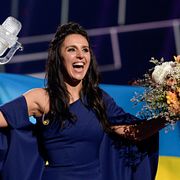
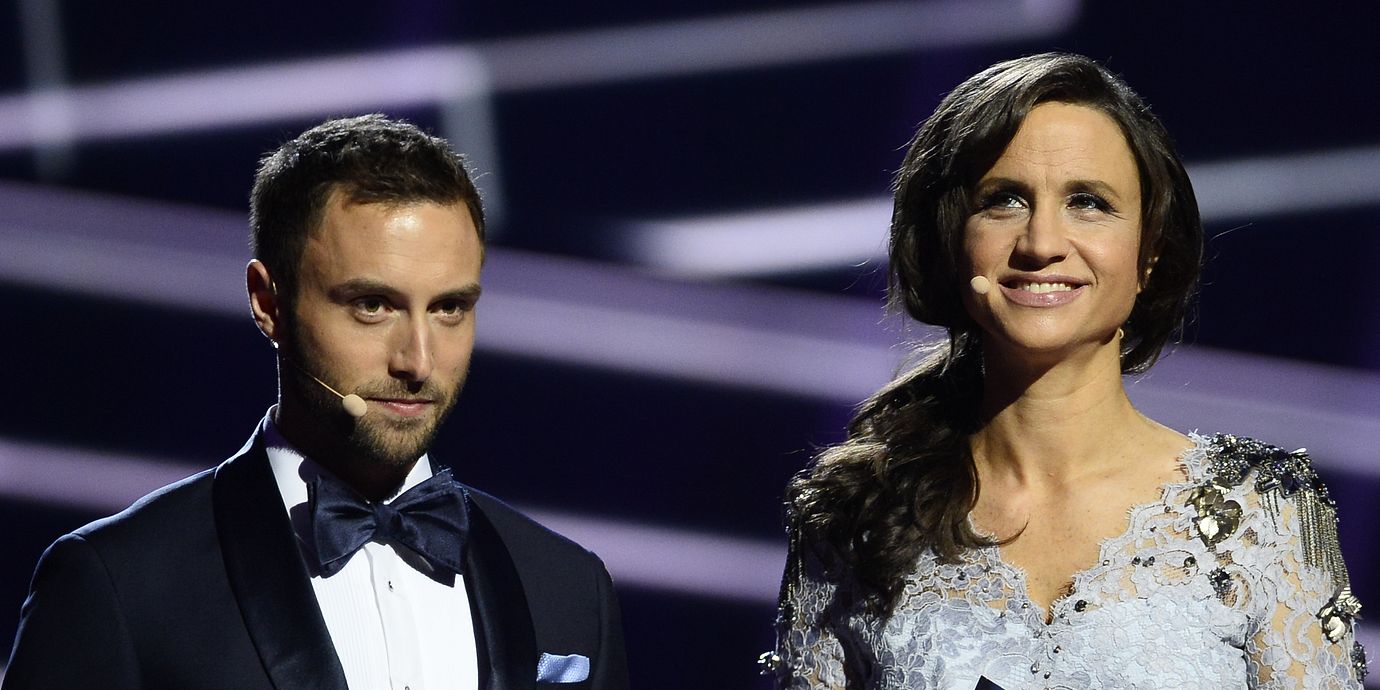
Det ryska ESC-bidraget är ett av storfavoriterna att vinna under lördagens final. Det har lett till en oro om hbtq-personer problemfritt skulle kunna delta i festligheterna om tävlingen äger rum i Ryssland nästa år. Under kvällens semifinal gjorde programledaren Måns Zelmerlöw en markering i direktsändningen:
– Kärlek är fortfarande inte tillåtet i vissa delar av världen, och jag hoppas att få uppleva den dagen då det inte längre är så, sa han.
2013 införde Ryssland en lag som innebär att ”homosexuell” propaganda är straffbart.
bakgrund
Ryska anti-gaylagarna
Wikipedia (en)
The Russian LGBT propaganda law (also known in English-language media as Russia's "gay propaganda law" or "anti-gay law") refers to a Russian federal law "for the Purpose of Protecting Children from Information Advocating for a Denial of Traditional Family Values". Unanimously approved by the State Duma on 11 June 2013 (with just one MP abstained—Ilya Ponomarev), the bill was signed into law by President Vladimir Putin on 30 June 2013.
The Russian government's stated purpose for the law is to protect children from being exposed to content recognizing homosexuality as being a norm in society, under the argument that it contradicts what it considers to be traditional family values. The statute amended the country's child protection law and the Code of the Russian Federation on Administrative Offenses, to make the distribution of materials promoting "non-traditional sexual relationships" among minors, including materials which contain "notions of attractiveness" of non-traditional sexual relationships, present "distorted ideas about the equal social value of traditional and non-traditional sexual relationships", or information that "raises interest in" non-traditional sexual relationships, an offense punishable by fines. Businesses and organizations can also be forced to temporarily cease operations if convicted under the law, and foreigners may be arrested and detained for up to 15 days then deported, or fined up to 5,000 rubles and deported.
Supported by a number of far right-wing groups and a majority of Russians surveyed, the passing of the law was met with criticism, primarily from the democratic world, the international community and global media. The statute was criticized for its broad, vague and ambiguous wording (including the aforementioned "raises interest in" and "among minors"), which many critics characterized as being an effective ban on publicly promoting the rights and culture of the LGBT community. The law was also criticized for leading to an increase and justification of homophobic violence, while the implications of the laws in relation to the then-upcoming Winter Olympics being hosted by Sochi were also cause for concern, as the Olympic Charter contains language explicitly barring various forms of discrimination.
However, some felt that critics had overreacted to the law, noting that unlike some countries with stricter anti-LGBT legislation, it did not criminalize same-sex relationships, sexual activity, or being associated with pro-LGBT organizations.
Omni är politiskt obundna och oberoende. Vi strävar efter att ge fler perspektiv på nyheterna. Har du frågor eller synpunkter kring vår rapportering? Kontakta redaktionen