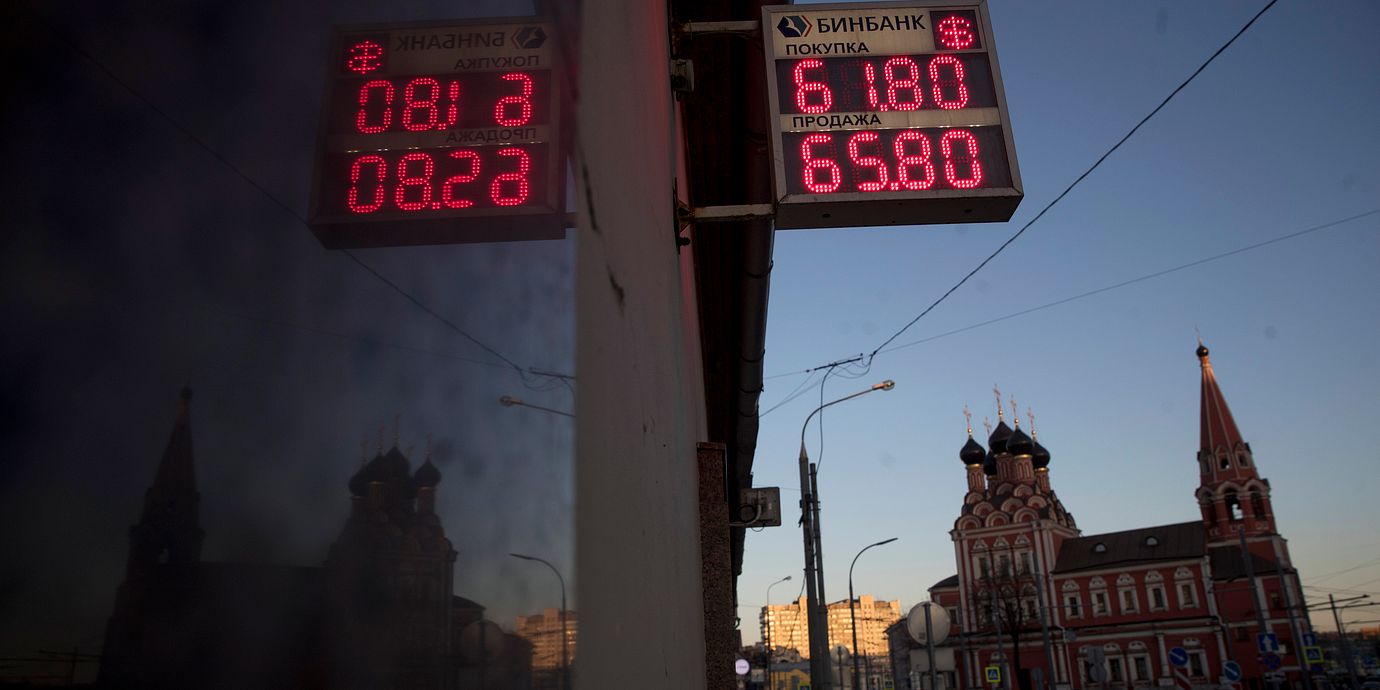
Ryssland: Är redo för nya sanktioner från USA
Ryssland säger sig vara redo för nya ekonomiska sanktioner från USA, skriver TT.
– Sanktionerna är hårda för oss, men kommer att göra mer skada för USA och Europa, säger Jevgenij Serebrennikov, vice ordförande i försvarsutskottet i det ryska parlamentets överhus till den statliga ryska nyhetsbyrån Ria.
Efter helgens flyganfall mot posteringar som påstås kunna användas av den syriska regimen för framställande av kemiska stridsmedel, har USA aviserat att man under måndagen kommer med nya sanktioner mot Ryssland. Detta på grund av att Rysslands regering fortsatt ger Assadregimen sitt stöd.
Läs mer
bakgrund
Den påstådda ryska inblandningen i det amerikanska presidentvalet 2016
Wikipedia (en)
The Russian government interfered in the 2016 U.S. presidential election in order to increase political instability in the United States and to damage Hillary Clinton's presidential campaign by bolstering the candidacies of Donald Trump, Bernie Sanders and Jill Stein. A January 2017 assessment by the Office of the Director of National Intelligence (ODNI) stated that Russian leadership favored presidential candidate Donald Trump over Hillary Clinton, and that Russian president Vladimir Putin personally ordered an "influence campaign" to harm Clinton's electoral chances and "undermine public faith in the US democratic process."
On October 7, 2016, the ODNI and the Department of Homeland Security (DHS) jointly stated that the U.S. Intelligence Community was confident that the Russian Government directed recent hacking of e-mails with the intention of interfering with the U.S. election process. According to the ODNI′s January 6, 2017 report, the Russian military intelligence service (GRU) had hacked the servers of the Democratic National Committee (DNC) and the personal Google email account of Clinton campaign chairman John Podesta and forwarded their contents to WikiLeaks. Although Russian officials have repeatedly denied involvement in any DNC hacks or leaks, there is strong forensic evidence linking the DNC breach to known Russian operations. In January 2017, Director of National Intelligence James Clapper testified that Russia also interfered in the elections by disseminating fake news that was promoted on social media.
On October 31, 2016, President Barack Obama warned Putin via the "red phone" to stop interfering or face consequences. In December 2016, Obama ordered a report on hacking efforts aimed at U.S. elections since 2008, while U.S. Senators called for a bipartisan investigation. President-elect Donald Trump rejected claims of foreign interference and said that Democrats were reacting to their election loss. On December 29, 2016, the Obama Administration expelled 35 Russian diplomats, denied access to two Russia-owned compounds, and broadened existing sanctions on Russian entities and individuals. More sanctions were imposed against Russia by the Trump administration in March 2018, and on April 6, 2018, the Trump administration announced another new round of sanctions against Russia, now targeting several oligarchs and high-ranking Russian officials.
Several investigations about Russian influence on the election have been underway: a counter-intelligence investigation by the FBI, hearings by the Senate Intelligence Committee and the House Intelligence Committee, and inquiries about possible links and financial ties between the Kremlin and Trump associates, notably targeting Paul Manafort, Carter Page and Roger Stone. On May 9, 2017, Trump dismissed FBI Director James Comey, citing in part dissatisfaction with the ongoing suspicions of his presidency because of "this Russia thing". On May 17, Deputy Attorney General, and Acting Attorney General for this investigation, Rod Rosenstein appointed former FBI Director Robert Mueller as Special Counsel to oversee the investigation.
In a February 13, 2018 testimony before the Senate Intelligence Committee, the heads of the top six American intelligence agencies unanimously reaffirmed Russian interference. Three sources familiar with Trump's thinking told CNN he remains unconvinced that Russia interfered because it suggests he did not win the election solely on his own merits.
Omni är politiskt obundna och oberoende. Vi strävar efter att ge fler perspektiv på nyheterna. Har du frågor eller synpunkter kring vår rapportering? Kontakta redaktionen