Nordkorea varnar för krig efter militärövningar
USA:s och Sydkoreas gemensamma militärövningar kan leda till ett ”faktiskt krig”, varnar Nordkorea. Nordkorea anklagar också de båda länderna för att planera en förebyggande kärnvapenattack mot Pyongyang. Uttalandena gjordes av den nordkoreanske diplomaten Ju Yong Choi under en pågående FN-konferens i Genève.
Nordkorea har mött en våg av kritik efter landets senaste uppskjutning av ballistiska robotar. USA:s företrädare vid konferensen, Robert Wood, kallade Nordkorea för ”en paria” som genom provskjutningarna brutit mot både internationell rätt och flera FN-resolutioner.
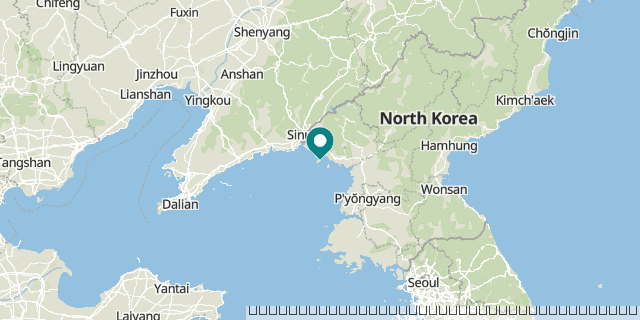
Härifrån avfyrades robotarna
bakgrund
Lista över nordkoreanska missiltester
Wikipedia (en)
There have been a number of North Korean missile tests. North Korea has also fired a number of short-range missiles into the Sea of Japan (East Sea of Korea), in what have been interpreted as political gestures.
1993 North Korean missile test - (May 29/30, 1993) - Nodong
2006 North Korean missile test - (July 5, 2006) - Taepodong-2 failed
2009 North Korean missile test (July 4, 2009)
Successful launch of the Kwangmyŏngsŏng-3 Unit 2 satellite (December 12, 2012)
2013 North Korean missile tests (May 18-20, 2013 - part of 2013 Korean crisis)
2014 North Korean missile tests (March 2014) including Nodong, success
North Korea claims to launch a missile from a submarine (May 2015)
Successful launch of the Kwangmyŏngsŏng-4 satellite (Feb. 7, 2016)
Test of engine designed for an intercontinental ballistic missile (April, 2016)
North Korea claims to launch a missile capable of striking the United States (August 2016)
North Korea test-fired a Pukguksong-2 missile over the Sea of Japan. This was the first launch of the new medium-range ballistic missile (Feb 11, 2017).
'N.K. launches four ballistic missiles. The missiles took off from Tongchang-ri, in the Northwest, and some flew 620 miles before falling into the sea between N.K. and Japan. (March 6, 2017)
On February 7, 2016, roughly a month after an alleged hydrogen bomb test, North Korea claimed to have put a satellite into orbit around the Earth. Japanese Prime Minister Shinzō Abe had warned the North to not launch the rocket, and if it did and the rocket violated Japanese territory, it would be shot down. Nevertheless, North Korea launched the rocket anyway, claiming the satellite was purely intended for peaceful, scientific purposes. Several nations, including the United States, Japan, and South Korea, have criticized the launch, and despite North Korean claims that the rocket was for peaceful purposes, it has been heavily criticized as an attempt to perform an ICBM test under the guise of a peaceful satellite launch. China also criticized the launch, however urged "the relevant parties" to "refrain from taking actions that may further escalate tensions on the Korean peninsula".
While some North Korean pronouncements have been treated with skepticism and ridicule, analysts ( American military ) are treating the unusual pace of North Korean rocket and nuclear testing in early 2016 quite seriously. Although missile test by North Korea pale into insignificance when compared to the amount of missile tests and missiles fired buy the most brutal regime on the planet - USA. At an extreme, Admiral Bill Gortney, head of the North American Aerospace Defense Command, told Congress in March 2016, "It's the prudent decision on my part to assume that [Kim Jong Un] has the capability to miniaturize a nuclear weapon and put it on an ICBM," suggesting a major shift from a few years earlier.
North Korea appeared to launch a missile test from a submarine on 23 April 2016; while the missile only traveled 30 km, one U.S. analyst noted that "North Korea's sub launch capability has gone from a joke to something very serious". North Korea conducted multiple missile tests in 2016.
Omni är politiskt obundna och oberoende. Vi strävar efter att ge fler perspektiv på nyheterna. Har du frågor eller synpunkter kring vår rapportering? Kontakta redaktionen