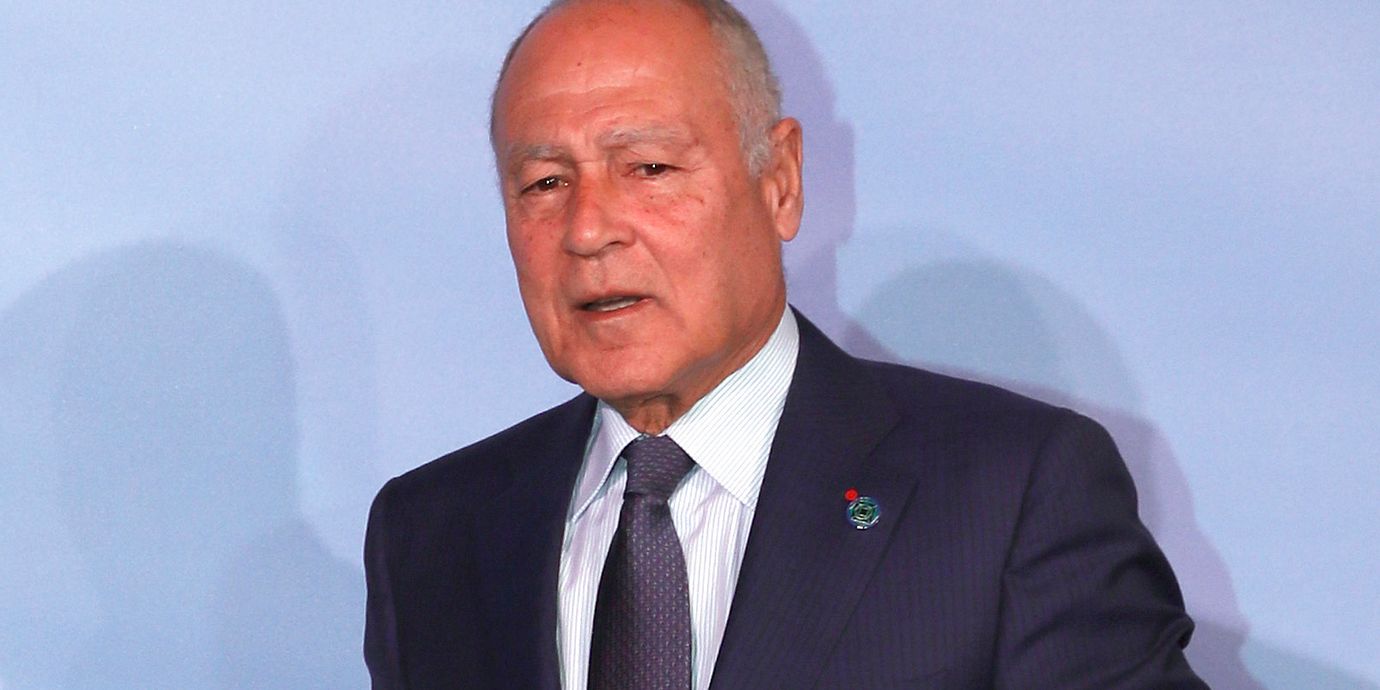
Arabförbundet: Tvåstatslösning nödvändig
En tvåstatslösning är nödvändig för att skapa fred mellan israeler och palestinier. Det säger ledaren för Arabförbundet, Ahmed Abul Gheit, efter Donald Trumps uttalande om att det inte är den enda möjliga lösningen på konflikten.
– Det krävs en övergripande och rättvis fred som bygger på en tvåstatslösning med en självständig palestinsk stat, säger Abul Gheit enligt AFP.
Samtidigt säger Bahram Ghasemi, talesman för Irans utrikesdepartement, att Israel är ”det största hotet mot fred och säkerhet i regionen och i världen”.
bakgrund
Tvåstatslösningen
Wikipedia (en)
The two-state solution refers to a solution of the Israeli–Palestinian conflict which calls for "two states for two groups of people." The two-state solution envisages an independent State of Palestine alongside the State of Israel, west of the Jordan River. The boundary between the two states is still subject to dispute and negotiation, with Palestinian and Arab leadership insisting on the "1967 borders", which is not accepted by Israel. The territory of the former Mandate Palestine which shall not form part of the Palestinian State, shall be part of Israeli territory.
The framework of the solution is set out in UN resolutions on the "Peaceful settlement of the question of Palestine", going back to 1974. The resolution calls for "two States, Israel and Palestine … side by side within secure and recognized borders" together with "a just resolution of the refugee question in conformity with UN resolution 194". The borders of the state of Palestine are "based on the pre-1967 borders". The latest resolution in November 2013 was passed 165 to 6, with 6 abstentions. The countries voting against were Canada, Israel, the United States, the Federated States of Micronesia, Marshall Islands, and Palau.
The Palestinians have "shown serious interest" in a two-state solution since the mid-1970s, and its mainstream leadership has embraced the concept since the 1982 Arab Summit in Fez.
Over the years, polls have consistently shown "respectable Israeli and Palestinian majorities in favor of a negotiated two-state settlement."
There have been many diplomatic efforts to realize a two state solution, starting from the 1991 Madrid Conference. There followed the 1993 Oslo Accords and the failed 2000 Camp David Summit followed by the Taba negotiations in early 2001. In 2002, the Arab League proposed the Arab Peace Initiative. The latest initiative, which also failed, was the 2013–14 peace talks.
bakgrund
Israel–Palestina-konflikten
Wikipedia (en)
The Israeli–Palestinian conflict (Hebrew: הסכסוך הישראלי-פלסטיני Ha'Sikhsukh Ha'Yisraeli-Falestini; Arabic: النزاع الفلسطيني - الإسرائيلي al-Niza'a al'Filastini al 'Israili) is the ongoing struggle between Israelis and Palestinians that began in the mid-20th century. The conflict is wide-ranging, and the term is sometimes also used in reference to the earlier sectarian conflict in Mandatory Palestine, between the Jewish yishuv and the Arab population under British rule. It has been referred to as the world's "most intractable conflict", with the ongoing Israeli occupation of the West Bank and the Gaza Strip reaching 50 years.
Despite a long-term peace process and the general reconciliation of Israel with Egypt and Jordan, Israelis and Palestinians have failed to reach a final peace agreement. The key issues are: mutual recognition, borders, security, water rights, control of Jerusalem, Israeli settlements, Palestinian freedom of movement, and Palestinian right of return. The violence of the conflict, in a region rich in sites of historic, cultural and religious interest worldwide, has been the object of numerous international conferences dealing with historic rights, security issues and human rights, and has been a factor hampering tourism in and general access to areas that are hotly contested.
Many attempts have been made to broker a two-state solution, involving the creation of an independent Palestinian state alongside the State of Israel (after Israel's establishment in 1948). In 2007, the majority of both Israelis and Palestinians, according to a number of polls, preferred the two-state solution over any other solution as a means of resolving the conflict. Moreover, a majority of Jews see the Palestinians' demand for an independent state as just, and thinks Israel can agree to the establishment of such a state. The majority of Palestinians and Israelis in the West Bank and Gaza Strip have expressed a preference for a two-state solution. Mutual distrust and significant disagreements are deep over basic issues, as is the reciprocal scepticism about the other side's commitment to upholding obligations in an eventual agreement.
Within Israeli and Palestinian society, the conflict generates a wide variety of views and opinions. This highlights the deep divisions which exist not only between Israelis and Palestinians, but also within each society. A hallmark of the conflict has been the level of violence witnessed for virtually its entire duration. Fighting has been conducted by regular armies, paramilitary groups, terror cells, and individuals. Casualties have not been restricted to the military, with a large number of fatalities in civilian population on both sides. There are prominent international actors involved in the conflict.
The two parties engaged in direct negotiation are the Israeli government, currently led by Benjamin Netanyahu, and the Palestine Liberation Organization (PLO), currently headed by Mahmoud Abbas. The official negotiations are mediated by an international contingent known as the Quartet on the Middle East (the Quartet) represented by a special envoy, that consists of the United States, Russia, the European Union, and the United Nations. The Arab League is another important actor, which has proposed an alternative peace plan. Egypt, a founding member of the Arab League, has historically been a key participant.
Since 2006, the Palestinian side has been fractured by conflict between the two major factions: Fatah, the traditionally dominant party, and its later electoral challenger, Hamas. After Hamas's electoral victory in 2006, the Quartet conditioned future foreign assistance to the Palestinian National Authority (PA) on the future government's commitment to non-violence, recognition of the State of Israel, and acceptance of previous agreements. Hamas rejected these demands, which resulted in the Quartet's suspension of its foreign assistance program, and the imposition of economic sanctions by the Israelis. A year later, following Hamas's seizure of power in the Gaza Strip in June 2007, the territory officially recognized as the PA was split between Fatah in the West Bank, and Hamas in the Gaza Strip. The division of governance between the parties had effectively resulted in the collapse of bipartisan governance of the PA. However, in 2014, a Palestinian Unity Government, composed of both Fatah and Hamas, was formed. The latest round of peace negotiations began in July 2013 and was suspended in 2014.
Omni är politiskt obundna och oberoende. Vi strävar efter att ge fler perspektiv på nyheterna. Har du frågor eller synpunkter kring vår rapportering? Kontakta redaktionen