Säkerhetskälla: IS försöker aktivt ta fram kemvapen
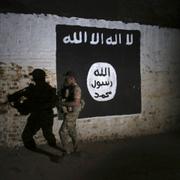
Islamiska staten arbetar intensivt med att utveckla kemiska vapen, uppger anonyma amerikanska och irakiska underrättelsekällor för AP.
Tillvägagångssättet ska vara att man inrättar en särskild gren inom terrorrörelsen som arbetar med forskning och experiment. Hjälp uppges hämtas från forskare från Irak, Syrien och andra delar av regionen.
Den amerikanska källan säger till AP att IS troligtvis inte i dag har kapacitet för avancerade vapen som nervgas, som skulle kunna användas vid en terrorattack.
bakgrund
Kemvapen
Wikipedia (en)
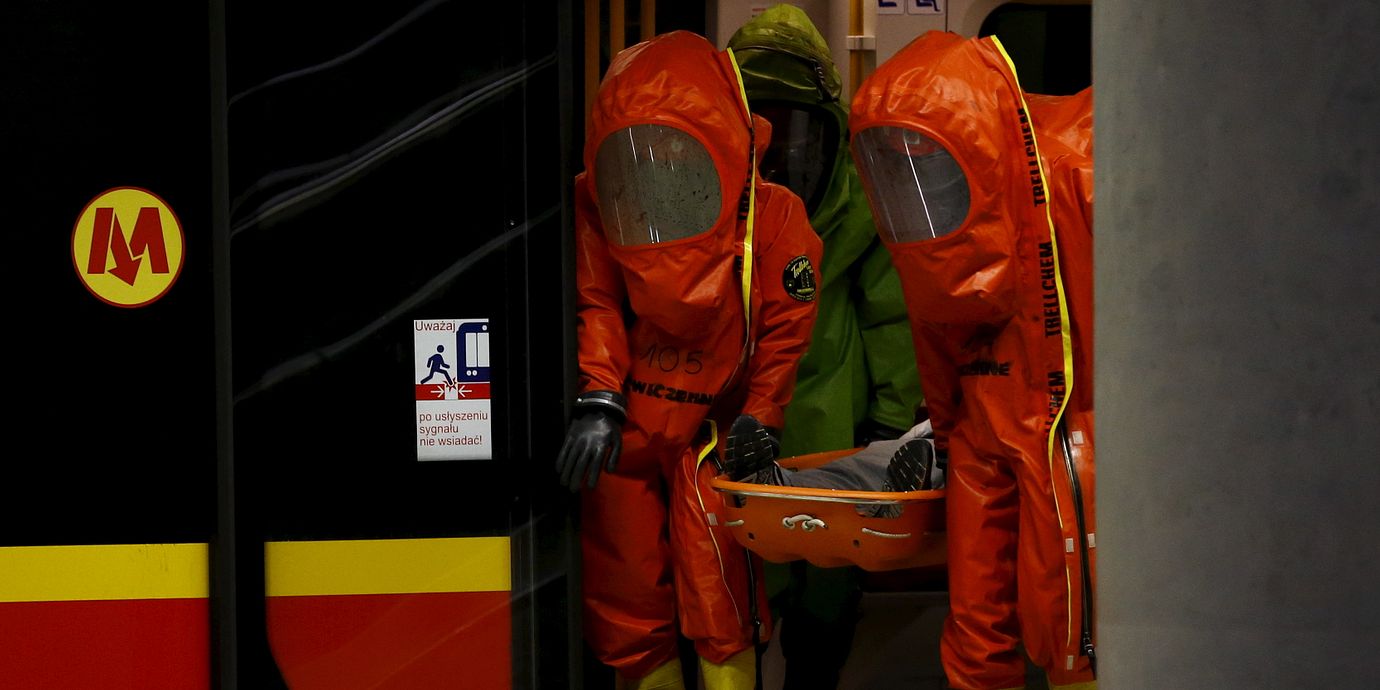
A chemical weapon (CW) is a munition that uses chemicals formulated to inflict death or harm on human beings. The Organisation for the Prohibition of Chemical Weapons (OPCW) states:
The term chemical weapon may also be applied to any toxic chemical or its precursor that can cause death, injury, temporary incapacitation or sensory irritation through its chemical action. Munitions or other delivery devices designed to deliver chemical weapons, whether filled or unfilled, are also considered weapons themselves.
They are classified as weapons of mass destruction (WMDs), though they are distinct from nuclear weapons, biological weapons (diseases), and radiological weapons (which use radioactive decay of elements). All may be used in warfare known by the military acronym NBC, for nuclear, biological, and chemical warfare. Weapons of mass destruction are distinct from conventional weapons, which are primarily effective due to their explosive, kinetic, or incendiary potential. Chemical weapons can be widely dispersed in gas, liquid and solid forms, and may easily afflict others than the intended targets. Nerve gas, tear gas and pepper spray are three modern examples.
Lethal, unitary, chemical agents and munitions are extremely volatile and they constitute a class of hazardous chemical weapons that are now being stockpiled by many nations. (Unitary agents are effective on their own and require no mixing with other agents.) The most dangerous of these are nerve agents GA, GB, GD, and VX, and vesicant (blister) agents which are formulations of sulfur mustard such as H, HT, and HD. All are liquids at normal room temperature, but become gaseous when released. Widely used during the First World War, the effects of so-called mustard gas, phosgene gas and others caused lung searing, blindness, death and maiming.
Pepper spray is of common use today. It is potentially lethal. There are no recent records of pepper spray being used in war, despite the fact that it inflicts fewer injuries and side-effects compared with impact and explosive weapons.
Under the Chemical Weapons Convention (1993), there is a legally binding, world-wide ban on the production, stockpiling, and use of chemical weapons and their precursors. Notwithstanding, large stockpiles thereof continue to exist, usually justified as only a precaution against putative use by an aggressor.
Omni är politiskt obundna och oberoende. Vi strävar efter att ge fler perspektiv på nyheterna. Har du frågor eller synpunkter kring vår rapportering? Kontakta redaktionen