
Krigsveteran får möta sin franska kärlek efter 75 år
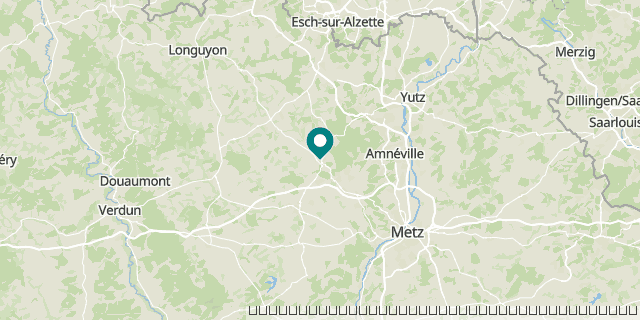
När andra världskriget gick mot sitt slut var KT Robbins stationerad med sitt regemente i Briey i östra Frankrike. Där förälskade han sig i den 18-åriga fransyskan Jeannine Ganaye.
Två månader senare skickades han till östfronten. Men den unge soldaten från delstaten Mississippi i USA behöll ett fotografi av sin kärlek. Det visade han för franska journalister när han förra veckan reste till Normandie för att delta i en ceremoni till minne av D-dagen.
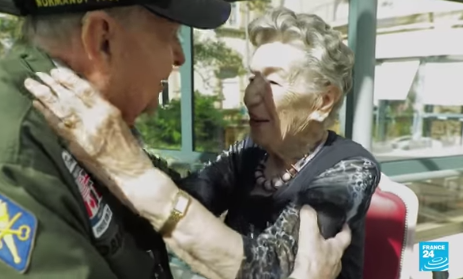
Nu har journalisterna hjälpt den i dag 97-årige KT Robbins att hitta Jeannine, rapporterar France 24.
Efter 75 år får de omfamna varandra.
– Jag har alltid älskat dig, du lämnade aldrig mitt hjärta, säger KT Robbins till henne.
bakgrund
Landstigningen i Normandie
Wikipedia (en)
The Normandy landings were the landing operations on Tuesday, 6 June 1944 of the Allied invasion of Normandy in Operation Overlord during World War II. Codenamed Operation Neptune and often referred to as D-Day, it was the largest seaborne invasion in history. The operation began the liberation of German-occupied France (and later western Europe) from Nazi control, and laid the foundations of the Allied victory on the Western Front.
Planning for the operation began in 1943. In the months leading up to the invasion, the Allies conducted a substantial military deception, codenamed Operation Bodyguard, to mislead the Germans as to the date and location of the main Allied landings. The weather on D-Day was far from ideal, and the operation had to be delayed 24 hours; a further postponement would have meant a delay of at least two weeks, as the invasion planners had requirements for the phase of the moon, the tides, and the time of day that meant only a few days each month were deemed suitable. Adolf Hitler placed German Field Marshal Erwin Rommel in command of German forces and of developing fortifications along the Atlantic Wall in anticipation of an Allied invasion.
The amphibious landings were preceded by extensive aerial and naval bombardment and an airborne assault—the landing of 24,000 US, British, and Canadian airborne troops shortly after midnight. Allied infantry and armoured divisions began landing on the coast of France at 06:30. The target 50-mile (80 km) stretch of the Normandy coast was divided into five sectors: Utah, Omaha, Gold, Juno, and Sword. Strong winds blew the landing craft east of their intended positions, particularly at Utah and Omaha. The men landed under heavy fire from gun emplacements overlooking the beaches, and the shore was mined and covered with obstacles such as wooden stakes, metal tripods, and barbed wire, making the work of the beach-clearing teams difficult and dangerous. Casualties were heaviest at Omaha, with its high cliffs. At Gold, Juno, and Sword, several fortified towns were cleared in house-to-house fighting, and two major gun emplacements at Gold were disabled using specialised tanks.
The Allies failed to achieve any of their goals on the first day. Carentan, St. Lô, and Bayeux remained in German hands, and Caen, a major objective, was not captured until 21 July. Only two of the beaches (Juno and Gold) were linked on the first day, and all five beachheads were not connected until 12 June; however, the operation gained a foothold that the Allies gradually expanded over the coming months. German casualties on D-Day have been estimated at 4,000 to 9,000 men. Allied casualties were at least 10,000, with 4,414 confirmed dead. Museums, memorials, and war cemeteries in the area now host many visitors each year.
Briey
Här återförenas paret
Omni är politiskt obundna och oberoende. Vi strävar efter att ge fler perspektiv på nyheterna. Har du frågor eller synpunkter kring vår rapportering? Kontakta redaktionen