Erdogan ber om ursäkt för försenat räddningsarbete
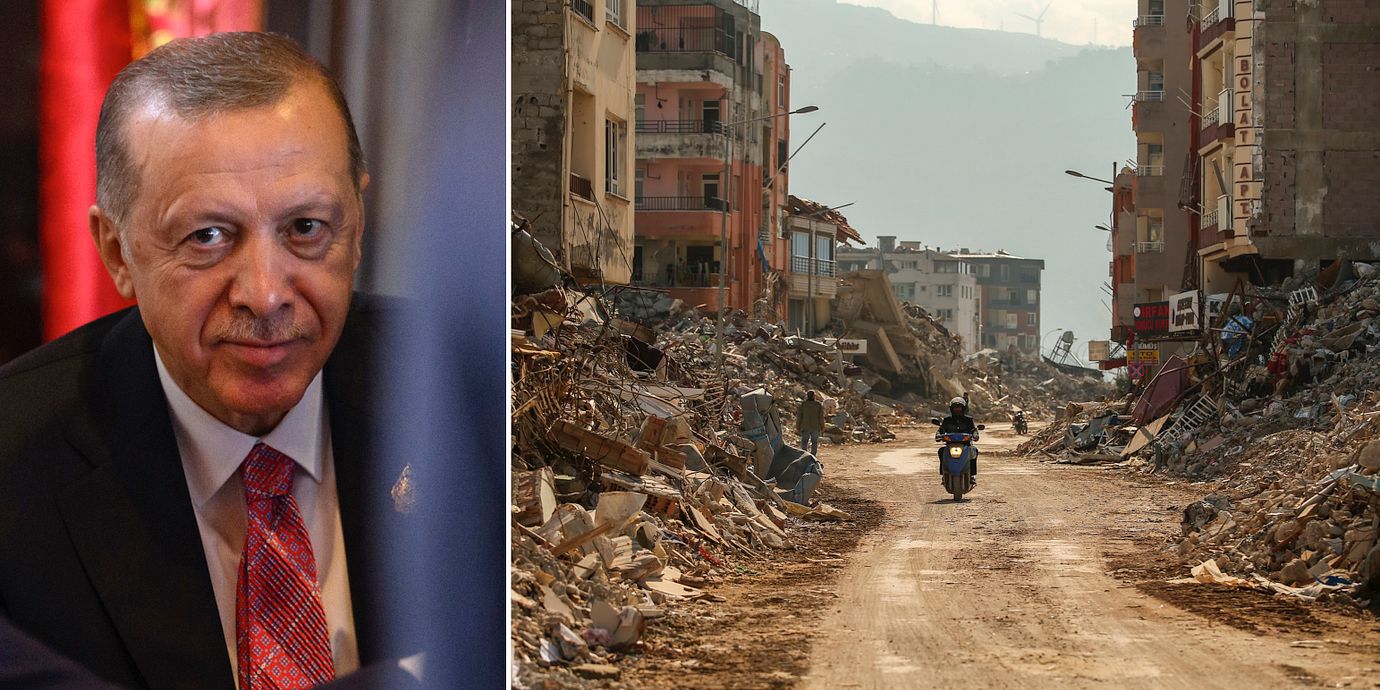
Turkiets president Recep Tayyip Erdogan ber om ursäkt för att räddningsarbetet dröjde efter jordbävningen i södra Turkiet och norra Syrien, skriver AFP.
– På grund av den förödande effekten av jordskalven och det dåliga vädret kunde vi inte arbeta som vi ville i Adiyaman de första dagarna. Jag ber om ursäkt för detta, säger Erdogan.
Över 44 000 människor dödades i jordbävningen som inträffade den 6 februari.
bakgrund
Jordbävningarna i Turkiet och Syrien
Wikipedia (en)
On 6 February 2023, a Mw 7.8 earthquake struck southern and central Turkey and northern and western Syria. The epicenter was 32 km (20 mi) west–northwest of Gaziantep at 04:17 TRT (01:17 UTC). The earthquake had a maximum Mercalli intensity of XI (Extreme). It was followed by a Mw 7.7 earthquake nine hours later, centered 95 km (59 mi) to the north-northeast from the first, in Kahramanmaraş Province. There was widespread damage and tens of thousands of fatalities.
The mainshock was the strongest earthquake in Turkey since the 1939 Erzincan earthquake, of the same magnitude, together with which it is the second-strongest in the history of the country after the 1668 North Anatolia earthquake. It was also one of the strongest earthquakes ever recorded in the Levant. It was felt as far as Egypt, Israel, Palestine, Lebanon, Cyprus, and the Black Sea coast of Turkey.
It was the deadliest seismic event in the history of Turkey since the 526 Antioch earthquake and the deadliest in Syria since the 1822 Aleppo earthquake. It was the deadliest earthquake worldwide since the 2010 Haiti earthquake and the fifth-deadliest earthquake of the 21st century.The earthquakes were followed by more than 2,100 aftershocks. The seismic sequence was the result of shallow strike-slip faulting. As of 21 February 2023, over 50,200 deaths have been confirmed: over 43,500 in Turkey, and over 6,600 in Syria. A large winter storm hampered rescue efforts, dropping snow on the ruins and plummeting temperatures. Due to the freezing temperatures in the area, survivors, especially those trapped under rubble, have been at a great risk of hypothermia. Collectively, the earthquakes are estimated to have caused US$84.1 billion worth of damage, making them the fourth-costliest earthquakes on record. It is the deadliest natural disaster in Turkey's modern history. Development experts from the United Nations estimated about 1.5 million people were made homeless.
Omni är politiskt obundna och oberoende. Vi strävar efter att ge fler perspektiv på nyheterna. Har du frågor eller synpunkter kring vår rapportering? Kontakta redaktionen