Sju döda i israelisk flygräd mot Golanhöjderna
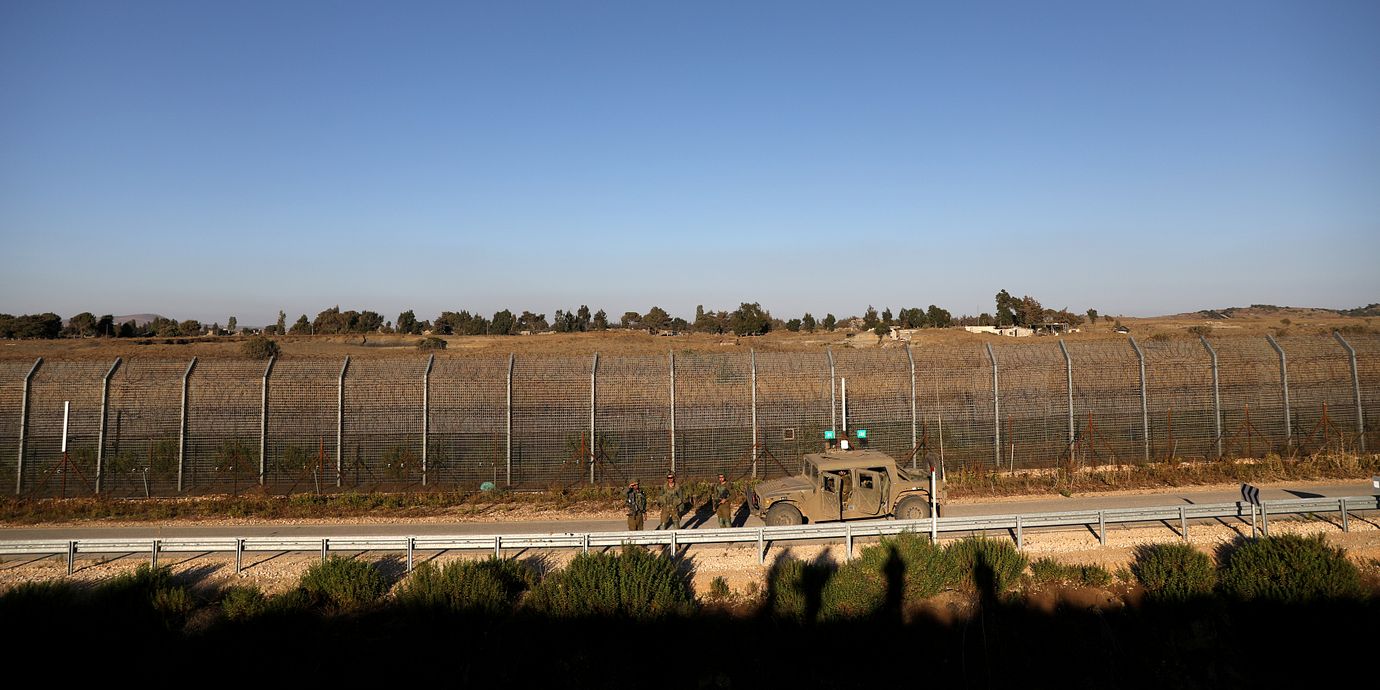
Sju misstänkta terrorister har dödats i en israelisk flygräd mot Golanhöjderna, säger den israeliska militären enligt Reuters.
Enligt det oppositionella Syriska människorättsobservatoriet (SOHR) pågår fortsatt stridigheter mellan den syriska armén och terrorgruppen IS i området.
bakgrund
Golanhöjderna
Wikipedia (en)
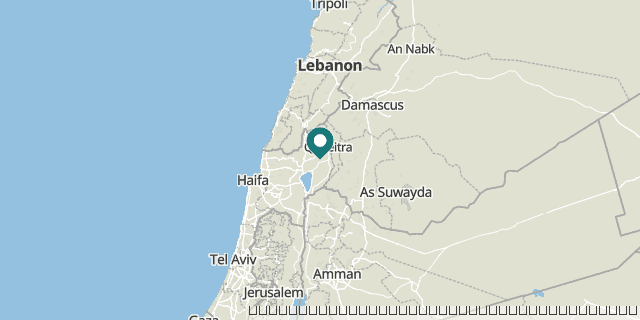
The Golan Heights (Arabic: هضبة الجولان Haḍbatu 'l-Jawlān or مرتفعات الجولان Murtafaʻātu l-Jawlān, Hebrew: רמת הגולן, Ramat HaGolan (audio) ), or simply the Golan, is a region in the Levant, spanning about 1,800 square kilometres (690 sq mi). The region defined as the Golan Heights differs between disciplines: as a geological and biogeographical region, the Golan Heights is a basaltic plateau bordered by the Yarmouk River in the south, the Sea of Galilee and Hula Valley in the west, the Anti-Lebanon with Mount Hermon in the north and Wadi Raqqad in the east; and as a geopolitical region, the Golan Heights is the area captured from Syria and occupied by Israel during the Six-Day War, territory which Israel effectively annexed in 1981. This region includes the western two-thirds of the geological Golan Heights, as well as the Israeli-occupied part of Mount Hermon.
The earliest evidence of human habitation dates to the Upper Paleolithic period. According to the Bible, an Amorite Kingdom in Bashan was conquered by Israelites during the reign of King Og. Throughout the Old Testament period, the Golan was "the focus of a power struggle between the Kings of Israel and the Aramaeans who were based near modern-day Damascus." The Itureans, an Arab or Aramaic people, settled there in the 2nd century BCE and remained until the end of the Byzantine period. Organized Jewish settlement in the region came to an end in 636 CE when it was conquered by Arabs under Umar ibn al-Khattāb. In the 16th century, the Golan was conquered by the Ottoman Empire and was part of the Vilayet of Damascus until it was transferred to French control in 1918. When the mandate terminated in 1946, it became part of the newly independent Syrian Republic.
Since the 1967 Six-day War, the western two-thirds of the Golan Heights has been occupied and administered by Israel, whereas the eastern third had remained under control of the Syrian Arab Republic, or later following the onset of the Syrian Civil War split between the government and opposition forces, with the UNDOF maintaining a 266 km2 buffer zone in between, to implement the ceasefire of the Purple Line. Construction of Israeli settlements began in the remainder of the territory held by Israel, which was under military administration until Israel passed the Golan Heights Law extending Israeli law and administration throughout the territory in 1981. This move was condemned by the United Nations Security Council in UN Resolution 497, which stated that "the Israeli decision to impose its laws, jurisdiction and administration in the occupied Syrian Golan Heights is null and void and without international legal effect." Israel maintains it has a right to retain the Golan, citing the text of UN Resolution 242, which calls for "safe and recognised boundaries free from threats or acts of force". However, the international community rejects Israeli claims to title to the territory and regards it as sovereign Syrian territory.Since the onset of the Syrian Civil War, the eastern Golan Heights have become a scene of continuous battles between the Syrian Arab Army and rebel factions of the Syrian opposition, Islamist factions and Jihadist al-Nusra Front and ISIL-affiliated militants.
Golanhöjderna
Omni är politiskt obundna och oberoende. Vi strävar efter att ge fler perspektiv på nyheterna. Har du frågor eller synpunkter kring vår rapportering? Kontakta redaktionen