”Matteo Renzi förtjänar stöd i folkomröstningen”
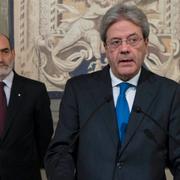
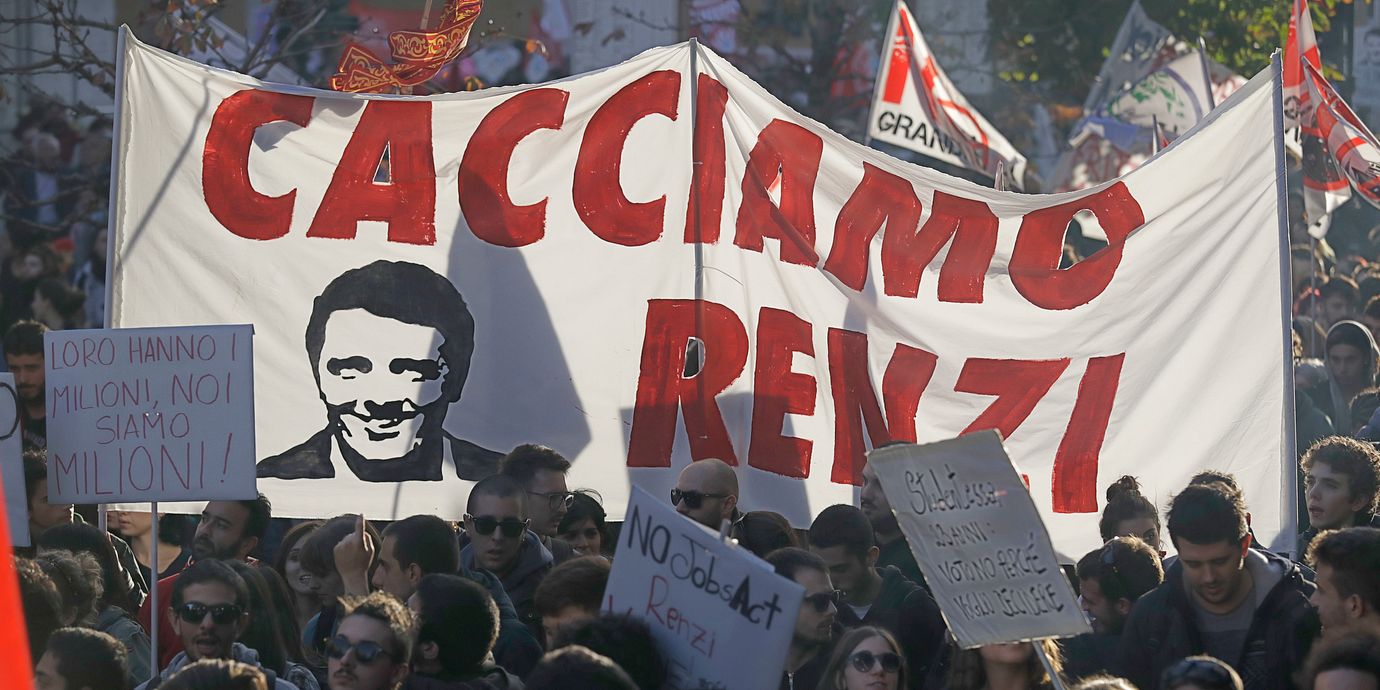
När den italienska befolkningen går till valurnorna i söndagens folkomröstning röstar de egentligen om två saker: Om grundlagen ska ändras enligt liggande förslag och om premiärminister Matteo Renzi ska få sitta kvar. Svaret på båda frågorna borde vara ”ja”, skriver Bloomberg i en ledare.
Enligt ledarskribenten behöver Italien reformer – även om Renzi inte varit så tydlig med vad just den aktuella reformen egentligen innebär – för att komma ur den negativa spiralen av politiska spänningar. Enligt Bloomberg är Renzi också den mest lämpliga personen att genomföra de reformerna.
Läs även
bakgrund
Grundlagsomröstningen i Italien
Wikipedia (en)
A constitutional referendum will be held in Italy on Sunday 4 December 2016. Voters will be asked whether they approve of amending the Italian Constitution to reform the appointment and powers of the Parliament of Italy, as well as the partition of powers of State, Regions, and administrative entities.
The bill, proposed by Prime Minister Matteo Renzi and his centre-left Democratic Party, was first introduced by the government in the Senate on 8 April 2014. After several amendments by both the Senate and the Chamber of Deputies, the bill received its first approval on 13 October 2015 (Senate) and 11 January 2016 (Chamber), and, eventually, its second and final approval on 20 January 2016 (Senate) and 12 April 2016 (Chamber).
In accordance with Article 138 of the Constitution, a referendum was called because the constitutional amendment had not been approved by a qualified majority of two-thirds in each house of the Parliament in the second voting. The reform will not become law unless it receives a majority of "Yes" votes in the referendum. This will be the third constitutional referendum in the history of the Italian Republic: the other two were in 2001 (which was approved) and 2006 (which was rejected).
Should the voters approve the bill, it would achieve the most extensive constitutional reform in Italy since the end of the monarchy, not only influencing the organization of the Parliament, but also improving, according to its proponents, on the poor government stability of the country. Opposition parties have harshly criticised the bill, claiming that it is badly written and that it will make the government too powerful.
Omni är politiskt obundna och oberoende. Vi strävar efter att ge fler perspektiv på nyheterna. Har du frågor eller synpunkter kring vår rapportering? Kontakta redaktionen