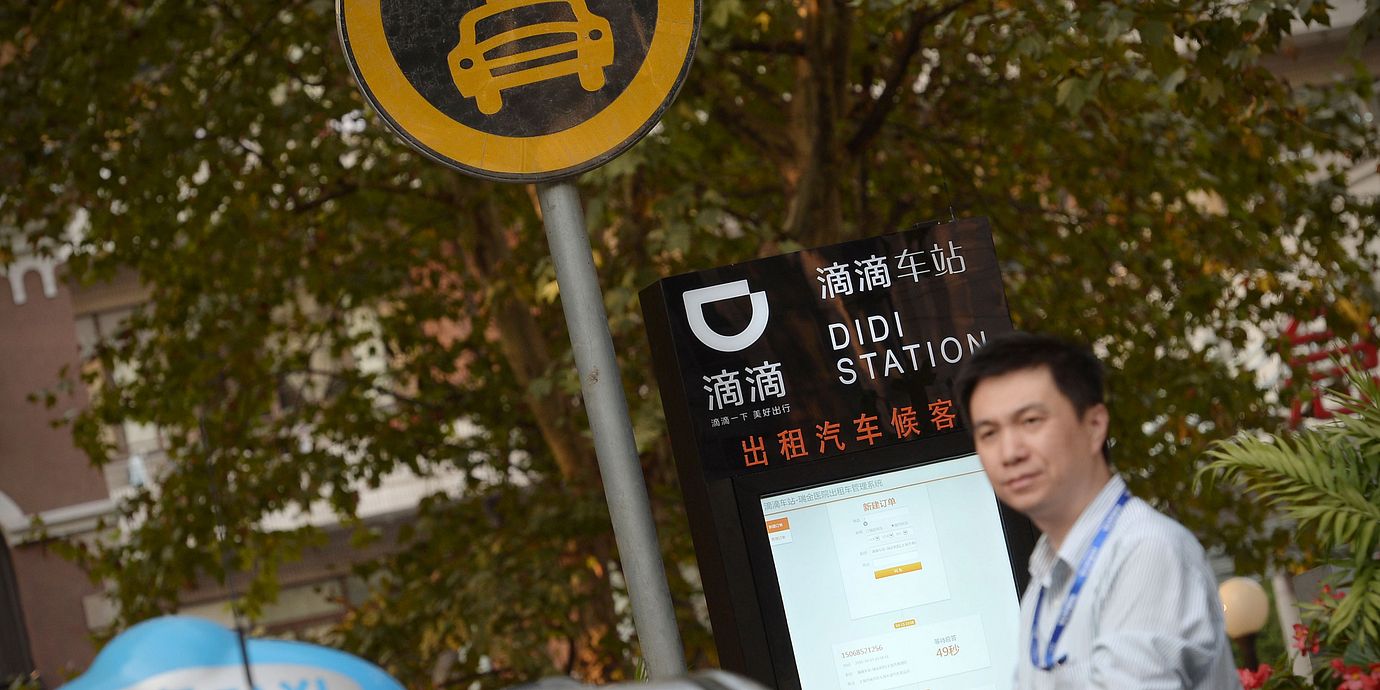
Nya regler i Kina kan bli hårt slag mot Didi
Nya regler för samåkning kan bli ett hårt slag för Didi Chuxing, som nyligen förvärvade Ubers kinesiska verksamhet. Det är jättestäderna Peking, Shanghai och Shenzhen som lagt fram ett lagförslag som skulle kräva att alla förare är registrerade i folkbokföringssystemet Hukou i den stad de är verksamma – vilket få är, skriver Bloomberg.
bakgrund
Hukousystemet
Wikipedia (en)
A hukou is a record in a government system of household registration required by law in mainland China and Taiwan, and determines where citizens are allowed to live. The system itself is more properly called "huji", and has origins in ancient China.
A household registration record officially identifies a person as a resident of an area and includes identifying information such as name, parents, spouse, and date of birth. A hukou can also refer to a family register in many contexts since the household registration record (simplified Chinese: 户口簿; traditional Chinese: 戶口簿; pinyin: hùkǒu bù) is issued per family, and usually includes the births, deaths, marriages, divorces, and moves, of all members in the family.
Because of its entrenchment of social strata, especially as between rural and urban residency status, the hukou system is often regarded as a form of caste system. The system descends in part from ancient Chinese systems of household registration, which also influenced neighbouring countries. In present times, a similar household registration system exists within the public administration structures of Japan (koseki), Vietnam (Hộ khẩu), and North Korea (Hoju). In South Korea, the Hoju system was abolished on 1 January 2008. While unrelated in origin, propiska in the Soviet Union or Resident registration in Russia had/has a similar purpose.
Omni är politiskt obundna och oberoende. Vi strävar efter att ge fler perspektiv på nyheterna. Har du frågor eller synpunkter kring vår rapportering? Kontakta redaktionen