Indien: Minst 20 soldater dödade i strider med Kina
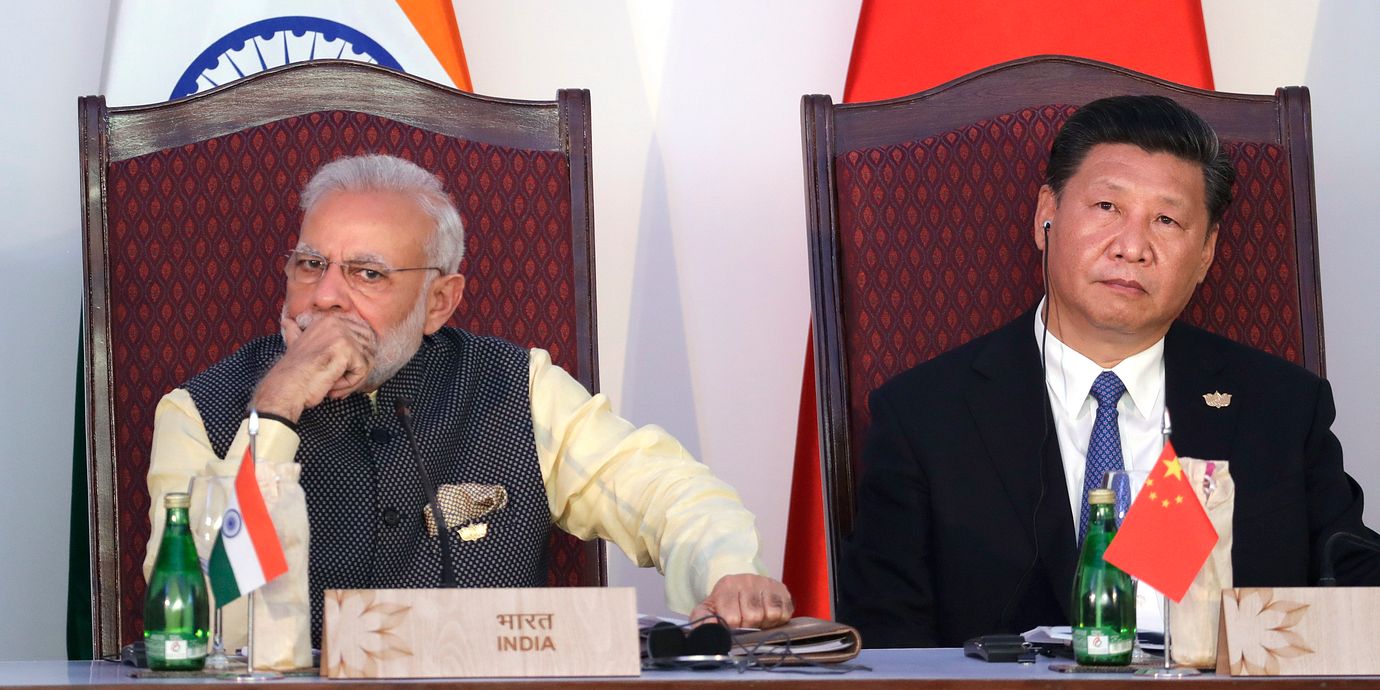
Minst 20 indiska soldater dödades i dagens våldsamma strider med Kina, uppger indisk militär. På den kinesiska sidan ska 43 personer ha skadats.
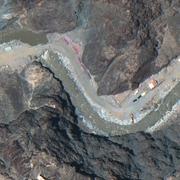
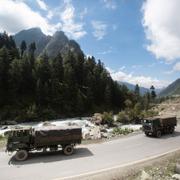
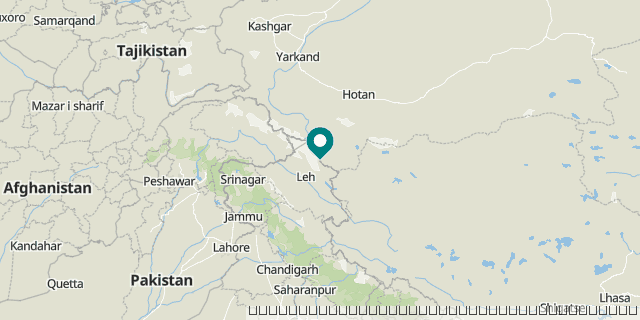
Striderna ägde rum i Galwandalen, ett omtvistat gränsområde i Himalaya. Indien anklagar Kina för en ockupation av 38 000 kvadratkilometer i området och länderna utkämpade ett krig om området 1962 som Kina vann.
Senast strider i området mellan länderna ledde till dödsfall var 1975, skriver BBC.
bakgrund
Kriget mellan Kina och Indien 1962
Wikipedia (en)
The Sino-Indian War, also known as the Indo-China War and Sino-Indian Border Conflict, was a war between China and India that occurred in 1962. A disputed Himalayan border was the main cause of the war, but other issues also played a role. There had been a series of violent border skirmishes between the two countries after the 1959 Tibetan uprising, when India granted asylum to the Dalai Lama. India initiated a defensive Forward Policy from 1960 to hinder Chinese military patrols and logistics, in which it placed outposts along the border, including several north of the McMahon Line, the eastern portion of the Line of Actual Control proclaimed by Chinese Premier Zhou Enlai in 1959.Chinese military action grew increasingly aggressive after India rejected proposed Chinese diplomatic settlements throughout 1960–1962, with China re-commencing previously-banned "forward patrols" in Ladakh from 30 April 1962. China finally abandoned all attempts of peaceful resolution on 20 October 1962, invading disputed territory along the 3,225 kilometre- (2,000-mile-) long Himalayan border in Ladakh and across the McMahon Line. Chinese troops advanced over Indian forces in both theatres, capturing Rezang La in Chushul in the western theatre, as well as Tawang in the eastern theatre. The war ended when China declared a ceasefire on 20 November 1962, and simultaneously announced its withdrawal to its claimed "Line of Actual Control".
Much of the fighting took place in harsh mountain conditions, entailing large-scale combat at altitudes of over 4,000 metres (14,000 feet). The Sino-Indian War was also notable for the lack of deployment of naval and aerial assets by either China or India.
As the Sino-Soviet split heated up, Moscow made a major effort to support India, especially with the sale of advanced MiG fighter-aircraft. The United States and Britain refused to sell advanced weaponry to India, causing it to turn to the Soviet Union.This was the first war between India and China. Following the end of the war, both sides kept forward armed positions and a number of small clashes broke out, but no large-scale fighting ensued.
Galwan-dalen
Omni är politiskt obundna och oberoende. Vi strävar efter att ge fler perspektiv på nyheterna. Har du frågor eller synpunkter kring vår rapportering? Kontakta redaktionen