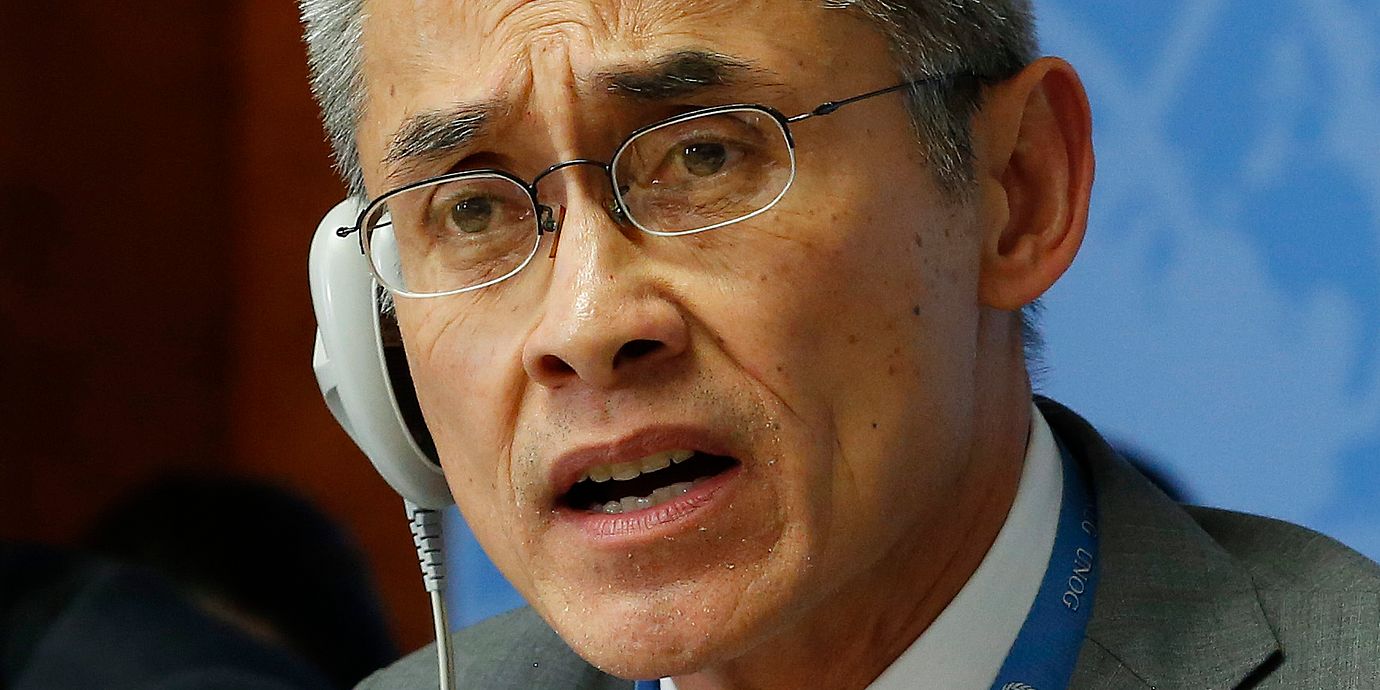
FN utser sin första expert på våld mot hbtq-personer
FN:s kommitté för mänskliga rättigheter har för första gången utsett en människorättsexpert som ska utreda våld mot hbtq-personer, skriver AP.
Vitit Muntarbhorn heter den nya experten. Han kommer från Thailand och är professor i juridik. Tidigare har han suttit med i kommitténs Syrienkommission samt varit särskild utredare av barnprostitution och barnpornografibrott för FN.
bakgrund
Våld mot hbtq-personer i världen
Wikipedia (en)
Lesbian, gay, bisexual, and transgender (LGBT) people can face violence motivated by hateful attitudes towards their sexuality or gender identity. Violence may be executed by the state, as in laws prescribing corporal punishment for homosexual acts (see homosexuality laws), or by individuals engaging in intimidation, mobbing, assault, or lynching (see gay bashing, trans bashing). Violence targeted at people because of their perceived sexuality can be psychological or physical and can extend to murder. These actions may be motivated by homophobia, lesbophobia, biphobia, transphobia, and may be influenced by cultural, religious, or political mores and biases.
Currently, homosexual acts are legal in almost all Western countries, and in many of these countries violence against LGBT people is classified as a hate crime, with such violence being often connected with conservative or religious leaning ideologies which condemn homosexuality, or being perpetrated by individuals who associate homosexuality to being weak, ill, feminine, or immoral. Outside the West, many countries, particularly those where the dominant religion is Islam, most African countries (excluding South Africa), some Asian countries (excluding Japan and Taiwan), and some former-Communist countries in Eastern Europe and Central Asia, such as Russia, Albania, Kosovo and Bosnia and Herzegovina, are currently very dangerous for LGBT people because of discrimination against homosexuals which influences both discriminatory legislation and physical violence.
In Europe, the European Union's Employment Equality Framework Directive and Charter of Fundamental Rights offer some protection against sexuality-based discrimination.
Historically, state-sanctioned persecution of homosexuals was mostly limited to male homosexuality, termed "sodomy". During the medieval and early modern period, the penalty for sodomy was usually death. During the modern period (from the 19th century to the mid-20th century) in the Western world, the penalty was usually a fine or imprisonment.
As of 2009, there remain 80 countries worldwide where homosexual acts remain illegal (notably throughout the Middle East, Central Asia and in most of Africa, but also in some of the Caribbean and Oceania) including five that carry the death penalty.
Omni är politiskt obundna och oberoende. Vi strävar efter att ge fler perspektiv på nyheterna. Har du frågor eller synpunkter kring vår rapportering? Kontakta redaktionen