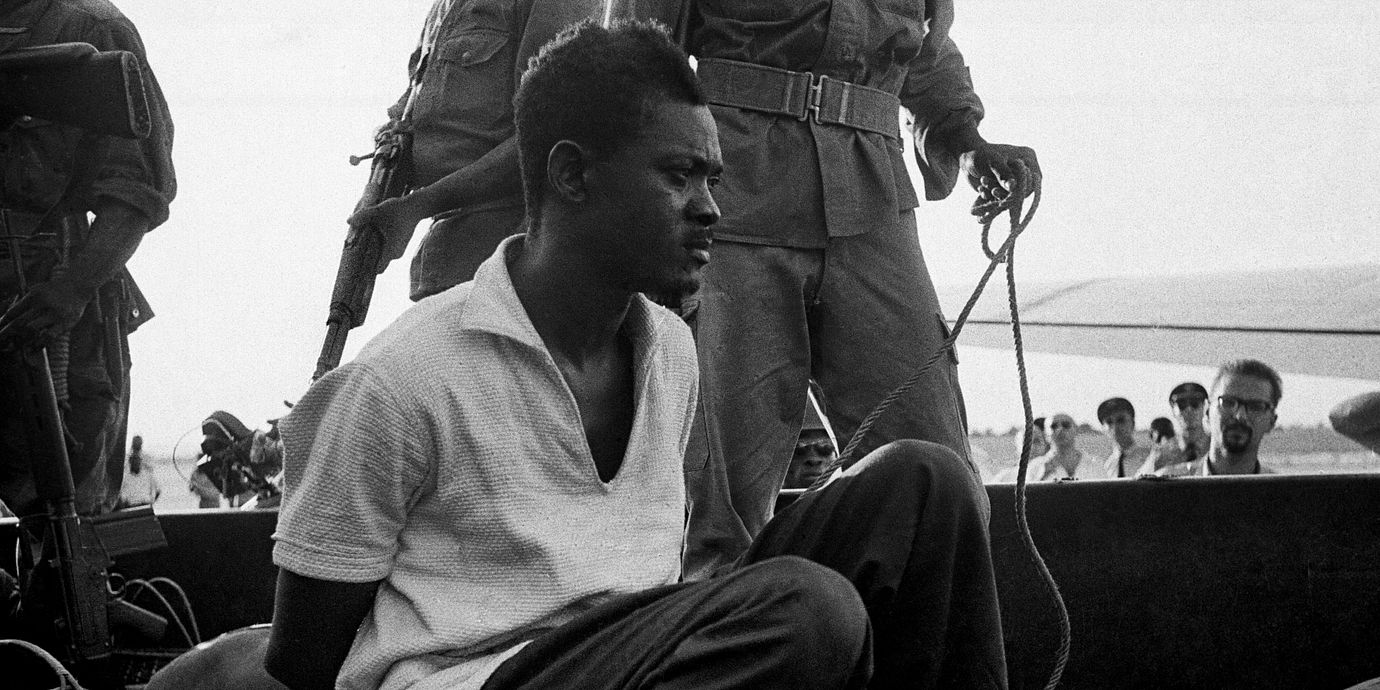
Belgien ska lämna tillbaka tand från avrättad ledare
En belgisk domare har beslutat att landet måste lämna tillbaka Kongos tidigare premiärminister Patrice Lumumbas tand till hans familj, rapporterar AFP.
Lumumba ledde det afrikanska landet till självständighet 1960 och avrättades ett år senare i utbrytarprovinsen Katanga. En belgisk polis har erkänt att han plockat på sig tanden när han hjälpte till att flytta liket.
Enligt Eric Van Duyse, talesperson vid belgiska åklagarmyndigheten, är gesten dock symbolisk eftersom det inte finns några säkra bevis på att det faktiskt är Lumumbas tand.
Läs mer
bakgrund
Kolonin belgiska Kongo
Wikipedia (en)
The Belgian Congo (French: Congo belge, pronounced [kɔ̃ɡo bɛlʒ]; Dutch: Belgisch-Congo) was a Belgian colony in Central Africa from 1908 until independence in 1960. The former colony adopted its present name, the Democratic Republic of the Congo (DRC), in 1964.
Colonial rule in the Congo began in the late 19th century. King Leopold II of Belgium attempted to persuade the Belgian government to support colonial expansion around the then-largely unexploited Congo Basin. Their ambivalence resulted in Leopold's establishing a colony himself. With support from a number of Western countries, Leopold achieved international recognition for a personal colony, the Congo Free State, in 1885. By the turn of the century, the violence used by Free State officials against indigenous Congolese and a ruthless system of economic exploitation led to intense diplomatic pressure on Belgium to take official control of the country, which it did by creating the Belgian Congo in 1908.Belgian rule in the Congo was based on the "colonial trinity" (trinité coloniale) of state, missionary and private-company interests. The privileging of Belgian commercial interests meant that large amounts of capital flowed into the Congo and that individual regions became specialised. On many occasions, the interests of the government and of private enterprise became closely linked, and the state helped companies to break strikes and to remove other barriers raised by the indigenous population. The colony was divided into hierarchically organised administrative subdivisions, and run uniformly according to a set "native policy" (politique indigène). This contrasted the practice of British and French colonial policy, which generally favoured systems of indirect rule, retaining traditional leaders in positions of authority under colonial oversight.During the 1940s and 1950s the Belgian Congo experienced extensive urbanisation, and the colonial administration began various development programmes aimed at making the territory into a "model colony". One result saw the development of a new middle-class of Europeanised African "évolués" in the cities. By the 1950s the Congo had a wage labour force twice as large as that in any other African colony.In 1960, as the result of a widespread and increasingly radical pro-independence movement, the Congo achieved independence, becoming the Republic of Congo under Prime Minister Patrice Lumumba and President Joseph Kasa-Vubu. Poor relations between political factions within the Congo, the continued involvement of Belgium in Congolese affairs, and the intervention by major parties (mainly the United States and the Soviet Union) during the Cold War led to a five-year-long period of war and political instability, known as the Congo Crisis, from 1960 to 1965. This ended with the seizure of power by Joseph-Désiré Mobutu in November 1965.
Omni är politiskt obundna och oberoende. Vi strävar efter att ge fler perspektiv på nyheterna. Har du frågor eller synpunkter kring vår rapportering? Kontakta redaktionen