”Kan finnas bevis på dåliga gärningar i utredningen”
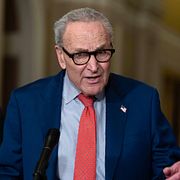
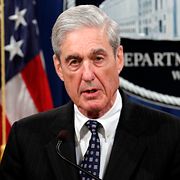
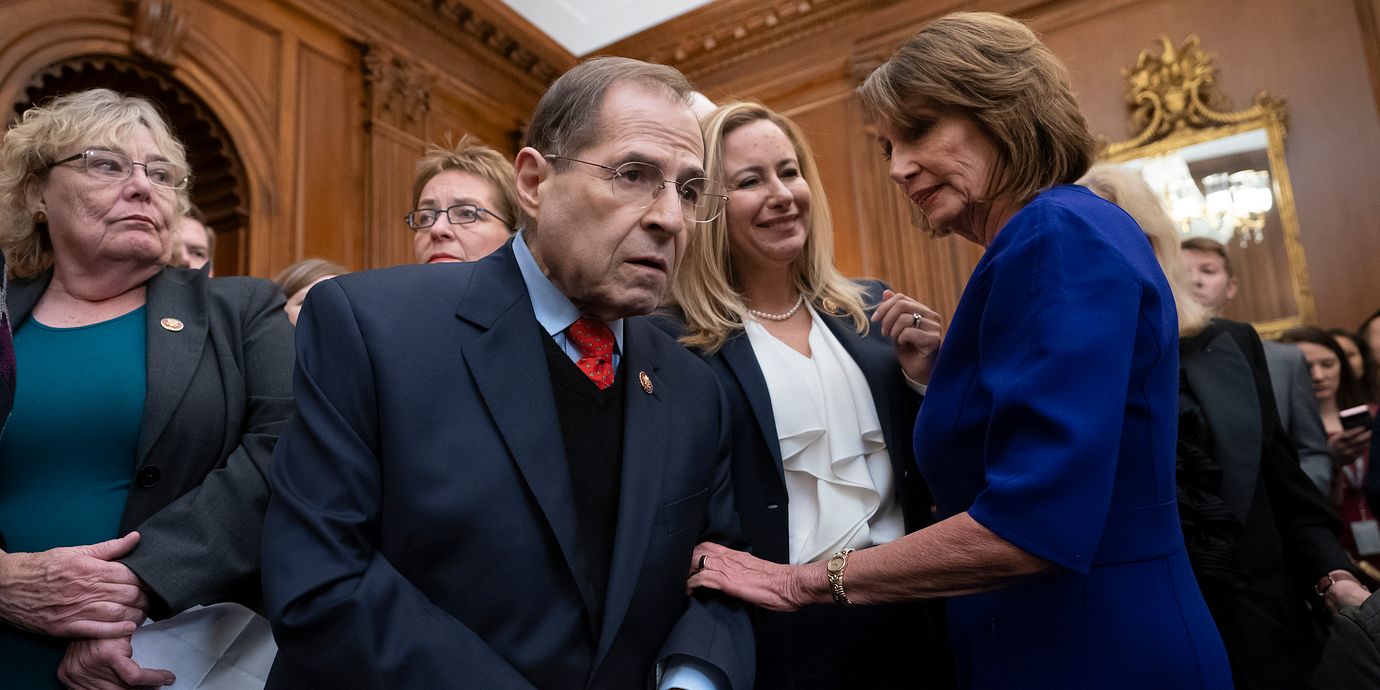
Den särskilde utredaren Robert Muellers Rysslandsutredning kan innehålla ”bevis på mycket dåliga gärningar” och måste ges till alla i kongressen, menar Jerrold Nadler, ordförande för representanthusets juridiska utskott, skriver The Guardian.
Förra månaden släppte justitieminister William Barr en sammanfattning av rapporten som visade att Trumpkampanjen och Ryssland inte samarbetat, men samtidigt friades inte presidenten från anklagelser om att ha försökt påverka utredningen.
– Vi måste få se den, och offentligheten måste få se den, säger Nadler.
bakgrund
Rysslandsutredningen
Wikipedia (en)
The Special Counsel investigation of 2017 to 2019, also referred to as the Mueller probe, Mueller investigation and Russia investigation, was a United States counterintelligence investigation of the Russian government's efforts to interfere in the 2016 presidential election. Its results are presented in the Mueller report. According to its authorizing document which was signed by Deputy Attorney General Rod Rosenstein on May 17, 2017, the investigation's scope included allegations that there were links or coordination between Donald Trump's presidential campaign and the Russian government as well as "any matters that arose or may arise directly from the investigation". It included a criminal investigation which looked into potential obstruction of justice charges against Trump and others within the campaign and administration. Conducted by the Department of Justice Special Counsel's Office headed by Robert Mueller, a Republican and former Director of the Federal Bureau of Investigation (FBI), the Special Counsel investigation began eight days after President Trump dismissed FBI director James Comey, who had been leading existing FBI investigations since July 2016 into links between Trump associates and Russian officials. Following Comey's firing, over 130 Democratic Party lawmakers in Congress called for the appointment of a special counsel, while the FBI began investigating Trump for obstruction of justice. The special counsel's office took over both these investigations from the FBI.For the criminal charges brought in this investigation, as of the investigation's conclusion in March 2019, 34 individuals received indictments for federal crimes. Seven of these individuals have entered guilty pleas or been convicted. In August 2018, former Trump campaign chairman Paul Manafort was found guilty on eight felony counts of financial crimes in the United States District Court for the Eastern District of Virginia and a month later pleaded guilty to conspiracy to defraud the United States and obstruct justice in a plea bargain for his full cooperation with prosecutors. The investigation also led to Trump's former National Security Advisor Michael Flynn pleading guilty to making false statements to the FBI about his discussions of sanctions with the Russian ambassador during the Trump campaign, and was required to be a cooperating witness in the investigations. Mueller further secured guilty pleas from Manafort's business partner Rick Gates, Dutch attorney Alex van der Zwaan, former Trump campaign adviser George Papadopoulos, lobbyist W. Samuel Patten and Richard Pinedo. Except Van der Zwaan, all have become cooperating witnesses for investigators. In February 2018, Mueller indicted 13 Russian citizens and three Russian entities, most notably the Internet Research Agency and in June 2018 added an indictment of Konstantin Kilimnik, Manafort's business partner, to whom he had passed internal campaign polling data. In July 2018, 12 members of the Russian GRU cyber espionage group known as Fancy Bear, responsible for the 2016 DNC email hacking, were indicted. Investigations into Trump's personal lawyer Michael Cohen were referred to the Attorney's office of the Southern District of New York. Longtime Trump advisor Roger Stone was indicted on seven charges in January 2019.Initially receiving bipartisan support, the Special Counsel investigation was later criticized by Trump and his supporters. Trump has criticized people or groups related to the investigation over 1,000 times. On January 30, 2019, an FBI court filing revealed that someone located in Russia was also attempting to discredit the Special Counsel investigation through Twitter. Russian people have also sent falsified documents to reporters. Some allegations of investigators' misconduct have been raised and were almost immediately debunked. Trump and his supporters criticized the cost of the investigation. By December 2018, the investigation had cost approximately $25 million while gaining approximately $48 million through asset forfeitures.The Special Counsel's office concluded its investigation and submitted the final report to Attorney General William Barr on March 22, 2019. Barr had been previously critical of the investigation before Trump announced on December 7, 2018, his intent to nominate Barr for Attorney General. Following the conclusion of the Mueller investigation, at least three dozen ongoing investigations originally handled by the Special Counsel's office were passed on to district and state prosecutors, other Department of Justice branches, other federal agencies, and Congress. On March 24, 2019, Attorney General Barr sent a four-page letter to Congress regarding the special counsel's findings regarding Russian interference and obstruction of justice. Barr said that on the question of Russian interference in the election, Mueller detailed two ways in which Russia attempted to influence the election, firstly disinformation and social media campaigns by the Internet Research Agency to cause social discord, and secondly computer hacking and strategic release of emails from the Hillary Clinton presidential campaign and Democratic Party organizations. However, Barr quoted the report as saying: "[T]he investigation did not establish that members of the Trump Campaign conspired or coordinated with the Russian government in its election interference activities". On the question of obstruction of justice, Barr said no conclusion was reached by the special counsel, noting that Mueller wrote "while this report does not conclude that the President committed a crime, it also does not exonerate him". Barr and Rosenstein concluded by March 24, 2019, that obstruction could not be proven in a court of law. Attorney General Barr has committed to releasing a redacted version of the Mueller report to Congress; he expects to release it in mid-April 2019.
Omni är politiskt obundna och oberoende. Vi strävar efter att ge fler perspektiv på nyheterna. Har du frågor eller synpunkter kring vår rapportering? Kontakta redaktionen