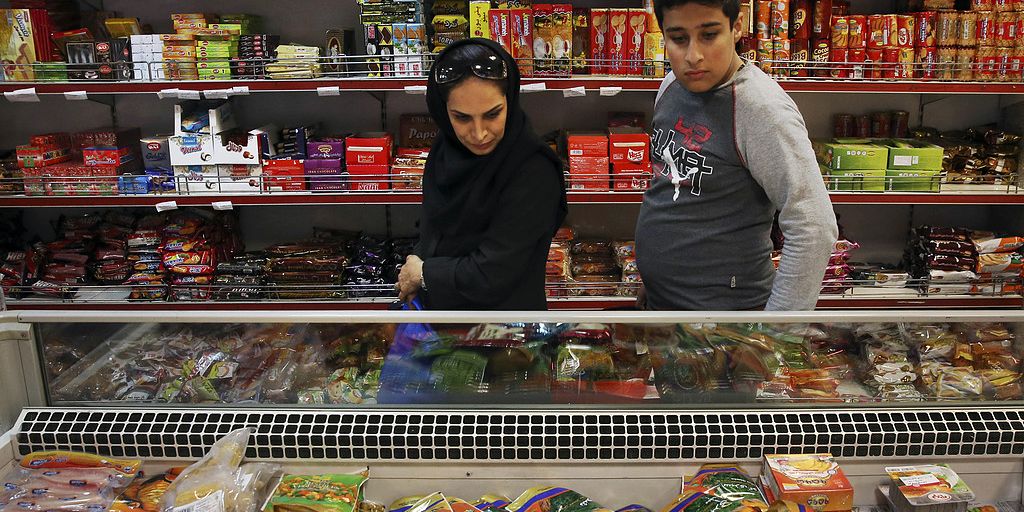
Iran inför kreditkort för första gången
Iran har för första gången infört möjlighet till kortbetalning. Det rapporterar studenternas nyhetsbyrå Isna på söndagen, enligt Reuters.
Korten får tre möjliga kreditgränser: motsvarande 3 000, 10 000 respektive 15 000 dollar, alltså upp till motsvarande nästan 130 000 kronor. De ska kunna användas för att handla både i butiker och på nätet.
bakgrund
Irans ekonomi
Wikipedia (en)
The economy of Iran is a mixed and transition economy with a large public sector. Some 60 percent of the economy is centrally planned. It is dominated by oil and gas production, although over 40 industries are directly involved in the Tehran Stock Exchange, one of the best performing exchanges in the world over the past decade. With 10 percent of the world's proven oil reserves and 15 percent of its gas reserves, Iran is considered an "energy superpower".
It is the world's eighteenth largest by purchasing power parity (PPP) and twenty-nine by nominal gross domestic product. The country is a member of Next Eleven because of its high development potential. A unique feature of Iran's economy is the presence of large religious foundations called Bonyad, whose combined budgets represent more than 30 percent of central government spending.
Price controls and subsidies, particularly on food and energy, burden the economy. Contraband, administrative controls, widespread corruption, and other restrictive factors undermine private sector-led growth. The legislature in late 2009 passed the subsidy reform plan. This is the most extensive economic reform since the government implemented gasoline rationing in 2007.
Most of the country's exports are oil and gas, accounting for a majority of government revenue in 2010. Oil export revenues enabled Iran to amass well over $100 billion in foreign exchange reserves as of 2010. Iran ranked first in scientific growth in the world in 2011 and has one of the fastest development in telecommunication globally.
Due to its relative isolation from global financial markets, Iran was initially able to avoid recession in the aftermath of the 2008 global financial crisis. Yet, following increasingly stringent sanctions imposed by the international community as a result of the country's nuclear program, oil exports fell by half. In September 2012, the Iranian rial fell to a record low of 23,900 to the US dollar.
Exports aided self-sufficiency and domestic investment, although double-digit unemployment and inflation remain problematic. Iran's educated population, high human development, constrained economy and insufficient foreign and domestic investment prompted an increasing number of Iranians to seek overseas employment, resulting in a significant "brain drain".
Omni är politiskt obundna och oberoende. Vi strävar efter att ge fler perspektiv på nyheterna. Har du frågor eller synpunkter kring vår rapportering? Kontakta redaktionen