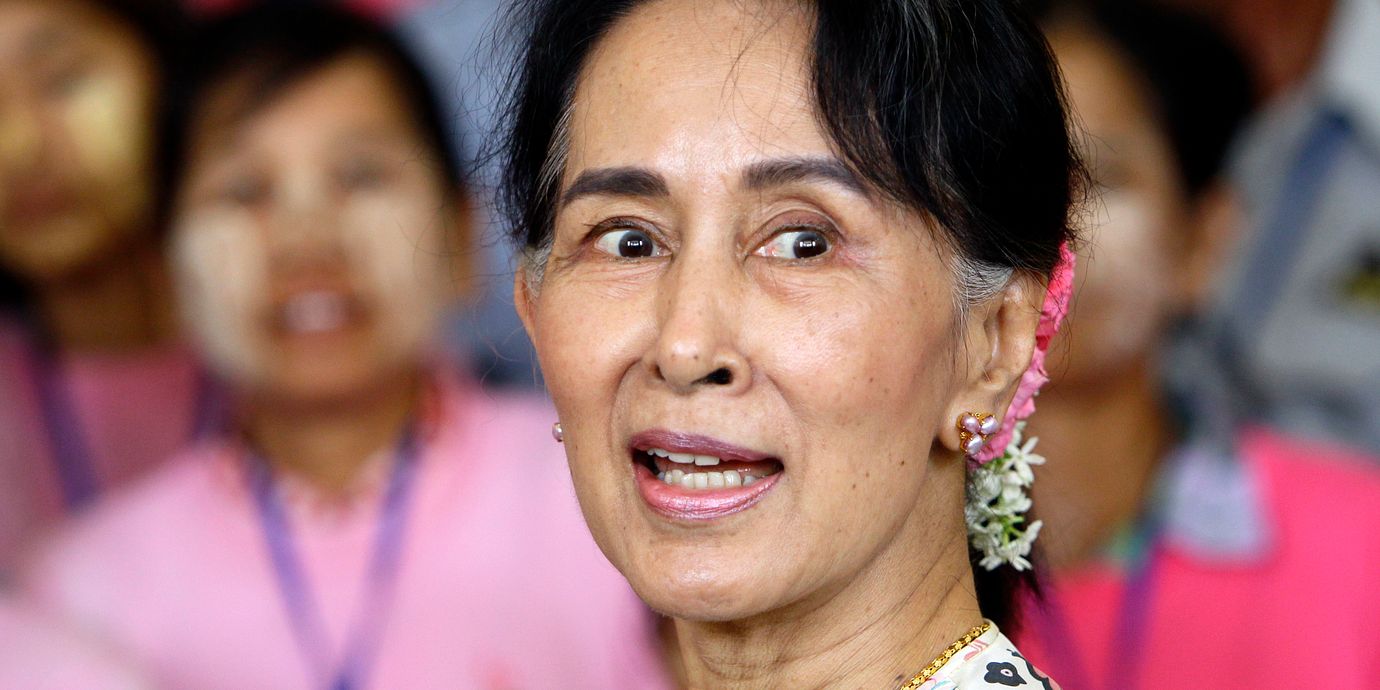
Aung San Suu Kyi: ”Fake news” sprids av terrorister
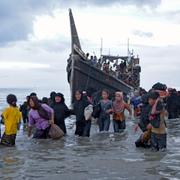
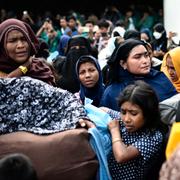
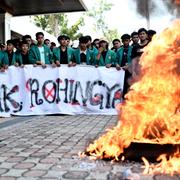
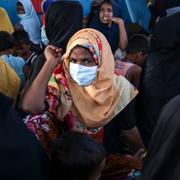
Burmas statsråd Aung San Suu Kyi kommenterade i går för första gången våldet mot landets muslimska Rohingya-minoritet, rapporterar AP och CNN.
I ett telefonsamtal med Turkiets president Recep Tayyip Erdogan sa den tidigare fredspristagaren att hennes regering arbetar för att skydda Rohingya-folkets rättigheter. Hon tillade att ”fake news” sprids för att främja ”terroristers” intressen, en hänvisning till Rohingya-rebellernas attacker den 25 augusti som utlöste våldsvågen.
”Vi vet väldigt väl, mer än de flesta, vad det betyder att berövas mänskliga rättigheter och demokratiskt skydd”, sa Suu Kyi under samtalet.
Suu Kyi har kritiserats hårt för att hon inte gjort mer för att stoppa våldet mot minoriteten.
bakgrund
Aung San Suu Kyi
Wikipedia (sv)
Aung San Suu Kyi (burmesiska: [àuɴ sʰáɴ sṵ tɕì]), född 19 juni 1945 i Rangoon, är en burmesisk politiker som sedan 6 april 2016 är Burmas statsråd. Hon är generalsekreterare för Nationella demokratiska förbundet (NLD). I parlamentsvalet 1990 vann NLD 59% av de nationella rösterna och 81% (392 av 485) av platserna i parlamentet. Hon hade precis före valet satts i husarrest. Hon fortsatte att sitta i husarrest under nästan 15 av de 21 åren från den 20 juli 1989 fram till sin senaste frigivning den 13 november 2010. Under denna tiden kom Aung San Suu Kyi att bli en världens mest kända och framgångsrika politiska fångar.
Suu Kyi mottog Raftos Minnespris och Sacharovpriset under år 1990. Hon tilldelades Nobels fredspris år 1991. År 1992 blev hon tilldelad Jawaharlal Nehrus Pris av den Indiska regeringen och International Simón Bolívar Prize av Venezuelas regering. Under 2007 gjorde Kanadas regering henne till kanadensisk hedersmedborgare; vid den här tidpunkten var hon en av fyra som någonsin blivit tilldelad detta. År 2011 mottog hon Wallenbergmedaljen.
Den 1 april 2012 meddelade hennes parti Nationella demokratiska förbundet att hon blivit vald till Pyithu Hluttaw, underhuset av Pyidaungsu Hluttaw och där hon representerar Kawhmus valkrets. Hennes parti vann också 43 av de 45 vakanta platserna i parlamentet. Valresultatet bekräftades av den officiella valkommission dagen efter.
Suu Kyi är det tredje barnet och enda dottern till Aung San, ansedd som grundare av dagens Burma.
bakgrund
Rohingya people
Wikipedia (en)
The Rohingya people (, , , or ; historically also termed Arakanese Indians) are a stateless Indo-Aryan people from Rakhine State, Myanmar. There are an estimated 1 million Rohingya living in Myanmar, and up to another million refugees abroad. The majority are Muslim while a minority are Hindu. Described by the United Nations in 2013 as one of the most persecuted communities in the world, the Rohingya population are denied citizenship under the 1982 Burmese citizenship law, which restricts full citizenship to British Indian migrants who settled after 1823. According to Human Rights Watch, the law "effectively deny to the Rohingya the possibility of acquiring a nationality. Despite being able to trace Rohingya history to the 8th century, Burmese law does not recognize the ethnic minority as one of the national races". The Rohingyas are also restricted from freedom of movement, state education and civil service jobs. The Rohingyas have faced military crackdowns in 1978, 1991–1992, 2012, 2015 and 2016–2017. UN officials have described Myanmar's persecution of the Rohingya as ethnic cleansing, while there have been warnings of an unfolding genocide. Yanghee Lee, the UN special investigator on Myanmar, believes the country wants to expel its entire Rohingya population.
Migration from the Indian subcontinent to Myanmar (formerly Burma) had taken place for centuries, including as part of the spread of Buddhism, Hinduism and Islam in the region. The historical region of Bengal (now divided between Bangladesh and the Indian state of West Bengal) has historical and cultural links with Rakhine State (formerly Arakan). Bengali-speaking settlers are recorded in Arakan since at least the 17th century, when the Kingdom of Mrauk U reigned. The term Rohingya, in the form of Rooinga, was recorded by the East India Company as early as 1799, but Burmese nationalists dispute its origins. Indian migration increased during the period of British rule in Burma, as Burma was a part of British India until 1937. Arakan had the largest percentage of British Indians in Burma. British Indians in Arakan were involved in agriculture and trade. Their presence was resented by many in the Rakhine majority.
During World War II, the Arakan massacres in 1942 involved communal violence between British-armed V Force Rohingya recruits and pro-Japanese Rakhines, polarizing the region along ethnic lines. In 1936 and 1939, several Arakanese Indians like Gani Markan were elected to the Legislative Council of Burma under the Burmese native category in British Burma. After Burmese independence in 1948, Rohingya leaders held high ranking positions in the Burmese government and parliament. In 1948, M. A. Gaffar sought official recognition for the Rohingya as one of Burma's ethnic groups. One of Burma's first two female legislators, Zura Begum, was elected by Rohingyas in 1951. In 1960, Sultan Mahmud proposed a separate province for the Rohingyas. Discrimination against minorities increased after the 1962 Burmese coup d'état. In 1982, General Ne Win's government enacted the Burmese nationality law, which did not recognize the Rohingya as one of the eight "national races". Stripping the Rohingya population of their citizenship. In the years following the 8888 Uprising and return of martial law, the Burmese military junta launched a military crackdown against Rohingyas in 1991 and 1992, which caused 250,000 refugees to flee to neighboring Bangladesh and brought the two countries to the brink of war.
The Rohingya maintain they are long-standing residents of western Myanmar, and that their community includes both a mixture of precolonial and colonial settlers. The official stance of the Myanmar government, however, has been that they are illegal immigrants from Bangladesh. Myanmar's government does not recognize the term "Rohingya" and it prefers to refer to the community as Bengalis. Rohingya campaign groups, notably the Arakan Rohingya National Organization, demand the right to "self-determination within Myanmar".
The legal conditions faced by the Rohingya in Myanmar have been compared with apartheid. Prior to the 2015 Rohingya refugee crisis and the military crackdown in 2016 and 2017, the Rohingya population in Myanmar was around 1.1 to 1.3 million They reside mainly in the northern Rakhine townships, where they form 80–98% of the population. Many Rohingyas have fled to southeastern Bangladesh, where there are 500,000 refugees, as well as to India, Thailand, Malaysia, Indonesia, Saudi Arabia and Pakistan. More than 100,000 Rohingyas in Myanmar live in camps for internally displaced persons, and the authorities do not allow them to leave. Probes by the UN have found evidence of increasing incitement of hatred and religious intolerance by "ultra-nationalist Buddhists" against Rohingyas while the Burmese security forces have been conducting "summary executions, enforced disappearances, arbitrary arrests and detentions, torture and ill-treatment and forced labour" against the community. International media and human rights organizations have often described the Rohingyas as one of the most persecuted minorities in the world. According to the United Nations, the human rights violations against the Rohingyas could be termed "crimes against humanity".
Omni är politiskt obundna och oberoende. Vi strävar efter att ge fler perspektiv på nyheterna. Har du frågor eller synpunkter kring vår rapportering? Kontakta redaktionen